




Search keywords:
product name, product type, model number,
test method, manufacturer, technique, application
-
Cone Calorimeter
The import of American VTEC, cone calorimeter ultra high cost performance
more
-
Digital Elmendorf Tearing Tester
Pendulum method test material tear strength, operating more simple, more accurate data
more
-
ZwickiLine Materials testing machines
Top of the world's leading universal material testing machine
more
Enamelled Wire Softening Breakdown Tester
BACK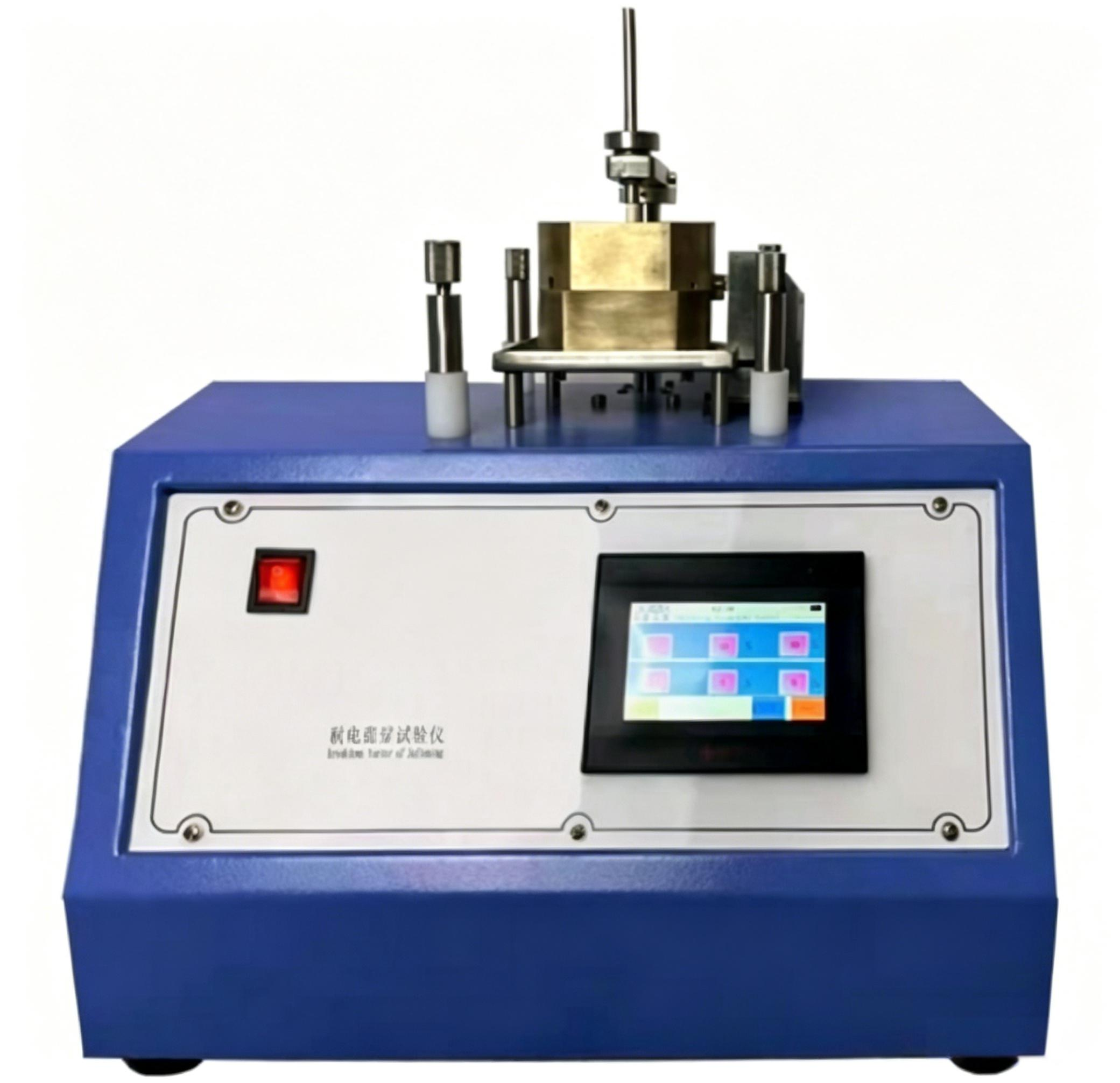


Standards:
Applications:
Enamelled wires are widely used in electrical equipment such as motors, transformers, generators, and inductors. During operation, the wire coils are subjected to both heat generation and mechanical stress. If the enamel insulation softens due to excessive temperature, it can easily lead to short circuits between adjacent turns, resulting in insulation failure and reduced equipment reliability.The Enamelled Wire Softening Breakdown Tester helps manufacturers assess the thermal endurance of enamel coatings, ensuring that enamelled wires maintain adequate insulation performance and electrical safety under high-temperature operating conditions.
Product Information:
The Enamelled Wire Softening Breakdown Tester is a specialized testing instrument designed to evaluate the heat deformation resistance and anti-softening performance of the insulating enamel coating on enamelled wires (magnet wires) under elevated temperature conditions.
Features
Suitable for testing the insulation performance of enamelled round wires and film-wrapped round wires with a nominal conductor diameter of 0.020–3.000mm after softening under thermal conditions.
Automatic temperature measurement, automatic constant temperature control, temperature adjustment and display.
According to the preset preheating temperature and test time, the instrument automatically completes specimen preheating, loading, and application of test voltage. When the set test time is reached or the specimen breaks down, the load is automatically released. Meanwhile, an audible and visual alarm is triggered, and the test time and temperature are displayed. The entire test process is fully automatic.
An automatic forced air-cooling fan is equipped to enable rapid preparation for the next test.
The heating mold is made of brass.
Standards
Standards of implementation: GB/T 4074.6-2008 / IEC 60851-6:1996
Inspection standard: JB/T 4279.8-2008
Complies with the requirements of GB/T 6109-2008 standard.
Technical Specifications
| Item | Specification |
|---|---|
| Heating Mold Size | 100 × 100 × 70 mm |
| Angle Between Two Wire Grooves of Heating Mold | 90° |
| Test Voltage Between Two Specimens | AC 100 ± 10 V |
| Breakdown Operating Current of Specimen | (5 ± 0.5) mA |
| Short-Circuit Current Between Specimens | < 50 mA |
| Temperature Difference Between Displayed Temperature and Specimen Cross-Point Temperature | < 2°C |
| Specimen Preheating Time / Test Time | 0–999 s, Freely Settable |
| Test Temperature | Room Temperature to 500°C, Freely Settable with Automatic Constant Temperature Control |
| Timing Accuracy | Error Within 120 s, ±1 s |
| Power Supply | AC 220 V ± 10%, 50 Hz |
| Heating Power | 900 W |
| Operating Environment | Temperature: 0–40°C; Relative Humidity: ≤85% |
| Overall Dimensions | 540 × 310 × 345 mm |
| Weight | 32 kg |
FAQ
1. What is the Enamelled Wire Softening Breakdown Test?
The Enamelled Wire Softening Breakdown Test is a destructive test used to evaluate the deformation resistance of the insulating enamel coating on magnet wires under the combined effects of high temperature and mechanical load.
In this test, two enamelled wires are placed in a cross configuration. A specified weight load and test voltage are applied at the intersection point. The test determines the temperature at which the enamel coating softens during heating and ultimately leads to electrical short-circuit breakdown.
2. What is the working principle of the test equipment?
During testing, the instrument heats the crossed wire specimens to a predetermined temperature while applying a defined mechanical load at the contact point. At the same time, a specified test voltage is applied between the two conductors.
When the insulating enamel softens and becomes too thin to withstand the applied voltage, a short-circuit breakdown occurs. The system automatically records the breakdown temperature or the corresponding test time, providing a precise evaluation of thermal and electrical failure behavior.
3. Why is this test critical for motors and transformers?
In motor and transformer windings, coils are subjected to mechanical tension and compression. Lower layers of wire may experience pressure from upper layers, causing the enamel insulation to thin over time.
This can lead to inter-turn or inter-layer short circuits, especially under conditions such as:
Motor startup stress
Sudden load changes
Transient overvoltage conditions
High thermal operating environments
The test ensures that magnet wires maintain insulation integrity under extreme thermal and mechanical stress, thereby guaranteeing the long-term safety, reliability, and service life of electrical equipment.
4. What are the common testing standards?
This equipment typically complies with both international and national standards, including:
IEC 60851-6 – Methods of test for winding wires: Thermal properties
GB/T 4074.6 – Test methods for winding wires: Thermal properties
NEMA MW 1000 – Magnet wire standard
These standards ensure consistency, repeatability, and global recognition of test results.
5. Which industries commonly use this equipment?
The Enamelled Wire Softening Breakdown Tester is widely used in:
Motor manufacturing industry
Transformer manufacturing industry
Wire and cable production industry
Electrical insulation material R&D
Quality inspection laboratories (QC and OQC)
Third-party testing institutions
It plays a key role in both production quality control and material development processes.
