




Search keywords:
product name, product type, model number,
test method, manufacturer, technique, application
-
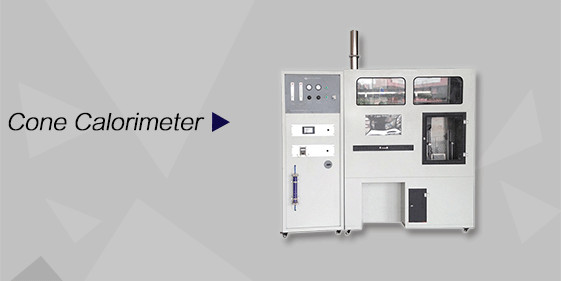
Cone Calorimeter
The import of American VTEC, cone calorimeter ultra high cost performance
more
-
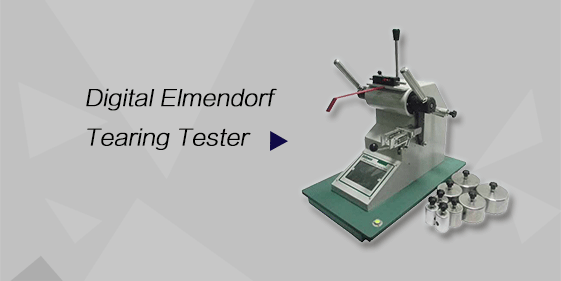
Digital Elmendorf Tearing Tester
Pendulum method test material tear strength, operating more simple, more accurate data
more
-
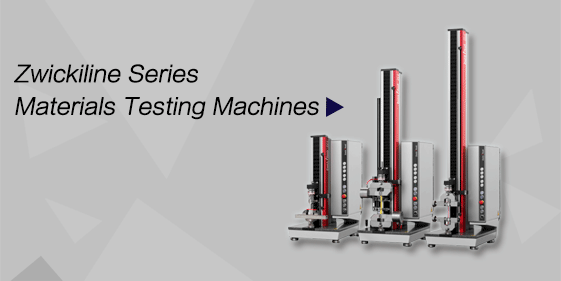
ZwickiLine Materials testing machines
Top of the world's leading universal material testing machine
more
Fan Energy Efficiency Testing System
BACK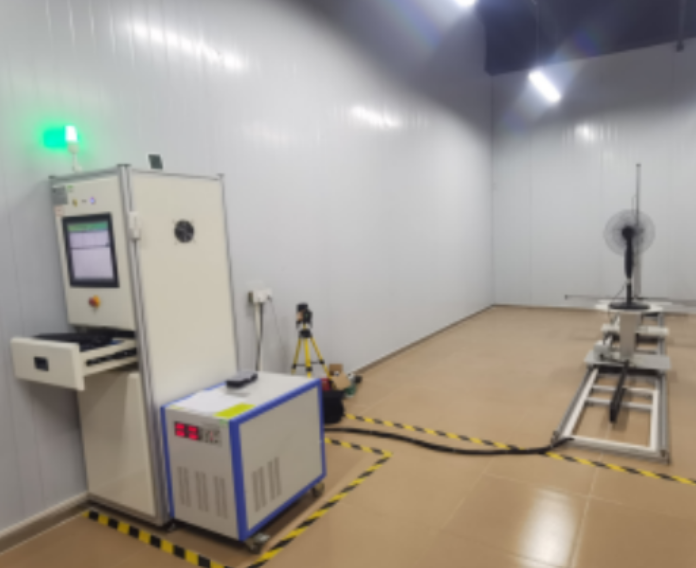


Standards:
Applications:
Product Information:
The system mainly consists of a chamber body, test screen, control system, and airflow acquisition system. It adopts a Mitsubishi PLC (Japan) combined with an industrial computer control system, and is operated via a 17-inch touchscreen display for test parameter setting and data visualization.It supports XYZ three-axis motion control, including movement distance, speed, and test height. It also measures airflow, temperature, humidity, rotational speed, voltage, current, and power.All test data can be automatically stored and exported via USB.
Product Size Range
|
Product Type |
Size Range (mm) |
|
Table Fan |
250 / 300 / 350 / 400 / 450 |
|
Ceiling Fan / Decorative Ceiling Fan |
Optional (not standard) |
|
Floor Fan |
300 / 350 / 400 / 450 |
|
Oscillating Fan |
300 / 350 / 400 / 450 |
|
Bladeless Fan |
300 / 350 / 400 / 450 |
|
Column Fan / Tower Fan |
300 / 350 / 400 / 450 |
|
Traditional Fan |
300 / 350 / 400 / 450 |
Main Components
1. Chamber body (provided by the customer)
2. Temperature and humidity control system (provided by the customer)
3. Air velocity measurement motion mechanism
4. Anemometer (air velocity measurement system)
5. Control system
Chamber Specification
1. External chamber size:
6.5 m × 6.5 m × 4 m outer wall; internal test screen space is 4.5 m × 4.5 m × 3 m.
Material used: modular structure, using 50 mm thick insulation board with high fire-resistance grade fireproof panels, surface electrostatic spraying.
Lighting installation position: four lamps are installed on the test top panel and on the modular 6 m inner wall of the test chamber.
Lighting brightness and power: power 60 W, illuminance 12.000 lux.
2. Temperature and humidity control system:
Air-conditioning constant temperature method, wall-mounted type.
Ensure indoor environmental temperature control: 20 ± 5°C (air conditioner to be installed by customer, optional part).
3. Air velocity test motion mechanism:
Aluminum profile steel structure assembly.
A servo-driven ball screw and guide rail are used to drive the test support.
The central control system controls the longitudinal and transverse transmission mechanisms to perform airflow testing on test samples.
4. Air velocity measurement system:
Four groups of air velocity testers are used for fixed-point airflow collection.
Data transmission is carried out via RS485 communication method.
4-channel independent control and independent output.
Positioning is carried out through XYZ motion coordinates.
5. Central control system:
Independent control cabinet, using Mitsubishi PLC control (Japan), 17-inch touchscreen display for setting and displaying related test parameters and data.
Through the control system, X, Y, Z three-axis movement distance, movement speed, test height, airflow, temperature/humidity, speed, voltage, current, power and other parameters are set and collected. Test data can be exported and printed via USB.
Main Technical Specifications
| No. | Item | Specification |
|---|---|---|
| (1) | Test station | Single station |
| (2) | Control mode | PLC + 17-inch touchscreen display |
| (3) | Drive system | Servo motor drive |
| (4) | Applicable test types | Table fans, floor fans, etc. |
| (5) | Test travel range | 0–2000 mm |
| (6) | Measured parameters | Air velocity, air volume, voltage, current, power |
| (7) | Power supply | AC 220V, 2.5 kW |
| (8) | Configuration | Computer + inkjet printer |
| (9) | Operating system | Windows 10 |
| (10) | Temperature range | 0–50°C (Accuracy: ≤ ±0.5°C) |
| (11) | Humidity range | 0–100% RH (Accuracy: ≤ ±2% RH) |
| (12) | Air velocity range | 0–20 m/s (Accuracy: ≤ ±0.01 m/s + 2% of reading) |
| (13) | Current range | 0–10 A (Accuracy: ≤ ±0.5%) |
| (14) | Voltage range | 0–300 V (Accuracy: ≤ ±0.5%) |
| (15) | Power range | 0–2000 W (Accuracy: ≤ ±0.5%) |
| (16) | Vertical lifting mechanism | Adjustable platform height 550–1300 mm |
| (17) | Test distance adjustment | 550–1550 mm from air volume measurement frame |
| (18) | Horizontal & centering adjustment | ±15° |
| (19) | Air volume measurement sensor | Vane-type anemometer (impeller type, ≤50–100 mm diameter), sensitivity ≥ 0.15 m/s, max range 20 m/min |
| (20) | Increment adjustment range | 0–100 mm |
| (21) | Installation space requirement | ≥ 45 m² |
