Search keywords:
product name, product type, model number,
test method, manufacturer, technique, application
-
Cone Calorimeter
The import of American VTEC, cone calorimeter ultra high cost performance
more
-
Digital Elmendorf Tearing Tester
Pendulum method test material tear strength, operating more simple, more accurate data
more
-
ZwickiLine Materials testing machines
Top of the world's leading universal material testing machine
more
Mask Respiratory Resistance Tester
BACK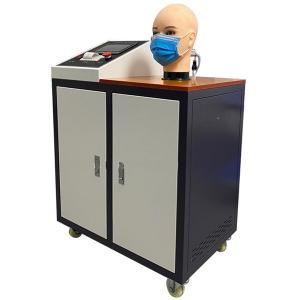


Standards:
Applications:
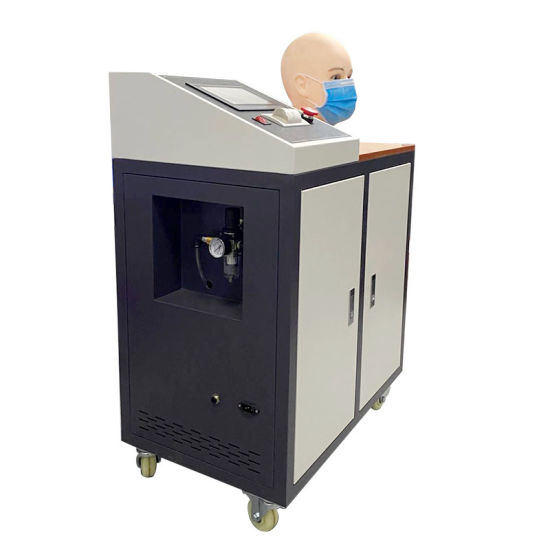
The respiratory resistance tester is used to determine the inspiratory and expiratory resistance of respirator and mask protective equipment under specified conditions. It applies to do the relevant detection and inspection for the national labor protection equipment inspection agencies, masks manufacturers of ordinary masks, dust masks, medical masks, and anti-haze masks products.
The Mask Respiratory Resistance Tester is applicable to respiratory resistance evaluation across the following industries and products:
(1) Medical and Healthcare Industry: surgical masks, medical face masks, N95/FFP masks, disposable masks — testing inhalation and exhalation resistance
(2) Personal Protective Equipment Industry: dust masks, anti-fog masks, respirators — evaluation of airflow resistance and wearer comfort
(3) Quality Control: production batch verification, mask material compliance testing for breathing resistance standards
(4) Research and Development: development of new mask and respirator materials, optimization of airflow and comfort
(5) Third-Party Testing Laboratories: certification testing, laboratory evaluation of mask respiratory resistance
The instrument is widely used for product development, production quality control, R&D, and laboratory testing.
Product Information:
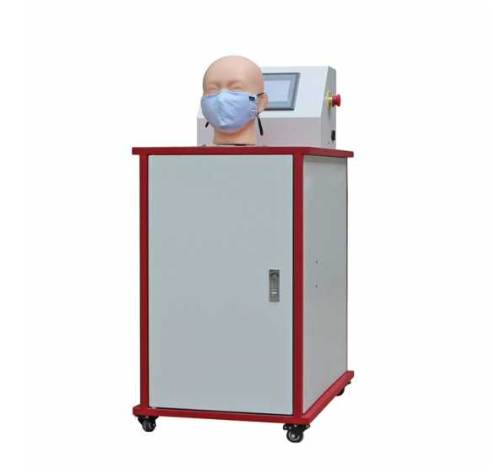
The Mask Respiratory Resistance Tester is designed to measure the inhalation and exhalation resistance of respirators and masks under controlled conditions. The instrument simulates real human breathing through a 3D-printed standard head mold and accurately measures flow resistance at specified airflow rates. It provides precise evaluation of mask performance, including ordinary masks, dust masks, medical masks, and anti-fog respirators, and is suitable for both manufacturers and national inspection agencies.
Standards:
GB 19083.
GB 2626.
GB/T 32610.
42 CFR Part 84
JIS/T 8151
EN 149.
EN 12941.
EN 14594.
NFPA 1972
Technical Parameters:
| Item | Specification |
|---|---|
| Inhalation Flow Rate | 30 L/min, 95 L/min |
| Exhalation Flow Rate | 160 L/min |
| Flow Impact Test Rate | 300 L/min |
| Flow Sensor | Thermal mass flow meter, high sensitivity |
| Micromanometer Range | -1000 Pa – 1000 Pa, accuracy 1 Pa |
| Head Mold | 3D-printed standard head, simulates human inhalation/exhalation |
| Suction Pump | 40–100 L/min |
| Ventilation Volume | Constant 85 L/min |
| Data Logger | Graphic dot-matrix LCD, 4M memory, Chinese/English interface |
| Power Supply | AC 220 V, 50 Hz |
Accessories:
Main testing unit with suction and ventilation system
3D-printed standard head mold
Inhalation and exhalation tubing systems
Thermal mass flow sensor and micromanometer sensor
Built-in thermal printer
Data logger and controller
Power cable
Operation manual
Calibration certificate
Features:
The instrument consists of gas source that can regulates the flow, standard specifies of small human head mold, inspiratory and expiratory line system, a respiratory resistance measurement system, and so on.
Flow sensor has high sensitivity and minimal start flow. Flow
sensor chip uses thermal mass flowmeter, no temperature and
pressure compensation to ensure the sensor's high-precision measurement.
Multiple sensors are integrated on a single flow sensor chip, resulting in the sensor range greatly improved.
The zero stability of the flow sensor is high, with full range of high stability, with full range of high accuracy and excellent in repeatability, with low power consumption, low voltage loss and fast response characteristics.
Data recorder uses graphics dot matrix LCD with resolution of 128 × 64. entire Chinese interface, easy to operate.
There are 4M memory in the data recorder for record the measured value.
Micro-pressure gauge sensor adopts two-wire system, has high precision, good stability; And adopts anti-explosion design for safe and reliable.
Micro-pressure gauge sensor range, zero external continuously to adjustable, damping adjustable, no mechanical moving parts, less maintenance work.
Adopting special air-switching components to ensure that the two sets of inspiratory and expiratory piping system replacement is quick and easy.
Digital show the respiratory resistance, with zero calibration, accuracy calibration and over-range alarm function.
Equipped with a silent air compressor and air filter to ensure that the test environment is quiet and tidy.
Meeting with the latest national standards, compatible with labor and daily protective masks.
Maintenance:
1. Do not carry it by the bottom of the control box during transportation to avoid being crushed.
2. Please wipe the electroplated part with oil to prevent rust and keep bright.
3. After the test, please wipe the machine clean, and regularly oil the active fulcrum to increase its service life and sensitivity. (The lubricating oil can be mixed with butter and a little engine oil)
4. Please wipe the panel (control box or display) with a dry cloth to prevent it from getting wet, so as not to damage the IC electronic parts.
5 Please place all fixtures and joint accessories properly, and wipe off the anti-rust oil to prevent rust.
6 After the machine is transported and placed, the foundation and the level must be fixed steadily.
7. Please input power as indicated. (Note that the phase of the input power supply must be correct, otherwise leakage will occur)
8 Ground wire Please perform ground output according to specifications to avoid danger of leakage and signal interference.
9 Do not pull out the plug during work.
10 Please operate and maintain by professional personnel. In case of major problems, please inform our maintenance department to dispatch personnel to handle it. Do not dismantle parts by yourself to avoid causing major losses.
FAQ:
1. What is this product?
The Mask Respiratory Resistance Tester measures the airflow resistance of protective masks and respirators under inhalation and exhalation conditions. It evaluates the ease of breathing and the efficiency of filtration media, providing objective data for product certification and quality control.
2. What is it used for?
It is used to assess the respiratory comfort of surgical masks, N95/KN95 respirators, and other protective masks. It ensures that masks meet regulatory standards for breathing resistance while maintaining filtration performance.
3. How does it work?
The mask is mounted on a standardized test fixture connected to an airflow system. The tester simulates breathing at defined flow rates, measuring the differential pressure across the mask in real time. Results reflect the inhalation and exhalation resistance, indicating wearer comfort and compliance with standards.
4. Why is it important?
Excessive respiratory resistance reduces comfort and can cause fatigue during prolonged use. Accurate testing ensures that protective masks provide effective filtration without compromising wearer safety or comfort, supporting regulatory compliance and product development.
5. Which industries use it?
Used by medical device manufacturers, PPE producers, testing laboratories, regulatory agencies, and research institutions to verify mask performance, optimize materials, and maintain consistent production quality.