



Search keywords:
product name, product type, model number,
test method, manufacturer, technique, application
-
Cone Calorimeter
The import of American VTEC, cone calorimeter ultra high cost performance
more
-

Digital Elmendorf Tearing Tester
Pendulum method test material tear strength, operating more simple, more accurate data
more
-

ZwickiLine Materials testing machines
Top of the world's leading universal material testing machine
more
Textile Point-to-Point Resistivity Tester
BACK

Standards:
National Standard GB12014-2009 "Antistatic Clothing"
Applications:
Product Information:
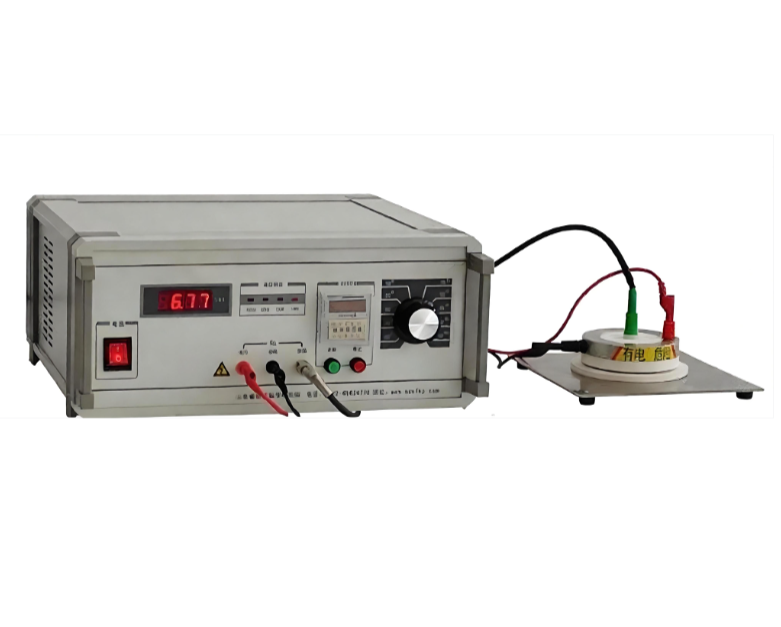
It is an essential instrument for the "Special Labor Protective Equipment Safety Certification" (LA Certification) and the "Special Labor Protective Equipment Production License". It is used to detect the point-to-point resistivity of anti-static clothing.
Main Technical Parameters of the Textile Point-to-Point Resistivity Tester:
Measurement range: Ω ~ Ω (The specific range values need to be supplemented here.)
Error of high-resistance meter indication: ±1%
Voltage: 100V DC
Features of the Textile Point-to-Point Resistivity Tester:
The principle of this instrument is to apply a test voltage of 100 V to the sample for 15 s. The weak current flowing through the sample is sampled and amplified by a standard resistor, and then read from the high-resistance meter. The resistance value is directly displayed in digital form, featuring high precision, rapid display, good stability, and convenient reading.
FAQs:
1. What is the Textile Point-to-Point Resistivity Tester used for?
It is used to measure the point-to-point electrical resistance of textile materials.
2. What properties can it evaluate?
It can evaluate the electrical resistance, conductivity, and electrostatic behavior of textile materials.
3. What types of textiles can be tested?
It can be used for various woven, knitted, nonwoven, and conductive textile materials.
4. Why is point-to-point resistance testing important?
It helps determine whether a textile has suitable electrical properties for electrostatic control and related applications.
5. Where is this tester commonly used?
It is commonly used in textile laboratories, research and development, quality control, and production inspection.