




Search keywords:
product name, product type, model number,
test method, manufacturer, technique, application
-
Cone Calorimeter
The import of American VTEC, cone calorimeter ultra high cost performance
more
-
Digital Elmendorf Tearing Tester
Pendulum method test material tear strength, operating more simple, more accurate data
more
-

ZwickiLine Materials testing machines
Top of the world's leading universal material testing machine
more
Dental material color stability tester
BACK

Standards:
YY0270.1-2011: Dentistry - Base polymers - Part 1: Denture base polymers YY/T0631-2008: Dental materials - Determination of colour stability ASTM C1442: Standard Practice for Conducting Tests on Sealants Using Artificial Weathering Apparatus ASTM C1501: Standard Test Method for Color Stability of Building Construction Sealants as Determined by Laboratory Accelerated Weathering Procedures ASTM D3424: Standard Practice for Evaluating the Relative Lightfastness and Weatherability of Printed Matter ASTM D5071: Standard Practice for Exposure of Photodegradable Plastics in a Xenon Arc Apparatus ASTM D6695: Standard Practice for Xenon-Arc Exposures of Paint and Related Coatings ASTM G151: Standard Practice for Exposing Nonmetallic Materials in Accelerated Test Devices that Use Laboratory Light Sources ASTM G155: Standard Practice for Operating Xenon Arc Light Apparatus for Exposure of Non-Metallic Materials COLIPA in-vitro UVA (2011): Method for in vitro determination of UVA protection EPA/ASTM E896: Standard Test Method for Conducting Aqueous Direct Photolysis Tests GB/T 8427: Textiles - Tests for color fastness - Color fastness to artificial light: Xenon arc fading lamp test GB/T 16422: Plastics -- Methods of exposure to laboratory light sources -Part 2: Xenon-arc lamps ICH Q1B: Q1B Photostability Testing of New Drug Substances and Products ICH Q5C: Stability testing of Biotechnological / Biological products ISO 4049: Dentistry -- Polymer-based restorative materials ISO 7491: Dental materials -- Determination of colour stability ISO 4892-1: Plastics - Methods of exposure to laboratory light sources - Part 1: General guidance ISO 4892-2: Plastics - Methods of exposure to laboratory light sources - Part 2: Xenon-arc sources
Applications:
The applications of color stability testers for dental materials are mainly reflected in the following aspects:
Quality Control: Helping manufacturers screen materials with resistant color changes and improve product durability.
Clinical Decision Making: Assisting dentists in selecting aesthetically pleasing and durable restorative materials, reducing revision rates.
Compliance and Certification: Meeting the testing requirements of industry standards such as YY/T 0631-2008.
These testers assess the color changes of dental materials under simulated environmental conditions, such as light, temperature, and humidity. During the test, the dental material sample is placed in the tester and exposed to predetermined environmental conditions. The tester records the initial color of the sample and remeasures the color at certain time intervals. By comparing the initial color and the subsequent measured color, the color stability of the dental material can be evaluated.
Product Information:
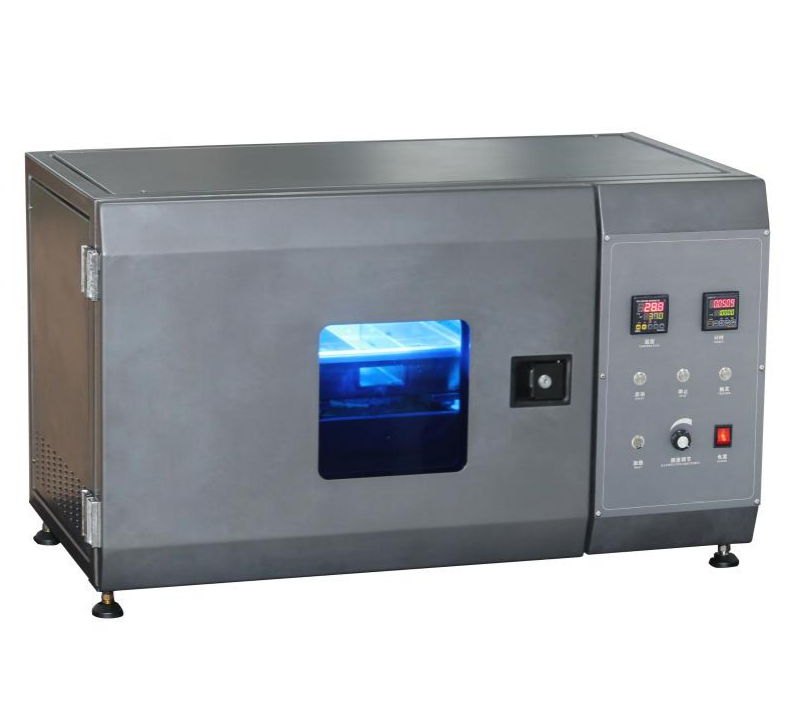
The Dentistry Base Polymer Search Stability tester evaluates color stability of dental base polymers (used in restorations like dentures) under varied conditions (light, temp, humidity). It records initial and subsequent color of samples to assess changes. This helps dentists and technicians choose better materials, improving repair effectiveness and durability, and aids manufacturers in enhancing product performance.
Feature
The dental material color stability tester has the following features:
Simulated Environmental Conditions: By simulating the light, temperature, and humidity conditions of the oral cavity, the sample undergoes accelerated aging treatment, and its color change is measured periodically to evaluate the material's color stability.
Ease of Operation: The instrument is user-friendly, easy to operate, and convenient to maintain.
High Sensitivity: Color change is measured using spectrophotometry, with repeatability accuracy reaching ΔE*ab ≤ 0.015. ensuring sensitive detection of color changes.
Environmental Stress Simulation: By setting specific periods (e.g., several hours to several days), changes in material color stability are observed.
Color Stability Evaluation Indicators: Auxiliary parameters include yellowness index (YI) and whiteness index (WI), used to quantify specific color shifts.
These features make the dental material color stability tester of significant application value in the research, development, production, and clinical application of dental materials.
Technical parameter
| Project | Details |
|---|---|
| Control System | PLC |
| Operation Interface | Color touch screen with Chinese-English switching |
| Light Source | Illuminance of 150.000 lx with an accuracy deviation not exceeding 10% |
| Color Temperature Range | 5000K - 10000K |
| Filter | Light transmittance greater than 90% |
| Test Chamber | Water temperature range: 0 - 99°C; Test temperature: 37°C; Adjustable water temperature with temperature display |
| Clamp | 304 stainless steel clamp with an outer diameter of 50MM and a thickness of 0.5MM |
| Polyurethane Film | Thickness ranging from 50μm to 0.5MM |
| Built-in Dial Indicator of the Equipment | Range: 0 - 25.5MM; Precision: 0.01MM |
| Standard | 15L constant-temperature tank with a temperature range of 0 - 99°C |
Accessoriess
The main accessories of a dental material color stability tester include the following, each playing a crucial role in the testing process:
Sample clamp: Typically made of 304 stainless steel, it can hold samples with a diameter of 50mm, ensuring stable fixation during testing.
Filter: A standard ultraviolet filter has a filtration efficiency of less than 1% for light wavelengths below 300nm and a transmittance of more than 90% for light wavelengths above 370nm. It is used to filter out unwanted light waves, ensuring the accuracy of test results.
Xenon lamp: As the standard light source, an air-cooled, full solar spectrum long-arc xenon lamp has a color temperature in the range of 5000~10000K and a lifespan of approximately 1500 hours, providing stable and near-natural light illumination conditions for testing.
Blackboard thermometer: Used to monitor and record temperature changes during testing, ensuring the testing environment meets standard requirements.
Illuminance meter: Used to measure and adjust the illuminance received by the sample, ensuring the illuminance is within the range of 150000lx±15000lx, meeting testing standards.
Circulating water bath system: Includes a circulating water tank and water pipes, used to maintain the sample water bath temperature within the range of 37±1℃ (or 37±5℃) to simulate the oral cavity temperature environment.
Standard wrenches: Such as 17-19 size wrenches, used for installing and adjusting fasteners in the equipment.
Other accessories: Depending on the specific equipment model and configuration, may also include product certificates, instruction manuals, delivery notes, acceptance slips, and other documents, as well as auxiliary accessories such as power cords and water pipes.
Test Procedures
The operation method of a dental material color stability tester includes the following steps:
Prepare the equipment and materials, including the tester, the dental material to be tested, a standard light source, and a standard color chart.
Place the dental material to be tested under the standard light source for pretreatment to simulate the lighting conditions in actual use.
Place the dental material to be tested on the sample holder of the tester and adjust the position and angle of the tester to ensure the accuracy and reliability of the test results.
Select a suitable standard color chart for comparison with the color of the dental material to be tested.
Set the test parameters, such as test time and light source type.
Start the test and record the color change data during the test.
Process and analyze the data to calculate key parameters such as the color difference value and color difference change rate of the dental material to be tested.
Compare the test results with the requirements of actual applications to evaluate the color stability performance of the dental material to be tested in actual use.
Conclusion
The Dentistry Base Polymer Color Stability Tester is an essential instrument for evaluating the long-term aesthetic performance of dental base polymers under simulated oral and environmental conditions. By accurately reproducing the effects of light exposure, temperature, and humidity, it provides reliable and quantitative data on color changes over time. With high measurement sensitivity, standardized test compliance, and user-friendly operation, the tester supports material selection, quality control, and product development. It helps dentists reduce restoration failures, assists manufacturers in improving material formulations, and ensures compliance with international and domestic standards, making it a valuable tool across dental research, production, and clinical applications.
FAQ
1. What materials can be tested?
Dental restoration materials, including composites, dental ceramics, acrylic denture bases, resin coatings, and other dental polymers. The tester simulates both light exposure and oral humidity conditions.
2. How is color stability measured?
Color changes are evaluated by comparing the test sample to a reference or baseline using CIE color space metrics (ΔE values), under controlled light intensity and water bath temperature.
3. What is the purpose of the xenon lamp?
The 1500W long-arc xenon lamp simulates natural daylight, providing realistic light exposure to assess the color stability of dental materials.
4. What are the temperature and light conditions for testing?
The water bath maintains 37°C ±5°C, and the light intensity is digitally controlled at 150,000 LX ±15,000 LX to mimic oral environmental conditions.
