




Search keywords:
product name, product type, model number,
test method, manufacturer, technique, application
-
Cone Calorimeter
The import of American VTEC, cone calorimeter ultra high cost performance
more
-
Digital Elmendorf Tearing Tester
Pendulum method test material tear strength, operating more simple, more accurate data
more
-

ZwickiLine Materials testing machines
Top of the world's leading universal material testing machine
more
Textile material feel style evaluation instrument
BACK

Standards:
T/CTES 1017-2019: Textile Hand Feel Evaluation Standard FZ/T 01171-2023: Chinese Textile Hand Feel Instrument Test Method ISO 9073-7: Textiles – Nonwovens – Determination of fabric hand properties (analogous international reference)
Applications:
The instrument is widely used in:
Textile R&D: Quantifying fabric hand feel for product development.
Quality Control: Monitoring batch-to-batch consistency in textiles.
Apparel and Home Textiles: Assessing fabrics for clothing, bedding, and upholstery.
Nonwoven and Technical Fabrics: Evaluating stiffness and surface smoothness.
Educational and Research Institutions: Studying tactile properties of fibers, yarns, and fabrics.
Regulatory and Standards Organizations: Verifying compliance with hand-feel specifications.
Product Information:
The Textile Material Feel Style Evaluator is a precision instrument designed to objectively assess the tactile properties of fabrics. By simulating the mechanical touch of human fingertips, the system evaluates softness, stiffness, smoothness, tightness, and overall hand feel. It collects force-displacement data during compressive, bending, frictional, and tensile deformations to generate quantitative indicators for fabric design, production control, and quality assurance.
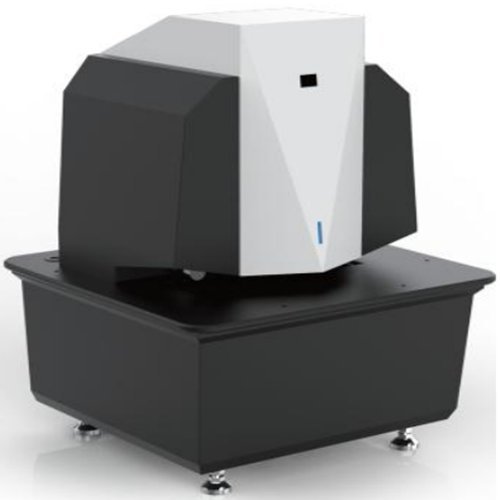
Developed jointly with Donghua University, the instrument incorporates bionic design principles and patented technology (Patent No.: ZL 201821326568.2) to provide reliable and reproducible tactile assessment.
Features
Bionic Design: Cylindrical indenter simulates human fingertip touch with fine textures resembling fingerprints.
Three-Point Indenter Arrangement: One on top, two on the bottom, mimicking the natural way fingers contact fabric.
Multi-Deformation Analysis: Measures compressive, bending, frictional, and tensile responses.
Quantitative Output: Provides indicators for softness, stiffness, smoothness, tightness, and overall hand feel.
Single-Measurement Multi-Indicator: Evaluates multiple tactile parameters in a single test.
High Precision and Stability: Advanced components ensure reproducible results.
Easy Operation: Simple interface for quick testing with minimal setup.
After-Sales Support: Complete spare parts, prompt technical support, and compliance with updated standards.
Technical Parameters
| Parameter | Specification |
|---|---|
| Test Indicators | Softness, Stiffness, Smoothness, Tightness, Comprehensive evaluation |
| Sample Size | 50 × 500 mm |
| Sample Thickness | ≤ 4 mm |
| Single Measurement Time | ~4 minutes |
| Test Environment | 20 ± 3 ℃; 60 ± 5 % RH |
| Dimensions (W×D×H) | 500 × 480 × 780 mm |
| Power Supply | AC 220V ±10%, 50Hz |
| Power Consumption | 100 W |
| Instrument Weight | 50 kg |
Accessories
Cylindrical indenter set with fingerprint texture
Adjustable sample holder
Force-displacement data acquisition system
Software for quantitative analysis and report generation
Calibration tools and manuals
Test Procedures
Place the fabric sample on the holder and adjust the indenter position.
Start the test via the control interface; the instrument automatically applies compressive, bending, frictional, and tensile deformations.
Data is recorded for all measured parameters and displayed in real time.
Analyze results using the included software to evaluate fabric hand feel and overall tactile style.
After testing, clean the indenter and sample holder to prevent residue build-up.
Perform periodic calibration to ensure continued accuracy of force measurements and indenter positioning.
Conclusion
The Textile Material Feel Style Evaluator offers an objective, scientific approach to fabric hand-feel assessment by accurately simulating human fingertip touch. Through bionic design and multi-deformation analysis, it converts subjective tactile sensations into reliable quantitative indicators. Compliant with relevant textile standards, the system supports fabric development, quality control, and academic research across a wide range of textile applications. Its high precision, efficient testing process, and intuitive operation make it an effective tool for improving product consistency, optimizing material selection, and enhancing overall textile comfort and performance.
FAQ
1. How does "Bionic Design" improve test accuracy compared to traditional stiffness testers?
Traditional testers often measure only one property (like bending length). The bionic indenter mimics the fingerprint’s texture and the finger's geometry, allowing you to capture the "micro-friction" and "surface softness" that a simple metal blade cannot detect.
2. Can this instrument test very thick fabrics like heavy carpets?
This model is optimized for materials up to 4 mm in thickness. For thicker materials, the compression and bending curves may exceed the sensor’s standard range. It is best suited for apparel, home textiles, and thin nonwovens.
3. Why does the test take 4 minutes?
Unlike a simple tensile test, this instrument performs a complex sequence of multiple deformations. It must move slowly and precisely to capture the subtle variations in force required to calculate softness and smoothness accurately.
4. Does the direction of the fabric (warp vs. weft) matter during the test?
Yes. Fabric feel can vary significantly depending on the yarn direction. For a comprehensive evaluation, you should test samples cut in both the warp and weft directions to understand the full tactile style of the material.
