




Search keywords:
product name, product type, model number,
test method, manufacturer, technique, application
-
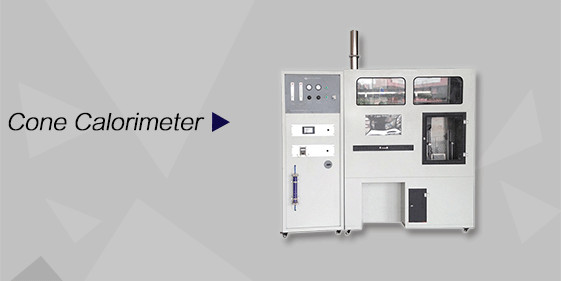
Cone Calorimeter
The import of American VTEC, cone calorimeter ultra high cost performance
more
-
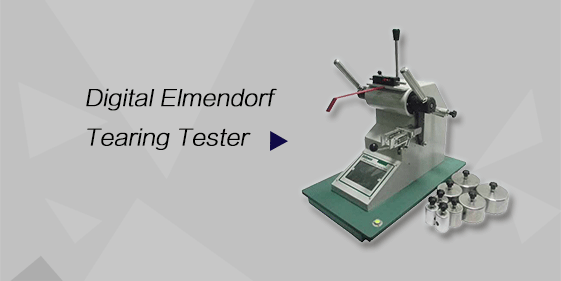
Digital Elmendorf Tearing Tester
Pendulum method test material tear strength, operating more simple, more accurate data
more
-
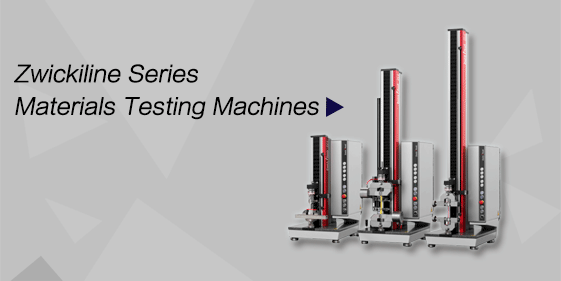
ZwickiLine Materials testing machines
Top of the world's leading universal material testing machine
more
Electronic Single Fiber Strength Meter
BACK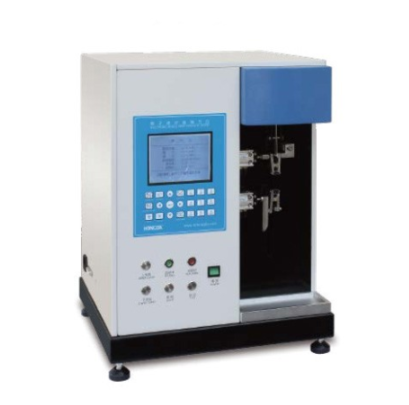


Standards:
Applications:
This instrument is widely used in:
Textile fiber research and development laboratories.
Quality control in cotton, wool, silk, synthetic, and specialty fiber production.
Determination of single fiber properties for spinning, yarn production, and composite materials.
Educational institutions for teaching fiber mechanical properties.
Textile testing agencies and standards compliance verification.
Product Information:
The Electronic Single Fiber Strength Meter is a precision instrument designed to measure the mechanical properties of single fibers, including breaking strength, elongation, and modulus. It integrates high-precision pneumatic clamps, microcomputer control, and real-time data acquisition to provide accurate, repeatable, and reliable fiber testing for research, quality control, and textile manufacturing applications.
Standards
The Electronic Single Fiber Strength Meter complies with:
GB/T 14337: Single fiber strength determination
GB/T 9997: Cotton fiber testing
GB/T 13835.5: Wool fiber testing
GB/T 21120: Silk fiber testing
ISO 5079: Textile – single fiber strength determination
ISO 11566: Wool fiber testing
ASTM D3822: Standard test method for tensile properties of single fibers
BS 4029: British single fiber testing standard
Features
(1) Microcomputer-controlled system with online communication capability.
(2) High-precision, high-speed force measurement system for accurate data.
(3) Patented pneumatic clamps providing constant clamping force to prevent fiber damage or slippage.
(4) Low-noise and stable drive system with precision ball screws and stepper motors.
(5) Direct USB connection for data transfer, report generation, graphics, and database management.
(6) Large-screen LCD with Chinese interface and printer output for test reports and curves.
(7) Memory function for storing up to 300 test data sets.
(8) LED-lit operating area for better visibility and sample handling.
Parameters
| Parameter | Specification |
|---|---|
| Mode | Constant Rate of Elongation (CRE) |
| Clamping Method | Pneumatic clamping |
| Force Measurement Range | 0~200 cN |
| Resolution | 0.01 cN |
| Measurement Accuracy | ±0.5% |
| Gauge Length | 5~60 mm (digital setting) |
| Maximum Elongation | 130 mm |
| Tensile Speed | 2~100 mm/min (digital setting) |
| Test Modes | Constant speed tensile, Load at specified elongation, Elongation at specified load, Creep, Initial modulus |
| Data Output Methods | LCD display (Chinese menu), Printer output of test reports and tensile curves |
| Printer Type | 24-pin dot-matrix |
| Power Supply | AC 220V ±10%, 50 W |
| Dimensions (H×W×D) | 450×510×580 mm |
Accessories
Standard package includes: main unit, pneumatic clamp set, power cable, printer, and user manual.
Optional software for enhanced data analysis and export.
Calibration fiber standards for routine verification.
Test Procedures
(1) Prepare and condition fiber samples according to standard requirements.
(2) Mount a single fiber in the pneumatic clamps.
(3) Set gauge length, tensile speed, and test mode on the LCD interface.
(4) Start the test and monitor the force-elongation curve.
(5) View results on the screen and/or print test report with tensile curve.
(6) Repeat for additional samples, storing data in memory as needed.
Maintenance
Regularly inspect and clean pneumatic clamps to prevent contamination.
Calibrate the force measurement system periodically using standard fibers.
Keep the instrument in a dust-free, dry environment.
Ensure stable AC power to prevent measurement errors.
Avoid mechanical shocks and handle the LCD and printer with care.
