




Search keywords:
product name, product type, model number,
test method, manufacturer, technique, application
-
Cone Calorimeter
The import of American VTEC, cone calorimeter ultra high cost performance
more
-
Digital Elmendorf Tearing Tester
Pendulum method test material tear strength, operating more simple, more accurate data
more
-
ZwickiLine Materials testing machines
Top of the world's leading universal material testing machine
more
Sock Stretch Tester
BACK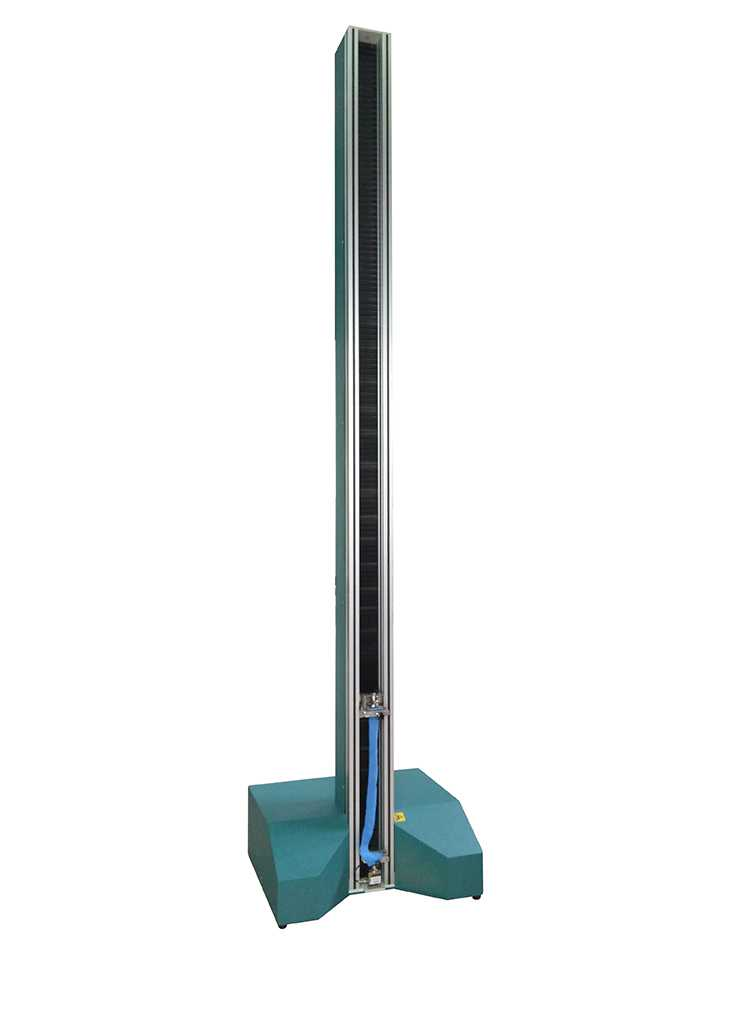


Standards:
Applications:
The tester is widely used in:
(1) Hosiery and sock manufacturing: evaluating elongation and elasticity performance
(2) Swimwear and activewear production: testing tensile and stretch properties
(3) Knitted garment industry: assessing pantyhose, leggings, and belly pants
(4) Textile R&D: developing new fabrics with desired elasticity and recovery
(5) Quality control laboratories: verifying compliance with garment stretch standards
(6) Third-party testing and certification laboratories: product performance validation
Product Information:
The Sock Stretch Tester is a precision instrument designed to evaluate the elongation and elastic recovery of hosiery, swimwear, pantyhose, knitted pants, and other stretchable garments. It measures both longitudinal (vertical) and transverse (horizontal) stretch, providing accurate data on tensile behavior, plastic deformation, and elastic recovery. The system combines a Siemens PLC control unit with ergonomic design and adjustable parameters for reliable, repeatable testing.
Standards
Chinese Standards:
FZ/T 70006: Hosiery tensile performance
FZ/T 73001: Knitted fabrics – General tensile test
FZ/T 73011: Knitted pants – Stretch and recovery test
FZ/T 73013: Swimwear – Stretch and elongation evaluation
FZ/T 73029: Pantyhose – Tensile properties
FZ/T 73030: Hosiery – Elastic recovery test
International Standards:
ISO 20932-1: Textiles – Determination of elastic recovery of knitted fabrics – Part 1: Strip method
ISO 13934-1: Textiles – Tensile properties of fabrics – Part 1: Strip method
ASTM D4964: Standard Test Method for Stretch and Recovery of Knitted Fabrics
ASTM D2594: Standard Test Method for Elastic Properties of Yarn and Fabric
EN 14704: Textiles – Knitted fabrics – Determination of elastic elongation and recovery
BS 3049: Hosiery – Test methods for elongation, stretch, and recovery
Product Features
Ergonomic design: Control panel located at ~100 cm height for comfortable operation
Vertical stretching structure: Facilitates sample installation and testing with small horizontal footprint
Siemens PLC control system: Ensures precise, stable, and reliable testing
Multiple test modes: Constant tensile, fixed elongation, constant elongation rate, and timed elongation
Integrated measurement: Records elongation force, elastic recovery, and plastic deformation
Pre-tensioning and manual fixture: Ensures consistent sample setup for accurate testing
Real-time display: LCD screen shows tensile speed, force, elongation, and test conditions
Technical Specifications
| Parameter | Specification |
|---|---|
| Tensile Speed | 20–250 mm/s (adjustable) |
| Test Movement | 100–3000 mm (customizable up to 3400 mm) |
| Rated Tension | 0.1–200 N (adjustable) |
| Sample Display | Side-set LCD controller, real-time display of test results |
| Structure Dimensions | 1000 × 700 × 3500 mm (L×W×H) |
| Instrument Weight | 120 kg |
| Control System | Siemens PLC |
| Test Modes | Constant tensile, fixed elongation, constant elongation rate, timed elongation |
| Accessories | Pre-tensioning weight, manual fixture |
Test Procedures / Maintenance
Install the sample on the vertical stretching frame using the manual fixture and pre-tensioning weights.
Set the test mode (constant tensile, fixed elongation, etc.) via the LCD controller.
Adjust tensile speed, rated tension, and stretch holding time as required.
Start the test; the system records elongation, elastic recovery, and plastic deformation in real time.
After testing, remove the sample and clean the fixture to avoid residue buildup.
Periodically inspect the tensile system, weights, and controller for accuracy and calibration.
