




Search keywords:
product name, product type, model number,
test method, manufacturer, technique, application
-
Cone Calorimeter
The import of American VTEC, cone calorimeter ultra high cost performance
more
-
Digital Elmendorf Tearing Tester
Pendulum method test material tear strength, operating more simple, more accurate data
more
-
ZwickiLine Materials testing machines
Top of the world's leading universal material testing machine
more
Cantilever Fabric Stiffness Tester
BACK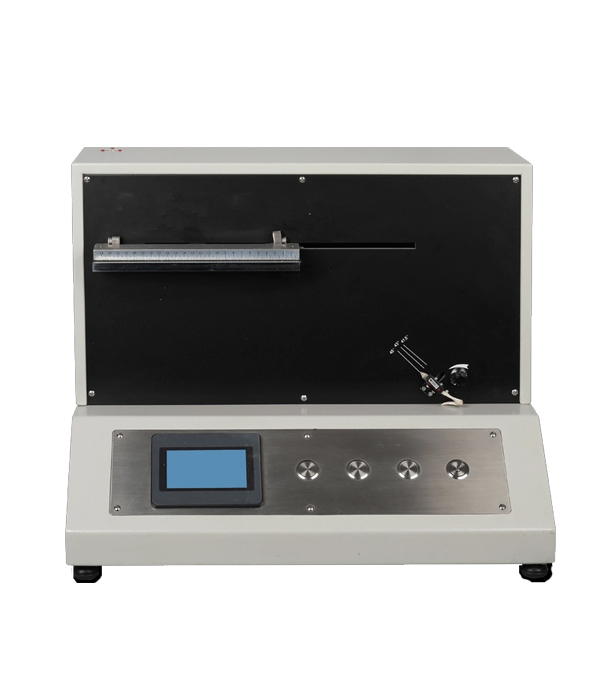


Standards:
Applications:
The tester is widely used in:
(1) Textile and apparel manufacturing: evaluating fabric stiffness for clothing and home textiles
(2) R&D laboratories: developing new fabric blends and coatings
(3) Quality control: batch testing of woven, knitted, napped, or pile fabrics
(4) Technical textiles: industrial fabrics, automotive interiors, and protective materials
(5) Educational institutions: fabric property testing for textile engineering courses
Product Information:
The Cantilever Fabric Stiffness Tester is a precision instrument designed to evaluate the bending height, flexural rigidity, and bending modulus of various fabrics. It provides an accurate, intuitive method to assess stiffness performance for woven, layered, napped, knitted, pile, and other textile materials. The device is equipped with advanced non-contact measurement technology and automated systems to ensure high precision and repeatability.
Standards
ZB WO4003
GB/T 18318 (Textile – Fabric stiffness determination)
ASTM D1388 (Standard Test Method for Stiffness of Fabrics)
ISO 9073-7 (Textiles – Nonwovens – Determination of bending properties)
BS EN 22313 (Textile fabrics – Determination of bending rigidity)
Features
(1) Infrared “stealth” detection system: replaces traditional physical slope measurement for non-contact detection, avoiding sample twist errors.
(2) Adjustable measurement tilt: allows precise control of sample orientation during testing.
(3) Automatic detection system: improves accuracy and minimizes operator error.
(4) Sample pressure plate automatic landing: ensures consistent sample positioning for reliable results.
(5) Computer-controlled interface with LCD display and report printing for efficient operation and documentation.
Technical Specifications
| Parameter | Specification |
|---|---|
| Working Mode | Computer control, infrared stealth slope detection, LCD display, report printing |
| Extension Length Range | 0.5–20.5 cm |
| Measurement Accuracy | 0.01 cm |
| Specimen Size | 2.5 × 25 cm |
| Specimen Pressure Plate Size | 2.5 × 25 cm |
| Sample Platen Advancing Speed | 0.3 cm/s, 0.4 cm/s, 0.5 cm/s |
| Power Supply | AC 220V, 50Hz, 0.12 kW |
| Dimensions | 470 × 290 × 405 mm |
| Weight | 18 kg |
Accessories
Standard specimen pressure plates
Sample fixture clamps
Calibration tools
Data output cables for printing or software integration
Test Procedures
(1) Place the fabric sample on the sample holder and secure with the pressure plate.
(2) Adjust the tilt angle and platen speed according to the testing requirements.
(3) Start the infrared measurement system via computer control.
(4) Record bending height and flexural rigidity; results are displayed on the LCD screen and can be printed.
(5) After testing, clean the sample holder and pressure plate to remove lint or residue.
(6) Perform periodic calibration checks to ensure measurement accuracy.
