




Search keywords:
product name, product type, model number,
test method, manufacturer, technique, application
-
Cone Calorimeter
The import of American VTEC, cone calorimeter ultra high cost performance
more
-

Digital Elmendorf Tearing Tester
Pendulum method test material tear strength, operating more simple, more accurate data
more
-
ZwickiLine Materials testing machines
Top of the world's leading universal material testing machine
more
Protective Clothing Liquid Static Pressure Resistance Tester
BACK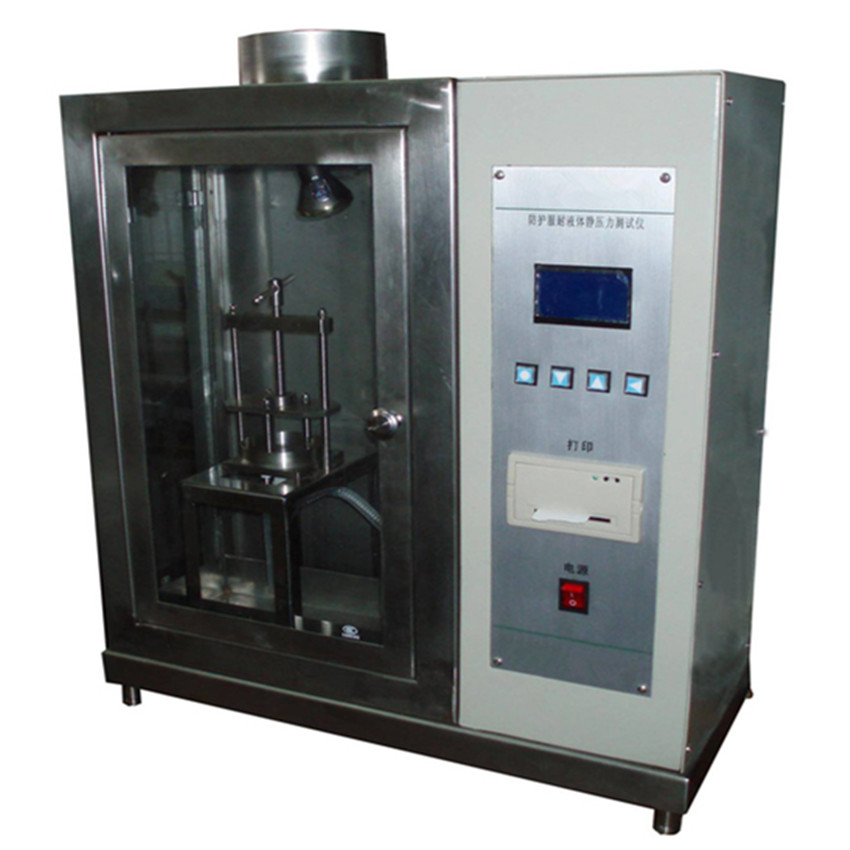


Standards:
GB 24540-2009: Protective Clothing for Acid and Alkali Chemicals – Performance Requirements
Applications:
(1) Protective clothing manufacturers – verify the liquid resistance performance of chemical protective fabrics.
(2) Quality control laboratories – ensure production batches meet GB 24540-2009 standards.
(3) Research and development – assess new fabric materials or treatments for chemical protection.
(4) Third-party testing organizations – certification and compliance testing for chemical protective clothing.
(5) Safety regulators – confirm protective clothing meets statutory safety requirements.
Product Information:
The Protective Clothing Liquid Static Pressure Resistance Tester is designed to evaluate the resistance of breathable chemical protective clothing fabrics against penetration by acidic and alkaline liquids under static pressure. This instrument measures the fabric’s ability to withstand liquid pressure, providing critical performance data for protective apparel in chemical hazard environments.
Parameters
| Parameter | Specification |
|---|---|
| Test Liquid | Acidic and alkaline solutions; e.g., 80% H₂SO₄ |
| Liquid Pressure Rise Rate | 60 ± 3 cm/min |
| Maximum Pressure | >150 mm liquid column (for 80% H₂SO₄) |
| Measurement Range | 0–150 mm liquid column (for 80% H₂SO₄) |
| Sample Size | Diameter 32 mm, taken from finished protective clothing |
Features
(1) Measures fabric resistance to liquid penetration under static pressure accurately.
(2) Provides quantitative evaluation by recording liquid column height at the onset of penetration.
(3) Compatible with various concentrations of acidic and alkaline test solutions.
(4) Simple sample preparation and reproducible testing procedure.
(5) Supports multiple tests per sample for statistical reliability.
Accessories
(1) Sample clamps for fabric mounting.
(2) Acid/alkali solution reservoir.
(3) Pressure control and measurement system.
(4) Test chamber for secure sample placement.
(5) Instruction manual with detailed test procedures.
Test Procedures
(1) Prepare three fabric samples from the finished protective clothing, each with a diameter of 32 mm.
(2) Place the sample in the test chamber so the test liquid contacts it from below.
(3) Apply liquid pressure continuously and steadily at 60 ± 3 cm/min.
(4) Observe the sample and record the liquid column height when the third droplet of liquid appears on the fabric surface.
(5) Repeat the test three times for each sample and calculate the arithmetic average to determine the fabric’s static liquid pressure resistance.
Maintenance Information
(1) Clean the test chamber and liquid reservoir after each use to prevent residue accumulation.
(2) Inspect the pressure control system regularly for leaks or malfunctions.
(3) Calibrate pressure sensors periodically to maintain measurement accuracy.
(4) Use corrosion-resistant materials for all components in contact with acidic/alkaline solutions.
(5) Store the instrument in a dry, ventilated environment and avoid exposure to direct sunlight.
Conclusion
The Protective Clothing Liquid Static Pressure Resistance Tester delivers accurate, reliable, and reproducible measurements of chemical protective fabric performance. It ensures that protective clothing meets safety standards and provides essential data for production, quality assurance, and regulatory compliance.
FAQ
(1) What is this product?
It is a testing instrument that measures the static liquid pressure resistance of chemical protective fabrics.
(2) What is this product used for?
It evaluates the ability of protective clothing fabrics to resist penetration by acidic and alkaline liquids.
(3) What is the working principle of this product?
A test liquid applies continuous pressure from below the fabric sample until three points of penetration occur; the liquid column height at this moment represents the fabric’s resistance.
(4) Why is this product important?
It ensures protective clothing provides adequate chemical resistance, safeguarding users from exposure to hazardous substances.
(5) What industries is this product suitable for?
Protective clothing manufacturing, chemical industry safety, quality control laboratories, R&D institutions, and regulatory compliance testing.
