




Search keywords:
product name, product type, model number,
test method, manufacturer, technique, application
-
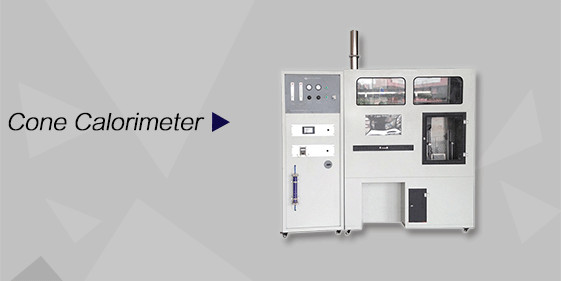
Cone Calorimeter
The import of American VTEC, cone calorimeter ultra high cost performance
more
-
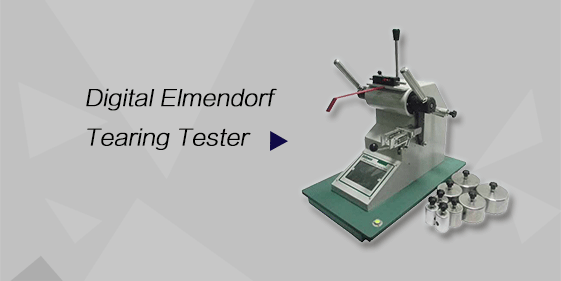
Digital Elmendorf Tearing Tester
Pendulum method test material tear strength, operating more simple, more accurate data
more
-

ZwickiLine Materials testing machines
Top of the world's leading universal material testing machine
more
Circular Locus Pilling Tester
BACK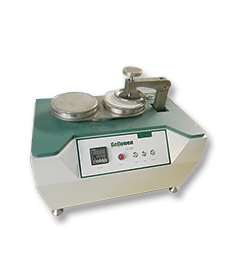


Standards:
GB/T 4802.1, JIG 040-1990
Applications:
The Circular Locus Pilling Tester is used for testing the Pilling and fuzzing of all kinds of fabrics to evaluable the product quality and process, such as wool, chemical fiber, mixed, kitted and woven fabrics. During the test, fabric is rubbed against a nylon brush and abrasive or an abrasive only under controlled conditions.
Product Information:
Technical Parameters
1. Contact gap between Abrasive assembly and abrasive platform: ≤0.2mm;
2. Parallelism of grinding head and grind plane: ≤0.3mm;
3. Moving trace :¢40mm circle track moving;
4. Nylon brush with paralleled surface the altitude difference: <0.5mm;
5. Reciprocating speed of Abrasive platform : 60±1r/min;
6. Weight of grinding head: 490cN±1%;
7. Weight of largerLoading weight/pieces: 290cN±1%;
8. Weight of little hammer: 100cN±1%;
9. Times of options: 1~9999;
10. Meet the requirements of standard tests.
Test Reference
| SAMPLE TYPES | Pressure/cN | fuzzing | pilling |
| Chemical fiber knitted fabric | 590 | 150 | 150 |
| Chemical fiber woven fabric | 590 | 50 | 50 |
| Military uniform (combing blended) | 490 | 30 | 50 |
| Combed wool fabric | 780 | 0 | 600 |
| carded wool fabric | 490 | 0 | 50 |
Features
1. Scientific mechanical structure, smooth rotation, no mechanical noise, no contact fatigue failure, suitable for long continuous operation.
2. The use of standard nylon brush, the rigidity of nylon wire must be uniform, so as to control the fluff effect of nylon brush.
3. Ergonomic design, the surface using a spray forming, smooth and beautiful.
FAQ
1. What is a Circular Locus Pilling Tester used for?
It is used to evaluate the pilling and fuzzing resistance of textile fabrics under controlled circular rubbing motion.
2. Which standards are applicable to this tester?
It is commonly used according to standards such as ASTM D4970. ISO 12945-1. and JIS L1076.
3. What types of fabrics can be tested?
It is suitable for knitted fabrics, woven fabrics, wool fabrics, and other textile materials.
4. How does the tester evaluate fabric pilling performance?
The fabric sample is rubbed in a circular locus motion, and the resulting pills are compared with standard rating samples.
5. What are the advantages of a Circular Locus Pilling Tester?
It provides repeatable testing conditions, accurate results, and efficient evaluation of fabric surface durability.
