




Search keywords:
product name, product type, model number,
test method, manufacturer, technique, application
-
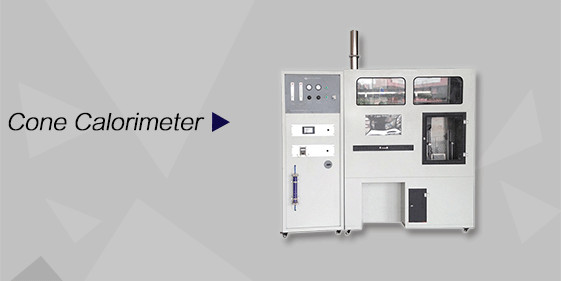
Cone Calorimeter
The import of American VTEC, cone calorimeter ultra high cost performance
more
-
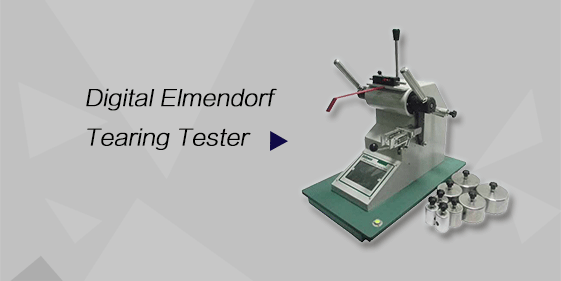
Digital Elmendorf Tearing Tester
Pendulum method test material tear strength, operating more simple, more accurate data
more
-
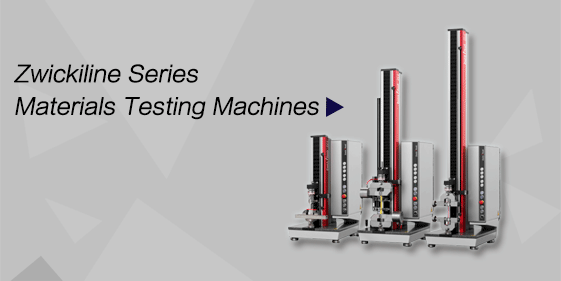
ZwickiLine Materials testing machines
Top of the world's leading universal material testing machine
more
Flow Fatigue Characteristics Tester
BACK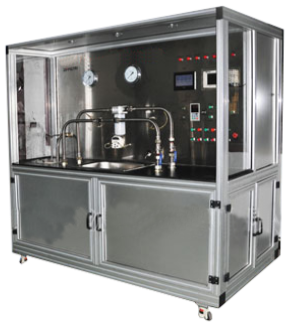


Standards:
Applications:
New product development.
Comparison with foreign product performance data.
Product quality control.
Third party testing, supervision agency.
Product Information:
The fatigue test bench is a method for measuring the flow fatigue characteristics of hydraulic filter element for hydraulic filter element. The test element is subjected to bending due to periodic differential pressure, resulting in structural damage.
Standards:
ISO 3724:1976 Hydraulic fluid power-Filter elements-Verification of flow fatigue characteristics
GB/T 17488:1976 Hydraulic fluid power—Filter elements—Determination of resistance to flow fatigue using particulate contaminant
Features:
Waveforms meet the standard requirements, and real-time monitoring.
Temperature control system with PID adjustment, is equipped with heating and cooling device (and meet the safety requirements).
The system is equipped with pressure safety protection, leakage safety protection, liquid level safety protection, oil temperature safety protection, fault prompt, emergency stop switch.
The bottom of the test bench is equipped with oil pan and casters for easy movement.
The test bed shell is made of aluminum alloy. The panel is made of stainless steel. The word adopts wax word, and the connecting pipe adopts seamless stainless steel tube.
Note: The above parameters can be designed and manufactured according to the different requirements of customers.
Technical Parameters:
| Items | Parameters |
| Test flow | 15L/min-150L/min |
| Medium temperature | Room temperature~50℃ |
| Working medium | 46 anti-wear hydraulic oil |
| Pressure measurement range | (0~1.6)MPa |
| Number of stations | 2 stations |
| Waveform | Rectangular wave, sine wave, trapezoidal wave |
FAQ:
What is its primary purpose?
It measures a hydraulic filter element's ability to withstand structural damage from flexing caused by cyclic (repeated) differential pressure during operation .
Which standard does it follow?
It primarily follows ISO 3724:1976 (currently withdrawn but foundational) and the Chinese standard GB/T 17488:1976 . Note that newer aerospace-specific standards like ISO 14085-5 or ISO 22056-6 are also emerging for specialized applications .
What waveforms can it generate?
It can generate rectangular, sine, and trapezoidal pressure waveforms to simulate different real-world operating conditions .
What are the key technical specifications?
Typical specs include a test flow of 15–150 L/min, a medium temperature up to 50°C using 46 anti-wear hydraulic oil, and a pressure range of (0–1.6) MPa .
What safety and control features does it include?
It features a PID temperature control system with heating/cooling, plus multiple safety protections for pressure, leakage, fluid level, and oil temperature, along with fault alerts and an emergency stop
