




Search keywords:
product name, product type, model number,
test method, manufacturer, technique, application
-
Cone Calorimeter
The import of American VTEC, cone calorimeter ultra high cost performance
more
-

Digital Elmendorf Tearing Tester
Pendulum method test material tear strength, operating more simple, more accurate data
more
-

ZwickiLine Materials testing machines
Top of the world's leading universal material testing machine
more
ICI Mace Snag Test machine
BACK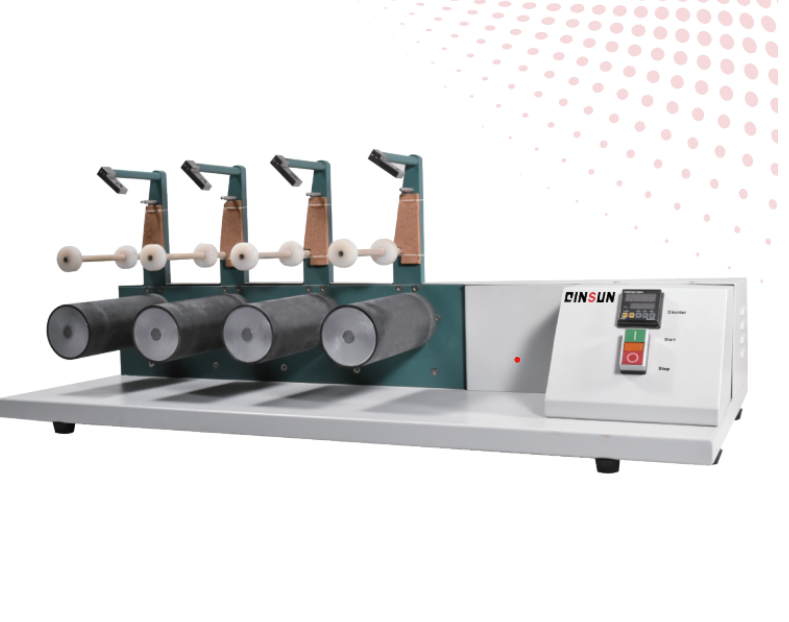


Standards:
Applications:
The instrument is equipped with an observation box and the comparison pattern card with different fabric structure. It is equipped with four test rolls ( for putting on the fabric to be tested). The mace ball is a tungsten carbide head and is controlled by a predetermined electronic counter.
Product Information:
ICI Mace Snag Test machine is suitable for the snagging performance test of knitted fabrics and woven fabrics in outwear as well as other fabrics easy to snag , especially for chemical fiber filament yarn and its deformation yarn products. It can quickly detect the fabric snagging tendency under normal wearing condition (namely snagging the yarn out from the fabric).
Working Principle:
The cylindrical specimen is placed on the revolving drum, and a chained hammer is placed on the surface of the specimen. When the drum rotates at a constant speed, the nail hammer makes random flip and bounces on the sample surface to hook the sample. The sample surface produces snagging. After the specified number of revolutions, compare with the comparison snag Lattuca for snag rating..
Technical Parameters:
| No. | Item | Specification |
|---|---|---|
| 1 | Specimen Size | 220 mm × 330 mm |
| 2 | Revolving Drum Diameter | 82 mm |
| 3 | Revolving Drum Length | 210 mm |
| 4 | Mace Ball Material | Tungsten Carbide Head |
| 5 | Mace Diameter | 31.8 mm |
| 6 | Mace Weight | 135 g |
| 7 | Mace Protruding Length | 9.5 mm |
| 8 | Mace Plant Needles | 11 Tungsten Needles |
| 9 | Needle Exposed Length | 10 mm |
| 10 | Tip Radius | R0.13 mm |
| 11 | Guide Bar Working Width | 125 mm |
| 12 | Distance Between Hammer and Guide Bar | 45 mm |
| 13 | Stations | 4 |
| 14 | Test Speed | 60 rpm |
| 15 | External Dimensions (L×W×H) | 1007 mm × 508 mm × 405 mm |
| 16 | Weight | Approx. 90 kg |
| 17 | Power Supply | 1∮, AC 220 V, 50 Hz, 3 A |
Standards:
ASTM D3939 Standard Test Method for Snagging Resistance of Fabrics (Mace Test Method)
GB/T 11047 Textiles-Determination of fabrics snagging resistance-Mace test method
JIS L1058 Test methods for snag of woven fabrics and knitted fabrics
Accessories:
Snag rating box
Tungsten carbide crochet hook (12pcs/bag)
Felt jacket (4pcs/bag)
Comparison snag Lattuca
FAQ:
1.What is the ICI Mace Snag Tester?
The ICI Mace Snag Tester is a specialized device used to assess the snagging resistance of fabrics. Commonly used in the textile and apparel industries, this tester evaluates how materials react when subjected to potential snagging conditions, ensuring durability and quality in finished products.
2.How does the ICI Mace Snag Tester operate?
The ICI Mace Snag Tester operates by simulating snagging actions on fabric samples. It employs a rotating mace that has a set of predetermined angles and speeds, which help to replicate real-world snagging scenarios. After the testing process, the fabric samples are examined to identify the extent of damage, allowing manufacturers to evaluate the performance of their textiles.
3.What types of fabrics can be tested with the ICI Mace Snag Tester?
The ICI Mace Snag Tester can be used on a wide variety of fabrics, including woven, knitted, and non-woven materials. It is particularly useful for evaluating garments, upholstery, and other textiles that may experience snagging in everyday use, helping manufacturers ensure they meet quality standards.
4.Why is snag testing important in the textile industry?
Snag testing is crucial in the textile industry because it helps manufacturers identify vulnerabilities in fabric designs that could lead to damage in finished products. By understanding snag resistance, companies can enhance the durability and longevity of their textiles, ultimately improving customer satisfaction and reducing returns.
5.Is training required to use the ICI Mace Snag Tester?
While the ICI Mace Snag Tester is designed to be user-friendly, it is recommended that operators undergo proper training to ensure accurate and consistent results. Training often includes understanding machine operation, sample preparation, and the evaluation of test outcomes, which can be provided by the equipment supplier or through industry workshops.
