




Search keywords:
product name, product type, model number,
test method, manufacturer, technique, application
-
Cone Calorimeter
The import of American VTEC, cone calorimeter ultra high cost performance
more
-

Digital Elmendorf Tearing Tester
Pendulum method test material tear strength, operating more simple, more accurate data
more
-

ZwickiLine Materials testing machines
Top of the world's leading universal material testing machine
more
Rubber Foaming Softening Tunnel Oven
BACK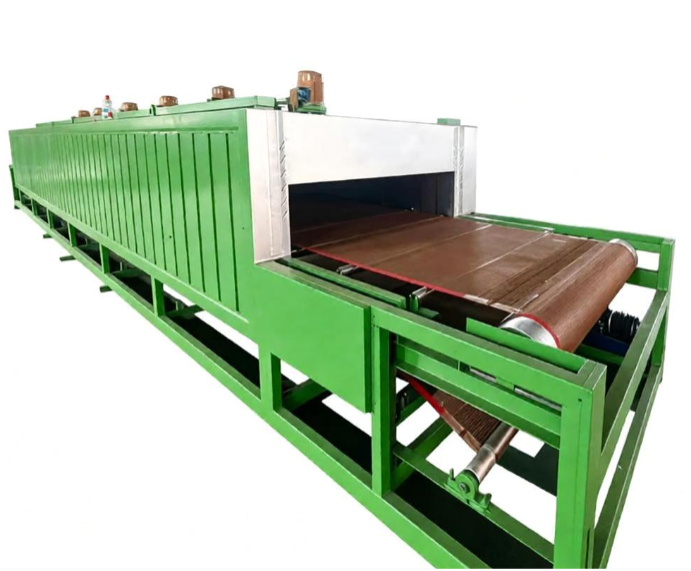


Standards:
Applications:
Product Information:
The Rubber Foaming Softening Tunnel Oven is an industrial tunnel-type heating system designed for the continuous foaming, vulcanization, drying, and softening treatment of rubber materials. It is widely used in continuous production processes requiring precise temperature control, uniform heating, and stable material properties.
Main Applications
1. Automotive Sealing Strips
Used for manufacturing rubber foamed sealing strips for vehicle doors, windows, and engine compartments.
2. Thermal Insulation Building Materials
Used for producing NBR/PVC foamed insulation pipes, insulation boards, and other thermal insulation products.
3. Footwear and Luggage Materials
Used for continuous curing and shaping of EVA or natural rubber foamed soles and luggage lining materials.
4. Sports Equipment
Used for manufacturing high-elasticity foamed products such as handle grips, yoga mats, and protective cushioning materials.
5. Industrial Cushioning Materials
Used for producing various vibration-damping, noise-reduction, and sealing foam pads for mechanical equipment.
Applicable Standards
GB/T 20051 — General Technical Conditions for Continuous Rubber Vulcanization Equipment
GB 5226.1 / EN 60204-1 — Safety of Machinery — Electrical Equipment of Machines — Part 1: General Requirements
GB 30720 — Energy Consumption Limits for Continuous Drying Furnaces Used in Rubber Processing Products Industry
HG/T 3228 — General Technical Conditions for Rubber Machinery
Equipment Features
1. Precise Temperature Control
The equipment adopts multi-zone independent microcomputer PID temperature control, with temperature differences controlled within ±1°C, ensuring stable processing conditions.
2. High Uniformity of Rubber Foaming
The scientifically designed hot air circulation system ensures that both the rubber surface and internal core are heated evenly and simultaneously, achieving consistent foaming performance.
3. Multiple Conveyor Options
According to different production processes, the oven can be equipped with:
PTFE (Teflon) mesh belt
Stainless steel mesh belt
Slat-type conveyor chain
to meet different rubber processing requirements.
4. High Efficiency, Energy Saving, and Environmental Protection
The oven body adopts high-density thermal insulation materials and is equipped with interfaces for:
Secondary combustion treatment of exhaust gases
Exhaust purification and collection systems
to improve energy efficiency and environmental performance.
5. Variable Frequency Stepless Speed Control
The conveyor speed can be precisely adjusted according to the foaming time requirements of different rubber formulations, ensuring optimal curing and foaming results.
FAQ
Q1: What heating methods are commonly used in this equipment?
A:The main heating methods include electric heating, direct combustion heating using natural gas or LPG, and steam or thermal oil heat exchange heating. Among them, electric heating and gas-fired hot air circulation heating are the most commonly used solutions.
Q2: How does the equipment prevent foamed rubber from sticking to the conveyor belt during processing?
A:The conveyor surface is usually coated with a PTFE (Teflon) non-stick layer. Alternatively, release agents or talcum powder can be sprayed onto the rubber before entering the oven. For certain processes, suspended conveyor systems or pin-type conveyors may also be used to prevent sticking.
Q3: What are the typical length and width dimensions of a tunnel oven?
A:The equipment is a customized product designed according to production capacity and process requirements. The typical oven length is generally between 12 meters and 30 meters, while the effective working width is usually between 400 mm and 1500 mm.
Q4: Why do pits or uneven bubbles appear on the surface of foamed rubber products after processing?
A:This problem is usually related to excessively high temperature in the initial heating zone, which causes premature surface curing, or uneven hot air circulation inside the oven. The temperature gradient curve of multiple heating zones should be optimized, typically following a lower temperature at the front section and higher temperature at the rear section to achieve uniform foaming.
