




Search keywords:
product name, product type, model number,
test method, manufacturer, technique, application
-
Cone Calorimeter
The import of American VTEC, cone calorimeter ultra high cost performance
more
-
Digital Elmendorf Tearing Tester
Pendulum method test material tear strength, operating more simple, more accurate data
more
-
ZwickiLine Materials testing machines
Top of the world's leading universal material testing machine
more
Mesh Screen Curing and Drying Tunnel Oven
BACK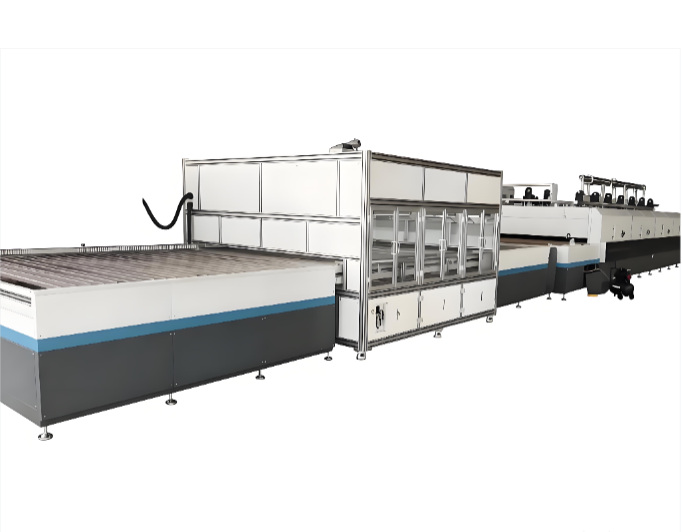


Standards:
Applications:
Product Information:
The Mesh Screen Curing and Drying Tunnel Oven is an industrial continuous thermal processing equipment. It mainly uses a conveyor system (usually a stainless steel mesh belt or specially designed screen mesh) to continuously transport materials into the heating tunnel, where moisture drying, coating curing, or thermal treatment is carried out under controlled temperature, airflow speed, and processing time.
Core Applications
Screen Printing Industry
Used for drying and curing inks after printing on various products, including nameplates, membrane switches, and textile printing materials.
Electronic and Electrical Industry
Used for infrared curing of electronic components after PCB assembly, adhesive curing, and drying of insulating coatings.
Hardware Coating Industry
Used for heating and baking surface coatings of metal parts, including spray coatings, paint finishes, and Teflon (PTFE) coatings.
New Energy Battery Industry
Used for drying battery electrode sheets after coating processes and dehydration treatment of related materials.
Applicable Standards
The design and manufacturing of the equipment generally comply with the following standards:
GB/T 30790
Protective paint systems for corrosion protection of steel structures.
GB 5226.1
Electrical safety of machinery — Electrical equipment of machines, Part 1: General requirements.
GB 20050
Safety requirements for high-frequency heating equipment (applicable when high-frequency or microwave-assisted heating technology is involved).
ISO 9001
The entire design and manufacturing process should comply with quality management system requirements.
Main Features
Continuous and High-Efficiency Operation
The mesh belt conveyor system enables continuous production and is suitable for large-scale automated manufacturing.
Precise Temperature Control
Adopts PID intelligent microcomputer temperature control technology combined with multiple independent heating zones, ensuring low temperature variation inside the oven.
Excellent Air Permeability
The mesh belt structure allows hot air to penetrate through the bottom of the materials, achieving more uniform heating and drying.
Energy Saving and Environmental Protection
Equipped with a hot air circulation system to significantly reduce energy consumption, along with an exhaust gas discharge system to remove process emissions.
FAQ
Q1: What heating methods are available for this type of tunnel oven?
A: The main heating methods include infrared radiation heating, hot air circulation convection heating, and combined infrared + hot air heating. Different heating methods can be selected according to material characteristics and process requirements.
Q2: What materials are commonly used for the mesh conveyor belt? How much weight can it carry?
A: The commonly used materials are SUS304 or SUS316 stainless steel mesh belts. The load capacity can be customized according to the equipment design. Lightweight models can carry several kilograms per meter, while heavy-duty models can reach dozens of kilograms per meter.
Q3: How is the drying time of materials inside the tunnel oven controlled?
A: The drying time is controlled by adjusting the speed of the conveyor drive motor through a frequency converter. The slower the mesh belt speed, the longer the material remains inside the oven, resulting in a longer drying time.
Q4: How does the equipment ensure operator safety under high-temperature conditions?
A: The oven body is insulated with high-quality thermal insulation materials, such as aluminum silicate fiber insulation cotton, which effectively reduces heat transfer and keeps the external surface temperature close to normal ambient temperature. The equipment is also equipped with over-temperature alarms and emergency stop buttons to ensure safe operation.
Q5: What daily maintenance is required for the equipment?
A: Regular maintenance includes cleaning impurities inside the oven and exhaust ducts, checking the lubrication condition of the transmission chain, and calibrating the accuracy of temperature control sensors to ensure stable operation.
