




Search keywords:
product name, product type, model number,
test method, manufacturer, technique, application
-
Cone Calorimeter
The import of American VTEC, cone calorimeter ultra high cost performance
more
-

Digital Elmendorf Tearing Tester
Pendulum method test material tear strength, operating more simple, more accurate data
more
-
ZwickiLine Materials testing machines
Top of the world's leading universal material testing machine
more
PAN-Based (Polyacrylonitrile-Based) Carbon Felt Tunnel Furnace
BACK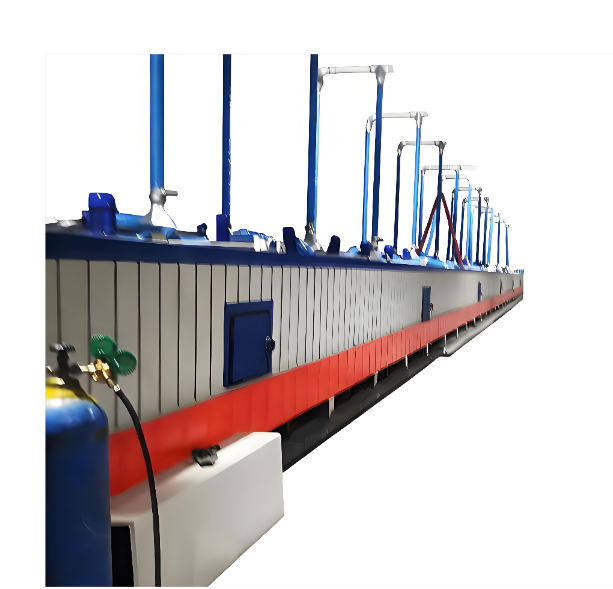


Standards:
Applications:
Product Information:
The PAN-based (Polyacrylonitrile-based) carbon felt tunnel furnace is a high-end industrial thermal processing equipment specially designed for continuous high-temperature carbonization and graphitization treatment of PAN-based precursor fibers, pre-oxidized fibers, or carbon fiber felts.The equipment adopts a tunnel-type continuous production structure, equipped with a precise temperature control system and strict atmosphere protection system. It enables large-scale, automated, and high-quality production of carbon felt materials.
Product Applications
Material Carbonization:
Used for high-temperature treatment of pre-oxidized PAN-based fiber felts under an inert atmosphere to remove pyrolysis by-products.
Material Graphitization:
Used for rearranging carbon atom structures under ultra-high-temperature conditions, significantly improving the electrical conductivity, thermal conductivity, and corrosion resistance of carbon felts.
Thermal Field Insulation Material Production:
Used for manufacturing high-performance, long-life thermal insulation felts required for single crystal silicon growth furnaces and vacuum metallurgical furnaces.
New Energy Electrode Manufacturing:
Used for producing carbon felt electrode materials required for flow batteries and fuel cells.
Product Parameters
| Parameter Item | Technical Specification |
|---|---|
| Rated Temperature | 1000℃ - 1600℃ (Carbonization Furnace); 2000℃ - 2800℃ (Graphitization Furnace) |
| Working Atmosphere | High-purity argon gas (Ar) or nitrogen gas (N₂), with micro-positive pressure control |
| Heating Elements | High-purity graphite rods or graphite plates |
| Temperature Control Accuracy | ±1℃ |
| Furnace Temperature Uniformity | ≤±5℃ |
| Operating Speed | Variable frequency speed regulation, continuously adjustable |
| Conveying Method | Roller rod conveying or mesh belt conveying |
Product Features
Continuous Production:
The tunnel-type structure enables continuous feeding and discharging, providing high production efficiency.
Precise Zoned Temperature Control:
Multiple temperature zones are independently controlled to perfectly match the process heating curve requirements of PAN-based materials.
Sealing and Atmosphere Protection:
Advanced furnace inlet and outlet dynamic sealing technology reduces gas consumption and effectively prevents product oxidation.
Energy Saving and Environmental Protection:
Uses high-quality graphite felt composite insulation materials to minimize heat loss and is equipped with a complete exhaust gas cracking and smoke discharge system.
Intelligent Control:
PLC fully automatic control enables real-time data recording and provides automatic alarms for over-temperature, gas interruption, and water supply failure.
FAQ
Q1: What protective gas is usually used in a PAN-based carbon felt tunnel furnace?
A1: High-purity nitrogen gas is usually used during the carbonization stage (below 1600℃). During the ultra-high-temperature graphitization stage (above 1600℃), high-purity argon gas must be used to prevent chemical reactions at high temperatures and protect the graphite heating elements.
Q2: How are tar and exhaust gases generated during the heating process of PAN-based materials handled?
A2: The equipment is equipped with dedicated exhaust ducts and tar collection devices. The generated exhaust gases are guided into a cracking furnace or environmental protection treatment system for high-temperature combustion treatment, preventing furnace contamination and pipeline blockage.
Q3: The furnace has openings at both ends. How is an oxygen-free environment maintained inside the furnace?
A3: The feeding and discharging openings are equipped with special nitrogen/argon gas curtain isolation systems and multi-stage mechanical dynamic sealing structures. The furnace maintains micro-positive pressure to prevent external air from entering.
Q4: What advantages does a continuous tunnel furnace have compared with batch furnaces (vacuum furnaces)?
A4: Continuous furnaces provide higher production capacity, lower energy consumption, better product performance uniformity, and avoid frequent heating and cooling cycles that can shorten furnace service life.
Q5: What is the typical service life of heating elements and insulation materials?
A5: Under normal operation and strict atmosphere protection, graphite heating elements and insulation materials usually have a service life of approximately 2 to 3 years. The actual replacement cycle depends on operating temperature and production frequency.
