




Search keywords:
product name, product type, model number,
test method, manufacturer, technique, application
-
Cone Calorimeter
The import of American VTEC, cone calorimeter ultra high cost performance
more
-
Digital Elmendorf Tearing Tester
Pendulum method test material tear strength, operating more simple, more accurate data
more
-
ZwickiLine Materials testing machines
Top of the world's leading universal material testing machine
more
High Temperature Catalyst Sintering Furnace
BACK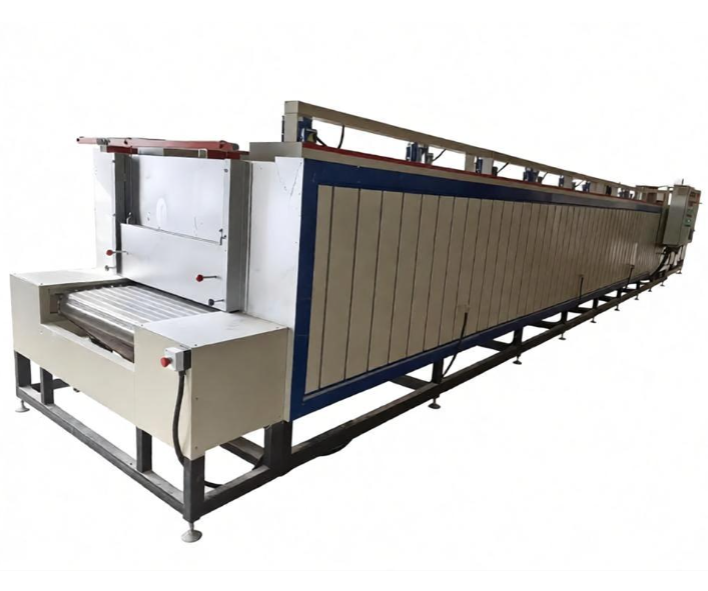


Standards:
Applications:
Product Information:
The High Temperature Catalyst Sintering Furnace is a high-performance heat treatment equipment specially designed for catalyst research and production in industries such as petrochemicals, automotive exhaust purification, and advanced environmental materials.The equipment adopts a precision temperature control system and multi-stage atmosphere control technology, enabling high-temperature solid-state reactions, calcination, and sintering of materials such as molecular sieves, metal catalysts, and ceramic catalyst carriers under vacuum, inert gas, or reactive atmospheres.Through precise thermal processing, the furnace optimizes catalyst pore structure and improves catalytic activity, selectivity, and mechanical strength.
Product Applications
1. Catalyst Calcination
Used for decomposition of catalyst precursors and formation of active metal oxides.
2. Catalyst Carrier Sintering
Improves the mechanical strength of catalyst carriers such as honeycomb ceramics and microsphere supports.
3. Catalyst Modification Treatment
Used for high-temperature doping and surface modification under specific controlled atmospheres.
4. Catalyst Regeneration
Used for thermal regeneration treatment of deactivated catalysts to restore catalytic performance.
Product Parameters
| Parameter Item | Technical Specification |
|---|---|
| Operating Temperature | Rated temperature: 1200℃ / 1400℃ / 1600℃ (Customized according to model) |
| Heating Elements | Silicon carbide rods / Molybdenum disilicide rods / High-quality resistance wires |
| Temperature Control Accuracy | ±1℃ |
| Furnace Chamber Material | High-purity alumina polycrystalline mullite fiber |
| Atmosphere Control | Supports nitrogen, argon, oxygen, hydrogen, etc., equipped with Mass Flow Controller (MFC) |
| Ultimate Vacuum | Dual-stage rotary vane pump: 10 Pa / Molecular pump system: 10⁻³ Pa |
Product Features
1. Precise Temperature Control
Adopts a microcomputer PID intelligent control system with multi-stage programmable heating processes to achieve accurate thermal treatment.
2. Excellent Sealing Performance
The furnace adopts a fully sealed structure. The flange is equipped with a water cooling system, ensuring extremely low gas leakage rates during vacuum and atmosphere-controlled operation.
3. Uniform Heating Performance
The heating elements are reasonably arranged to ensure excellent temperature uniformity inside the furnace chamber, with temperature deviation controlled within ±5℃.
4. Comprehensive Safety Protection
Equipped with multiple safety functions, including:
Over-temperature alarm
Thermocouple failure warning
Over-pressure relief protection
Automatic power-off protection
5. Highly Integrated Design
The modular structure allows optional configurations such as:
Exhaust gas treatment systems
PLC touchscreen control systems
Advanced atmosphere control modules
FAQ
Q1: Can this sintering furnace process corrosive or flammable gases?
A: Yes. However, special requirements must be specified when ordering. The furnace can be equipped with explosion-proof and corrosion-resistant systems, safety valves, and corresponding gas leakage alarm devices.
Q2: How does the furnace prevent contamination during high-purity catalyst sintering?
A: The furnace chamber uses high-purity alumina fiber materials, which are non-shedding and have low volatilization characteristics. High-purity quartz tubes or alumina ceramic tubes can also be selected to isolate materials and prevent cross-contamination.
Q3: What is the typical heating rate of the furnace?
A: The recommended heating rate is 5–10℃/min, and the maximum heating rate can reach 20℃/min depending on the furnace model and material characteristics. Excessive heating rates may affect furnace service life.
Q4: How are exhaust gases treated during furnace operation?
A: The equipment is equipped with a dedicated exhaust outlet. According to the composition of gases generated during catalyst calcination, such as NOx and SO₂, optional treatment systems such as acid mist scrubbers or activated carbon adsorption devices can be installed.
