




Search keywords:
product name, product type, model number,
test method, manufacturer, technique, application
-
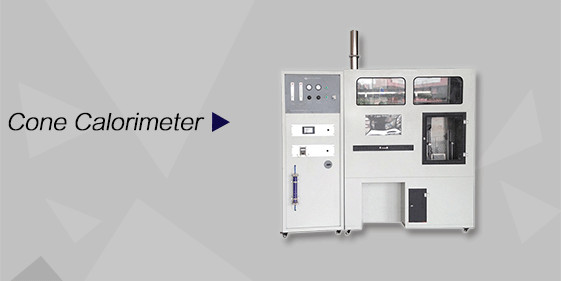
Cone Calorimeter
The import of American VTEC, cone calorimeter ultra high cost performance
more
-
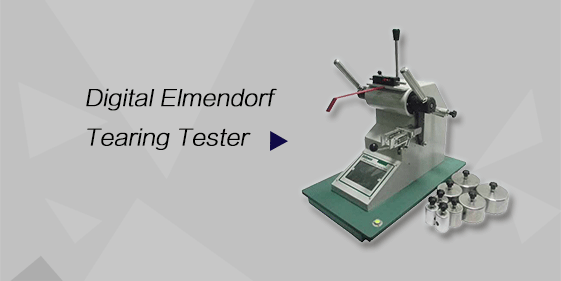
Digital Elmendorf Tearing Tester
Pendulum method test material tear strength, operating more simple, more accurate data
more
-
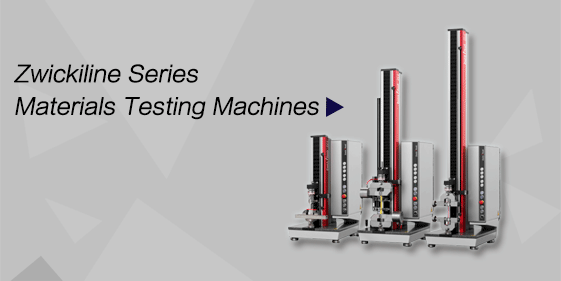
ZwickiLine Materials testing machines
Top of the world's leading universal material testing machine
more
Windshield Washer Nozzle Fatigue Test Machine
BACK

Standards:
The machine complies with international and national automotive testing standards, including: ISO 6255:1997 – Passenger car windscreen washer systems – Test methods SAE J942:1999 – Performance requirements and test procedures for passenger car windscreen washing systems GB 15085‑2013 – Performance requirements and test methods for automotive windshield wipers and washer systems GB/T 23436‑2009 – Automotive windshield cleaning fluid testing specification
Applications:
You can use this machine to assess the functional reliability, spray performance, and environmental endurance of automotive nozzles. Typical applications include:
Fatigue testing of windshield washer nozzles (WCS) under cyclic operation.
Fatigue testing of headlamp cleaning nozzles (HCS) under repeated use.
Evaluating spray consistency and fluid distribution under various temperature conditions.
Simulating real-world environmental conditions to verify nozzle durability.
Commonly tested components with this machine:
Windshield washer nozzles (WCS)
Headlamp cleaning nozzles (HCS)
Fluid delivery connectors and fittings
Spray system assemblies
Product Information:
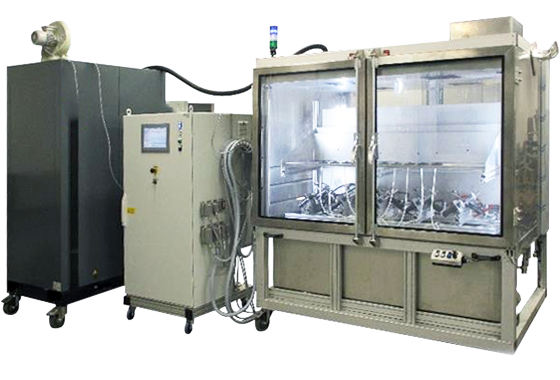
The Windshield Washer Nozzle Fatigue Test Machine is designed to evaluate the durability and performance of automotive nozzles, including windshield cleaning nozzles (WCS) and headlamp cleaning nozzles (HCS). The machine operates within a controlled environmental chamber, allowing you to simulate temperature and fluid conditions while performing long-term fatigue tests on multiple components simultaneously. Its integrated control and data acquisition system ensures precise monitoring and reliable results.
Parameters
| Parameter | Details |
|---|---|
| Test Unit Dimensions | 2030 × 2550 × 1600 mm (W × H × D) |
| Internal Test Unit Dimensions | 1900 × 1150 × 1450 mm (W × H × D) |
| Rated Power | 4 kW |
| Working Fluid | Water – Ethanol mixture |
| Allowable Environment Temperature (Test Unit) | MIN: -25 °C / MAX: 80 °C |
| Number of Test Components | 20 (10 HCS / 10 WCS) |
Features
Specifically developed for testing flammable or volatile liquids.
Consists of three independent components: test unit, control unit, and nitrogen generator.
Operates under Explosion-Proof Level 1 by inerting the test chamber with nitrogen.
Equipped with an explosion-proof suction device to remove flammable vapors and odors from the test chamber.
Test chamber and fluid temperature are adjustable according to the environmental conditions.
Visualization system displays all relevant operational statuses and real-time measurements.
PLC-based control unit enables precise operation and reliable data recording.
Accessories
Nitrogen generator for chamber inerting
Fluid supply lines and fittings
Temperature and pressure sensors
Data acquisition modules
Explosion-proof ventilation system
Test Procedures
Install nozzles or components to be tested inside the test chamber.
Connect the working fluid supply (water-ethanol mixture).
Set desired environmental temperature and operational cycles.
Start the test using the PLC-based control unit.
Monitor real-time system parameters including chamber temperature, fluid flow, and nozzle operation.
The machine records all data automatically for later analysis.
After the test, safely remove the components and review recorded fatigue performance.
Maintenance Information
Regularly inspect fluid lines and nozzles to prevent blockage or residue accumulation.
Check nitrogen generator and explosion-proof suction system for proper operation.
Calibrate temperature and pressure sensors periodically for accurate measurements.
Clean the test chamber to remove flammable vapors and fluid residue.
Verify PLC control software and data acquisition integrity before each test cycle.
FAQ
1. What is this product?
It is a specialized machine for fatigue testing automotive washer nozzles, including windshield and headlamp nozzles, under controlled environmental conditions.
2. What is it used for?
You use it to simulate long-term cyclic operation of nozzles, evaluating spray performance, durability, and functional reliability under various temperatures and fluid conditions.
3. How does it work?
The machine operates in a controlled environment chamber with flammable-fluid-compatible safety systems. It cycles the nozzles while monitoring temperature, pressure, and fluid flow, recording all data for analysis.
4. Why is it important?
It ensures that washer nozzles meet automotive performance and safety standards, preventing failures during real-world operation and maintaining driver visibility and safety.
5. Which industries is it suitable for?
Automotive component manufacturing and R&D
Automotive testing laboratories
Quality assurance and reliability testing of fluid delivery systems
Suppliers of windshield and headlamp cleaning systems
