




Search keywords:
product name, product type, model number,
test method, manufacturer, technique, application
-
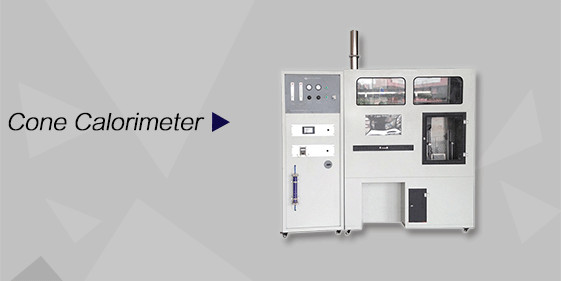
Cone Calorimeter
The import of American VTEC, cone calorimeter ultra high cost performance
more
-
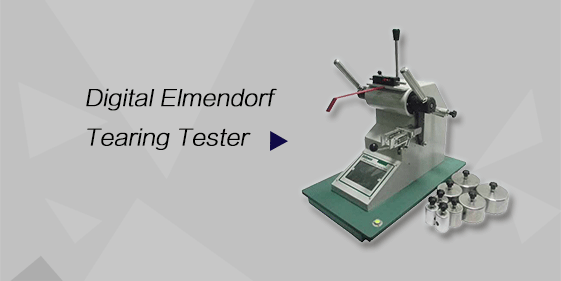
Digital Elmendorf Tearing Tester
Pendulum method test material tear strength, operating more simple, more accurate data
more
-
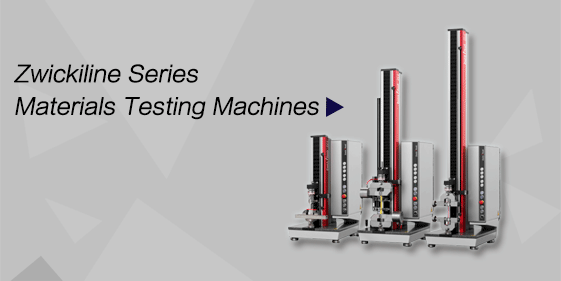
ZwickiLine Materials testing machines
Top of the world's leading universal material testing machine
more
Automotive Seat, Mounting Device and Seat Belt System Testing Machine
BACK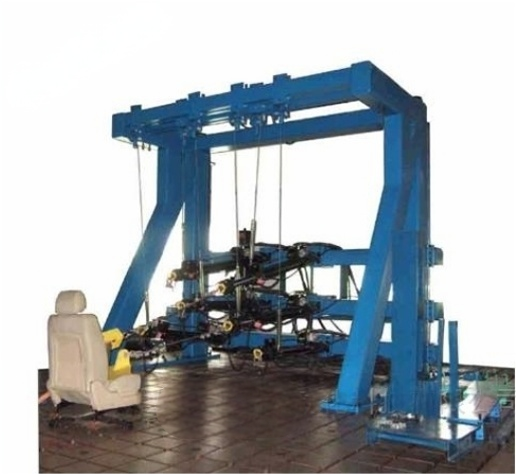


Standards:
The machine complies with major international and national safety standards, including: GB 15083‑2019 – Automotive seats, seat mounting devices, and headrest strength requirements and test methods GB 14166‑2024 – Motor vehicle occupant seat belt and restraint systems GB 14167‑2024 – Seat belt and restraint system anchor point requirements GB 11550‑2009 – Automotive headrest strength requirements and test methods GB 13057‑2023 – Strength requirements for bus seats and mounting devices FMVSS 209 – Seat belt assembly performance requirements FMVSS 208 – Motor vehicle occupant crash protection FMVSS 207/210 – Seat and seatbelt anchor point strength requirements
Applications:
You can use this machine to assess the strength and functional reliability of seat and restraint systems under various scenarios, including:
Evaluation of seatbelt and mounting point strength for new product designs.
Testing after changes in manufacturing processes or materials.
Incoming material or component quality verification.
Random sampling for production quality control.
Simulation of real-world stress conditions for automotive seats and restraint systems.
Commonly tested components with this machine:
Automotive seats and headrests
Seat mounting devices and brackets
Seat belt assemblies and anchor points
Complete occupant restraint systems
Product Information:
The Automotive Seat, Mounting Device and Seat Belt System Testing Machine is designed to evaluate the strength and performance of automotive seat, seat mounting, and seat belt assemblies. It allows you to perform precise tests on seatbelt anchor points and mounting components to ensure compliance with safety standards. The machine features a Windows-based user interface with intuitive operation, high-precision servo actuators, and real-time data acquisition for reliable testing and efficient analysis.
Parameters
| Parameter Category | Parameter | Details |
|---|---|---|
| Overall Dimensions | Main Machine | 6000 × 2500 × 2800 mm |
| Test Base Platform | Dimensions | 6000 × 2500 × 350 mm, T-slots spaced 250 mm |
| Microcomputer Console | Dimensions | 800 × 600 × 1600 mm |
| Electrical Control Cabinet | Dimensions | 800 × 600 × 1400 mm |
| Servo Actuators (Electric Cylinders) | Pulling Force & Quantity | 26 kN, 9 units, overall accuracy ±1% |
| Stroke | 1000 mm | |
| Loading Speed Range | 0–250 mm/s stepless, 2–60 s to reach target | |
| Speed Accuracy | 0.5% F.S | |
| Load Sensors | Load & Quantity | 30 kN, 3 units |
| Accuracy | ±0.1% F.S | |
| Optical Encoder Displacement Sensors | Quantity | 3 units |
| Linear Accuracy | 0.5% F.S | |
| Repeatability | 0.1% | |
| Other Parameters | Sampling Frequency | 1000 Hz |
| AD Conversion Accuracy | 16-bit | |
| Measurement Accuracy | Better than ±0.5% F.S | |
| Control Accuracy | Better than ±0.5% F.S | |
| Power Supply | Voltage & Consumption | 3-phase AC 380V, 50Hz, 50 kW |
Features
High-performance motion control system based on NI (National Instruments) technology, modular and standardized for flexible configuration and easy after-sales service.
Dual digital closed-loop control for load and displacement, with seamless switching.
Three servo actuators can operate individually or simultaneously, supporting multi-channel parallel measurement, display, and data storage.
Loading time adjustable according to servo speed; load control allows reaching target in as fast as 2 s.
Hold time at target value adjustable from 1 s up to unlimited duration.
Test data can be processed and stored as a complete module; flexible parameter combination allows easy retrieval and analysis.
Comprehensive safety features, including overload protection and software-based safety measures to ensure personnel and equipment protection.
Accessories
Clamping fixtures for seats and seat belts
Data acquisition modules
Optical encoder sensors
Control software license
Safety protective enclosures
Test Procedures
Secure the automotive seat, mounting device, and seat belt system onto the test base.
Configure test parameters in the Windows-based control software, including actuator force, stroke, and loading speed.
Verify safety measures and protective enclosures are in place.
Initiate the test; servo actuators apply controlled load to the seatbelt anchor points and mounting devices.
Monitor real-time data including force, displacement, and velocity.
After the test, retrieve and analyze stored data from the database.
Inspect the tested components for deformation, failure, or performance deviations.
Maintenance Information
Inspect servo actuators and load sensors regularly for wear or calibration drift.
Verify optical encoder displacement sensors and data acquisition system accuracy periodically.
Ensure T-slots and fixtures are clean and free from debris.
Check control software and database integrity before each test cycle.
Maintain a clean and stable environment to prevent external interference with test results.
FAQ
1. What is this product?
It is a high-precision testing machine for evaluating the strength and performance of automotive seats, mounting devices, and seat belt systems.
2. What is it used for?
You use it to test seatbelt anchor points and seat mounts for strength, functional reliability, and compliance with international safety standards.
3. How does it work?
The machine uses servo actuators to apply controlled loads and displacements to the seat and belt components while recording high-speed data for analysis.
4. Why is it important?
It ensures that seats and seat belts provide effective occupant protection, verifying safety and durability under simulated real-world conditions.
5. Which industries is it suitable for?
Automotive seat and restraint system manufacturers
Automotive R&D centers
Safety testing laboratories
Quality assurance and production inspection for seat and belt assemblies
