




Search keywords:
product name, product type, model number,
test method, manufacturer, technique, application
-
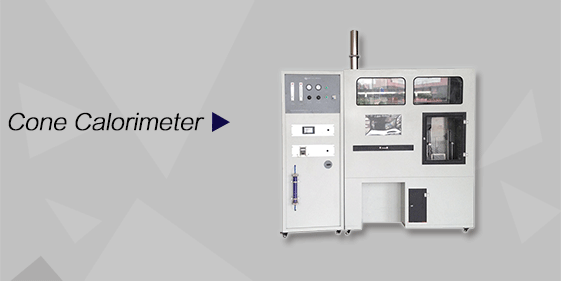
Cone Calorimeter
The import of American VTEC, cone calorimeter ultra high cost performance
more
-
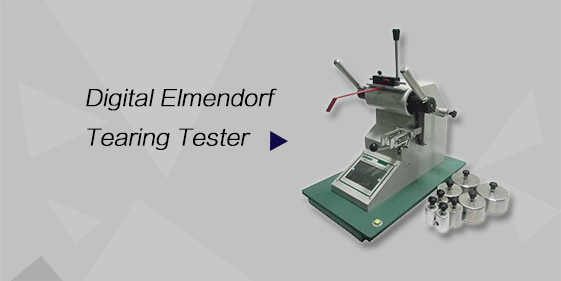
Digital Elmendorf Tearing Tester
Pendulum method test material tear strength, operating more simple, more accurate data
more
-
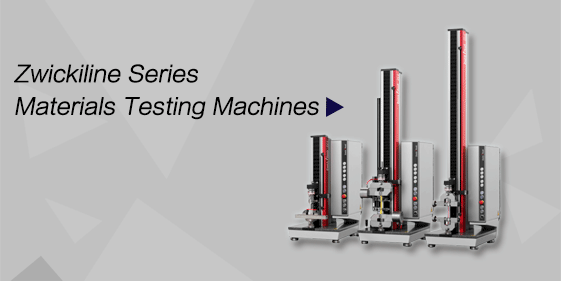
ZwickiLine Materials testing machines
Top of the world's leading universal material testing machine
more
Seam Fatigue Tester
BACK


Standards:
Toyota TSL5101G Section 3.7, GMW 3405, Nissan M-0154, Ford Motor Co. BN 106-02, TSL5100G Section 4.22
Applications:
The Seam Fatigue Tester is a two station bench top machine, used for evaluating fabric or leather seating materials resistance to tearing or needle hole elongation of a sewn seam. Each station includes a pair of suitable clamps for attaching the test sample. A set up gage is used to set the 140mm sample clamp separation for each station. One or two stations can be tested at a time.
Product Information:
The operator installs the set up gage between one pair of sample clamps on a station. The sewn test sample is aligned and clamped into position. The set up gage is removed and installed on the second station. The second sample is aligned and clamped into position and the set up gage is removed. The desired number of test cycles is entered on the cycle counter and the test is started. Once this cycle count is reached the machine will automatically stop. Test samples are visually evaluated.
Standard Test
ISO 5402: Leather physical testing – Flex tester method for adhesion and strength analysis.
SATRA TM55: Seam fatigue testing for footwear, ensuring stitching integrity under cyclic stress.
ASTM D6193: Loop strength testing for leather goods, critical for accessories like belts and bags.
GB/T 3903.32: Chinese national standard for footwear seam fatigue resistance.
EN 13520: Flexometer testing for coated fabrics, validating bonding durability in automotive interiors.
Feature
Quad-Testing Stations: Independent clamping mechanisms for parallel evaluation of seams, loops, or bonded joints.
Customizable Testing Modes:
Seam Fatigue: SATRA/ISO-compliant bending cycles (e.g., 50.000 cycles for footwear uppers).
Loop Strength: ASTM-standard tension tests for leather accessories.
Adhesion Integrity: EN 13520-compliant coating delamination analysis.
Advanced Control System:
7-inch touchscreen with preset protocols for footwear, automotive, and fashion industries.
Adjustable load cell (0–50N) for tension/compression testing.
Fail-Safe Mechanisms: Auto-stop function upon seam failure or cycle completion, with real-time data logging.
Ergonomic Design: Quick-release clamps for rapid sample mounting and tool-free angle adjustments.
Parameters
| Parameter | Specification |
|---|---|
| Test Stations | 1–4 (simultaneous operation) |
| Stroke Frequency | 100–300 cycles/min (adjustable) |
| Bending Angle | 0–90° (customizable) |
| Load Capacity | 0–50N (adjustable) |
| Sample Dimensions | 150 × 30 mm (standard) |
| Control System | PLC with touchscreen (programmable cycles, angles, loads) |
| Power Supply | 220V/50Hz, 120W |
| Dimensions | 600 (L) × 450 (W) × 500 (H) mm |
| Net Weight | 45 kg |
| Cycle Counter | Digital (1–999.999 cycles) |
Accessoriess
Standard accessories
Abrasion test components: 1 piece of H10 abrasion wheel (standard specification for leather wear testing), 1 box of wheel reconditioning abrasive papers (for maintaining the abrasion wheel's surface consistency).
Load weights: 250g, 500g, and 1000g standard weights (to apply specified pressure during the abrasion test, meeting common test standard requirements).
Auxiliary equipment: 1 vacuum cleaner machine (for cleaning debris generated during the abrasion process, ensuring test environment cleanliness and result accuracy).
Basic accessories: Power cord, user manual, certificate of conformity (standard supporting items for normal equipment operation and compliance verification).
Optional accessories
Additional abrasion wheels: Specialized wheels (e.g., CS-10. CS-17 wheels) for testing different leather types (such as soft garment leather or hard industrial leather).
Extended load weights: Lighter (e.g., 100g) or heavier (e.g., 2000g) weights to adapt to non-standard pressure test requirements.
Test result auxiliary tools: Abrasion loss weighing balance (for precise measurement of leather weight loss after testing), surface roughness tester (for evaluating post-abrasion surface smoothness of leather).
FAQ
1. What is a Leather Seam Fatigue Tester used for?
It is used to evaluate the fatigue resistance and durability of seams in leather materials.
2. Which materials can be tested?
It is suitable for leather and leather-like materials with stitched seams, depending on the test method.
3. How does the tester work?
It applies repeated mechanical stress to stitched specimens to evaluate seam durability under cyclic loading.
4. Why is seam fatigue testing important?
It helps identify seam weakness, prevent premature seam failure, and improve product quality.
5. Which industries use a Leather Seam Fatigue Tester?
It is commonly used in footwear, leather goods, luggage, upholstery, and quality control laboratories.
