




Search keywords:
product name, product type, model number,
test method, manufacturer, technique, application
-
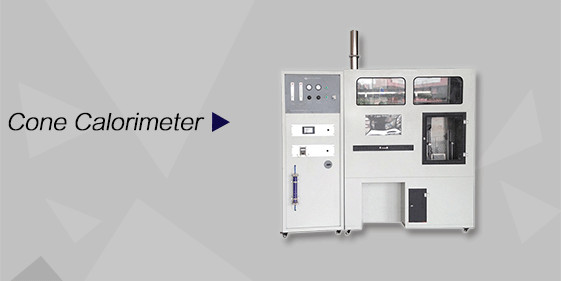
Cone Calorimeter
The import of American VTEC, cone calorimeter ultra high cost performance
more
-
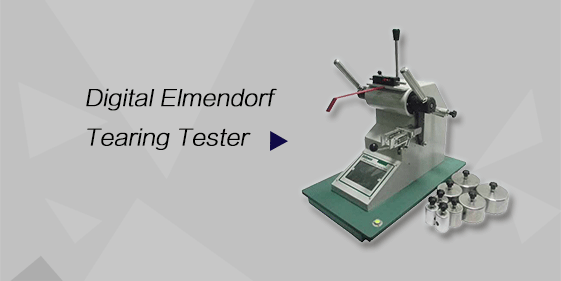
Digital Elmendorf Tearing Tester
Pendulum method test material tear strength, operating more simple, more accurate data
more
-

ZwickiLine Materials testing machines
Top of the world's leading universal material testing machine
more
Thermal Cycling Damp Heat and Freeze Test Chamber
BACK

Standards:
(1)GB/T 9535 Crystalline Silicon Terrestrial Photovoltaic (PV) Modules – Design Qualification and Type Approval (2)GB/T 18911 Photovoltaic Modules – Environmental Test Methods (3)GB/T 2423.1 Environmental Testing for Electric and Electronic Products – Part 2: Test Methods – Test A: Cold (4)GB/T 2423.2 Environmental Testing for Electric and Electronic Products – Part 2: Test Methods – Test B: Dry Heat (5)GB/T 2423.3 Environmental Testing for Electric and Electronic Products – Part 2: Test Methods – Test Ca: Damp Heat, Steady State (6)IEC 61215 Terrestrial Photovoltaic (PV) Modules – Design Qualification and Type Approval (7)IEC 61730 Photovoltaic (PV) Module Safety Qualification (8)IEC 60068-2-1 / IEC 60068-2-2 / IEC 60068-2-30 Environmental Testing – Cold, Dry Heat, Damp Heat (9)UL 1703 Standard for Flat-Plate Photovoltaic Modules and Panels (10)JIS C 8918 Environmental Test Methods for Photovoltaic Modules (partially applicable)
Applications:
This chamber is widely used in photovoltaic and related renewable energy fields, including but not limited to:
Thermal cycling and damp heat freeze reliability testing of crystalline silicon photovoltaic modules (monocrystalline and polycrystalline)
Environmental durability evaluation of thin-film photovoltaic modules such as CdTe, CIGS, and amorphous silicon
Temperature and humidity resistance verification of photovoltaic encapsulation materials including EVA, backsheets, glass, and encapsulants
Design verification (DV) and type testing (TT) during photovoltaic module development
Factory inspection and consistency quality control of photovoltaic modules
Standardized photovoltaic module testing in third-party inspection and certification laboratories
Environmental reliability research of new energy materials and devices in universities and research institutes
Product Information:
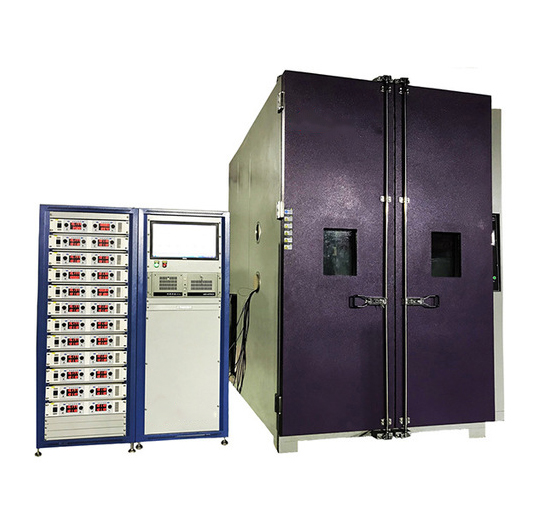
Thermal Cycling Damp Heat and Freeze Test Chamber is an environmental reliability testing system designed to evaluate photovoltaic modules under extreme temperature variation and high-humidity freezing conditions. By repeatedly cycling between high temperature, low temperature, and damp heat environments, the chamber simulates day–night temperature differences, seasonal transitions, and freeze–thaw stresses encountered during long-term outdoor operation. The system is used to verify structural integrity, electrical performance stability, and encapsulation durability of photovoltaic modules, serving as a critical test platform for design validation, type testing, and quality control.
Parameters
| Item | Technical Specification |
|---|---|
| Temperature range | -40 ℃ to 85 ℃ |
| Temperature fluctuation | ≤ ±1 ℃ |
| Temperature deviation | ≤ ±1 ℃ |
| Temperature uniformity | ≤ ±2 ℃ |
| Heating and cooling rate | Compliant with IEC 61215 requirements |
| Humidity range | 30 %RH to 98 %RH |
| Relative humidity deviation | ±3 %FS; 85 ±2 %RH; 90 ±2 %RH |
| Humidity fluctuation | ±2 %RH |
| Humidity uniformity | ≤ 2 %RH |
| Temperature change rate | ≤ 100 ℃/h |
| Extreme temperature dwell time | ≥ 10 min |
| Test cycle count | 200 cycles or 50 cycles |
| Maximum sample capacity | 12 photovoltaic modules |
| Inner chamber dimensions | Approx. 1.5 × 2.5 × 1.5 m (L × W × H) |
| Outer chamber dimensions | Approx. 2.5 × 3.0 × 2.5 m (L × W × H) |
| Power supply | AC 380 V / 60 Hz |
Features
High-precision temperature and humidity control system meeting stringent photovoltaic testing requirements
Supports both thermal cycling and damp heat freeze test modes, covering all relevant IEC 61215 clauses
Independent closed-loop control of temperature and humidity ensures fast response and stable operation
Large chamber volume enables simultaneous testing of multiple large-size photovoltaic modules
Touchscreen programmable control supports multi-step program editing and cyclic operation
Real-time display of setpoint and actual curves ensures intuitive monitoring and data traceability
Power failure memory and automatic recovery functions maintain test continuity
Environmentally friendly refrigeration system with reliable operation and low maintenance cost
Accessories
(1)Programmable control system with touchscreen interface
(2)High-precision industrial-grade temperature and humidity sensors
(3)Refrigeration compressor unit using environmentally friendly refrigerant
(4)Photovoltaic module sample racks compatible with multiple module sizes
(5)Drainage and condensation management system
(6)Optional data acquisition and management software for PC connection and data export
(7)Optional remote monitoring module for operation status viewing
(8)Consumable sealing strips for periodic replacement
(9)Humidity water filtration components to ensure humidification water quality
Test Procedures
Inspect photovoltaic modules to confirm no visible mechanical damage before testing
Install modules on the sample racks, ensuring uniform stress distribution and secure fixation
Set thermal cycling parameters according to applicable standards, including heating and cooling rates and dwell times
Initiate the test program; the system automatically performs high-temperature hold, cooling, low-temperature hold, and heating stages
For damp heat freeze testing, ensure the humidification system operates with qualified water quality
Avoid frequent door opening during high and low temperature operation to prevent thermal shock
After completion, allow the chamber temperature to return to a safe range before removing samples
Maintenance Information
Regularly inspect temperature and humidity sensors to ensure measurement accuracy
Check refrigeration and humidification systems for stable operation and proper refrigerant performance
Clean drainage and condensation systems to prevent water accumulation inside the chamber
Periodically inspect door seals and replace consumable sealing strips when necessary
Verify control system operation and backup parameters to ensure reliable long-term testing
FAQ
What is the main purpose of the Thermal Cycling Damp Heat and Freeze Test Chamber?
The chamber is designed to assess the long-term reliability of photovoltaic modules by simulating extreme environmental stresses encountered during outdoor operation. Through repeated cycling between high temperature, low temperature, and high humidity freezing conditions, the system reproduces thermal stress, cold stress, and damp freeze stress. This enables identification of potential failures such as cracking, delamination, bubbling, or electrical performance degradation before products are deployed in the field.
Which photovoltaic module technologies can be tested in this chamber?
The chamber supports testing of crystalline silicon photovoltaic modules, including monocrystalline and polycrystalline types, as well as thin-film modules such as CdTe, CIGS, and amorphous silicon. It is also suitable for evaluating encapsulation materials like EVA, backsheets, and glass, making it applicable across a wide range of photovoltaic technologies and development stages.
How does the chamber ensure compliance with IEC 61215 thermal cycling requirements?
Heating and cooling rates, temperature limits, dwell times, and cycle counts are designed to meet IEC 61215 requirements. The system uses independent closed-loop temperature control to maintain uniformity and stability during transitions, ensuring that each cycle accurately reflects standard-defined thermal stress conditions throughout the entire test sequence.
