




Search keywords:
product name, product type, model number,
test method, manufacturer, technique, application
-
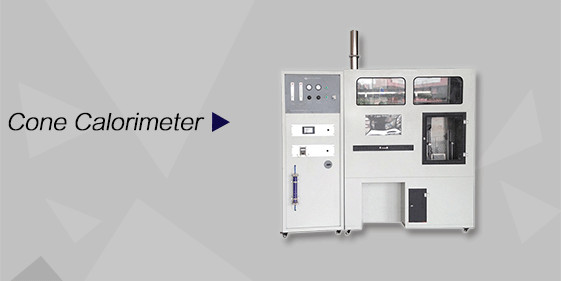
Cone Calorimeter
The import of American VTEC, cone calorimeter ultra high cost performance
more
-
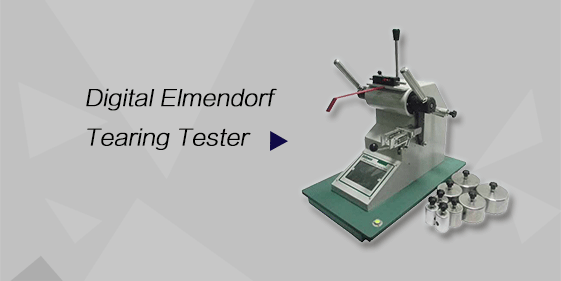
Digital Elmendorf Tearing Tester
Pendulum method test material tear strength, operating more simple, more accurate data
more
-

ZwickiLine Materials testing machines
Top of the world's leading universal material testing machine
more
Damp Heat Test Chamber
BACK

Standards:
The chamber complies with the following international standards: (1) GB/T IEC 61215 – Crystalline Silicon Terrestrial Photovoltaic Modules – Design Qualification and Type Approval (2) UL 1703 – Safety Standard for Photovoltaic Modules
Applications:
The Damp Heat Test Chamber is suitable for:
Damp-heat performance testing of photovoltaic modules
R&D and quality control of PV modules
Type certification and qualification tests
Indoor laboratory simulation of outdoor high temperature and humidity
Accelerated aging and lifespan evaluation of PV modules
Environmental adaptability studies and standard verification
Scientific research and laboratory durability studies
Product Information:
The Damp Heat Test Chamber is a high-precision environmental test device designed for evaluating the durability of photovoltaic modules under high temperature and high humidity conditions. By simulating prolonged exposure to extreme damp-heat environments in a sealed chamber, it assesses PV module materials, encapsulation, and electrical performance, providing critical insights into long-term reliability and resistance to extreme environmental stress.
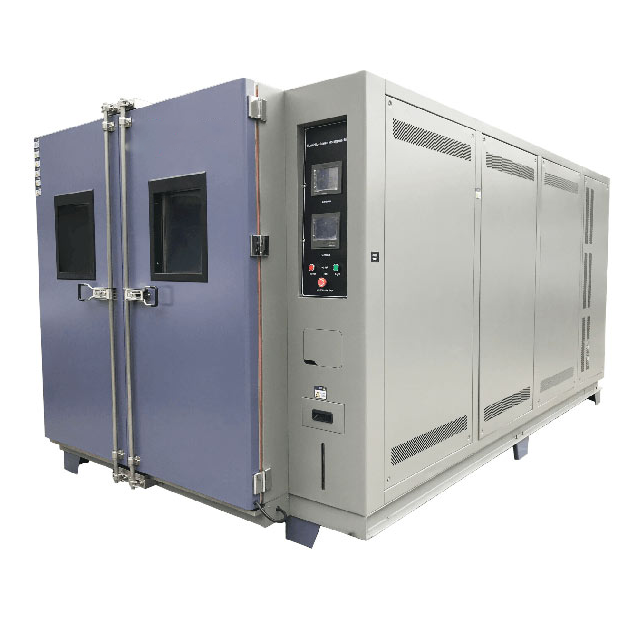
Parameters
| Item | Technical Specification |
|---|---|
| Test Temperature | 85℃ ±2℃ |
| Relative Humidity | 85% ±5% |
| Temperature Fluctuation | ≤±1℃ |
| Temperature Deviation | ≤±1℃ |
| Temperature Uniformity | ≤2℃ |
| Humidity Range | 30~95%RH |
| Relative Humidity Deviation | ≤±2.5%RH (for RH>75%) |
| Common Test Points | 85℃/85%RH ≥1000h; 90℃/90%RH ≥1000h |
| Control Method | Touchscreen + PID automatic control |
| Sample Capacity | Up to 12 PV modules |
| Inner Chamber Size | 1.5 × 2.5 × 1.5 m (L×W×H) |
| Outer Chamber Size | 2.5 × 3.0 × 2.5 m (L×W×H) |
| Inner Material | SUS #304 stainless steel panel |
| Outer Material | Powder-coated steel |
| Insulation Material | Rigid foam + glass wool |
| Test Door | Double swing, center-opening |
| Program Memory | Power failure automatic restart and continuation |
| Communication Interface | RS-232 or RS-485 |
| Circulation System | Fan-driven air circulation |
| Refrigerant | Environmentally friendly refrigerant; water-cooled condenser |
| Control Display | Touchscreen, English/Chinese switchable |
| Data Acquisition | Real-time graphical display, exportable |
| Power Supply | 380V, 60Hz |
Features
High precision temperature and humidity control: temperature fluctuation ≤±1℃, humidity deviation ≤±2.5%RH
Long-term high-temperature, high-humidity tests compliant with 85℃/85%RH ≥1000h standard
Touchscreen with PID automatic control ensures simple operation and accurate regulation
Inner SUS304 stainless steel chamber for corrosion and heat resistance; powder-coated steel outer chamber for durability and aesthetics
Double swing door design for convenient sample loading and unloading
Power failure memory function enhances safety and experiment continuity
RS-232/RS-485 communication interface for easy data acquisition and report export
Fan circulation ensures uniform temperature and humidity for precise testing
Environmentally friendly refrigerant with water-cooled condenser ensures energy efficiency
Accessories
(1) Damp Heat Test Chamber Main Unit – inner/outer chamber, fan circulation, refrigerant, control system
(2) Touchscreen Control Panel – PID program setup and real-time monitoring
(3) Sample Holder – accommodates up to 12 PV modules
(4) Consumable Refrigerant – environmentally friendly
(5) Insulation Materials – PU foam and glass wool
(6) Optional Data Acquisition and Analysis Software – supports data export, historical records, and graphical display
Test Procedures
Sample Installation: Secure PV modules on the sample holder evenly.
Program Setting: Set target temperature 85℃ ±2℃, relative humidity 85% ±5%, and test duration.
Start Test: The system automatically executes heating, humidifying, and fan circulation control.
Real-Time Monitoring: Touchscreen displays temperature and humidity curves and experiment status.
Test Completion: Record temperature and humidity data, and duration; then shut down the chamber.
Sample Removal: Allow modules to cool to room temperature before removal for performance testing or visual inspection.
Data Analysis and Archiving: Generate reports for evaluation of PV module damp-heat durability.
Maintenance Information
Ensure proper grounding of the power supply and secure refrigerant connections
Check sample holder stability and maintain safe distances from heating and humidifying components
Regularly inspect refrigerant, fan system, and insulation materials to ensure testing precision
Avoid opening the chamber door during operation to maintain environmental stability
Store and back up data for experiment traceability
Periodically clean chamber surfaces to prevent condensation residue affecting uniformity
Conclusion
The Damp Heat Test Chamber delivers precise and reliable simulation of high-temperature, high-humidity environments for photovoltaic modules. Its advanced temperature and humidity control, long-term stability, and safety features allow for accelerated aging, R&D evaluation, and type certification testing. By replicating extreme outdoor damp-heat conditions, it ensures comprehensive assessment of PV module reliability, material integrity, and electrical performance, fully supporting IEC 61215 and UL 1703 compliance.
FAQ
1. What is the main purpose of the Damp Heat Test Chamber?
The chamber simulates extreme high-temperature and high-humidity environments to assess PV module durability. It evaluates material stability, encapsulation integrity, and electrical performance under prolonged damp-heat exposure, providing critical data for reliability and lifespan analysis.
2. How many PV modules can be tested at the same time?
The chamber can accommodate up to 12 PV modules. The sample holder ensures stable, evenly spaced placement, allowing multiple modules to undergo identical damp-heat cycles simultaneously, which improves experimental efficiency and data consistency.
3. What is the accuracy of temperature and humidity control?
Temperature fluctuation is ≤±1℃, deviation ≤±1℃, uniformity ≤2℃. Humidity deviation is ≤±2.5%RH, and uniformity is within 2%RH. This guarantees accurate simulation of damp-heat environments for reliable, repeatable results.
