




Search keywords:
product name, product type, model number,
test method, manufacturer, technique, application
-
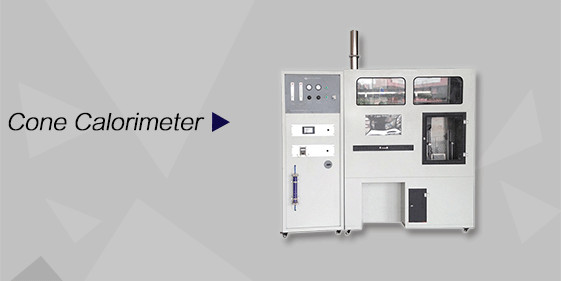
Cone Calorimeter
The import of American VTEC, cone calorimeter ultra high cost performance
more
-
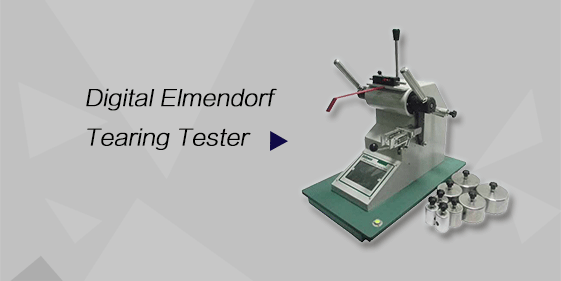
Digital Elmendorf Tearing Tester
Pendulum method test material tear strength, operating more simple, more accurate data
more
-
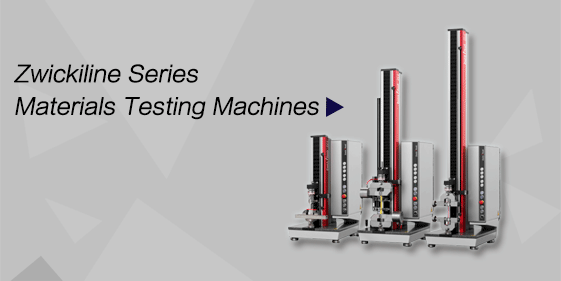
ZwickiLine Materials testing machines
Top of the world's leading universal material testing machine
more
Sandbag Mechanical Load Testing Machine
BACK

Standards:
The machine is designed to comply with international and domestic PV module mechanical testing standards: GB/T 9535 series – Mechanical Load Testing of Photovoltaic Modules IEC 61215 – Crystalline Silicon PV Module Design Qualification and Type Approval IEC 61646 – Thin-Film PV Module Design Qualification IEC 62782 – Mechanical Load Testing of PV Modules under Snow and Wind UL 1703 – Safety Standard for Photovoltaic Modules
Applications:
The machine is widely used for mechanical performance testing and structural verification of PV modules:
Photovoltaic Module Load Testing: Static and dynamic load endurance evaluation.
Environmental Simulation: Wind, snow, and ice load testing.
Structural Safety and Compressive Strength Verification: Ensuring module stability under stress.
Installation Scheme Optimization: Evaluating mounting reliability and performance.
Electrical Continuity Monitoring: Real-time detection of short circuits and circuit integrity.
Standardized Laboratory Testing: For wind and solar energy experiment labs.
Certification Testing: Compliant with IEC 61215. IEC 61646. UL 1703. IEC 62782.
Product Information:
The Sandbag Mechanical Load Testing Machine is a precision instrument designed to assess the mechanical load-bearing capacity of photovoltaic (PV) modules under static and dynamic conditions. By combining sandbag static loads with dynamic pressure from low-friction cylinders, it simulates wind, snow, and ice loads. This enables accurate evaluation of compressive strength, structural stability, and overall reliability, ensuring PV modules perform safely under real-world environmental conditions.
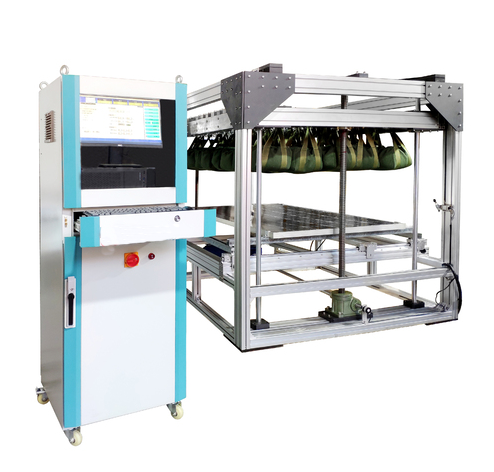
Parameters
| Item | Technical Parameter |
|---|---|
| Machine Dimensions | L 280 × D 180 × H 195 cm |
| Forward Load | 5400 Pa (adjustable) |
| Reverse Load | 2400 Pa (adjustable) |
| Cycle Count | Programmable |
| Dynamic Load Frequency | 7 s ±3 s |
| Dynamic Load | 1000 Pa × 1000 cycles |
| Pressure Control Accuracy | ±5% |
| Force System | Sandbag + low-friction cylinder + tension/compression sensor (0.1 N accuracy) |
| Frame Material | Aluminum profile structure with electrophoretic surface treatment |
| Max Test Size | 2000 × 1000 mm (customizable) |
| Custom Fixtures | Adjustable according to module installation |
| Electrical Continuity System | DC 150 V / 2 A, real-time monitoring |
| Number of Cylinders | 8 (4 sets × 2) |
| Cylinder Force per Set | >200 kg |
| Cylinder Stroke | 150 mm |
| Suction Cups | 32 (8 sets × 4) |
| Suction Cup Diameter | 120 mm |
| Suction Cup Spacing | ≤200 mm (horizontal/vertical) |
| Suction Cup Joint Rotation | ≥15° |
Features
Combines sandbag static load and cylinder dynamic load to simulate real environmental conditions.
Aluminum frame provides uniform force distribution; electrophoretic surface treatment ensures durability.
Maximum test size 2000×1000 mm; custom sizes available.
Custom fixtures allow flexible adaptation to different module installation methods.
Electrical continuity system ensures module circuitry safety during testing.
Mature upper computer software with user-friendly interface; supports Chinese and English.
Real-time display of pressure, deformation, cycle count, and electrical continuity.
Automatic pressure stabilization to target values, with continuous monitoring.
Data storage and report generation in Word, Excel, PDF, and JPG formats.
Fault warning system provides alerts and operational guidance for safe operation.
Accessories
Main Machine: Sandbag loading system, cylinders, suction cups, aluminum profile frame.
Upper Computer Software: Real-time control and data acquisition, multilingual interface.
Custom Fixtures: Adjustable according to module size and mounting method.
Electrical Continuity Monitoring System: DC 150 V / 2 A, real-time monitoring of module circuits.
Force Sensor: Tension/compression sensor, 0.1 N accuracy.
Optional: Pressure calibration kit for periodic calibration of cylinders and sensors.
Test Procedures
Ensure proper grounding and verify electrical continuity monitoring system connectivity.
Fix the PV module in the custom fixture, ensuring uniform force distribution.
Set testing parameters: forward/reverse load, cycle count, dynamic load frequency.
Confirm cylinder and suction cup operation before starting the test program.
Avoid opening the machine during testing to prevent load interference.
After testing, data is automatically stored; export reports as needed.
Periodically calibrate cylinder pressure and force sensors to maintain test accuracy.
Maintenance Information
Verify grounding and electrical connections before each test.
Inspect custom fixtures, suction cups, and sandbags for wear or damage.
Clean the aluminum frame periodically; maintain electrophoretic surface integrity.
Calibrate cylinders and force sensors regularly for accurate measurements.
Ensure electrical continuity monitoring system is functioning properly.
Conclusion
The Sandbag Mechanical Load Testing Machine provides accurate simulation of static and dynamic mechanical stresses on photovoltaic modules. Its combined sandbag and cylinder loading system, custom fixtures, and real-time monitoring enable reliable assessment of compressive strength, structural stability, and electrical continuity. It is an essential tool for PV module design validation, certification, and quality control.
FAQ
What is the purpose of combining sandbag and cylinder loads?
Combining sandbag static load with cylinder dynamic load allows simulation of real environmental conditions such as wind, snow, and ice. This combination accurately evaluates the PV module’s compressive strength and structural stability under both static and dynamic stresses, ensuring that modules meet safety and reliability standards.
How is electrical continuity monitored during the test?
The electrical continuity system operates at DC 150V / 2A, continuously monitoring the module’s internal circuitry. If any disconnection or short occurs, the system triggers an alert to prevent damage during load application. This ensures testing is safe and reliable while maintaining data integrity.
Can the machine accommodate different module sizes?
Yes, the standard maximum test size is 2000×1000 mm. Custom fixtures and optional adjustments allow larger or non-standard modules to be tested, providing flexibility for R&D, quality control, and certification labs.
How are test data and results recorded?
