





How to measure ultraviolet radiation exposure?
2025/12/09
Share:

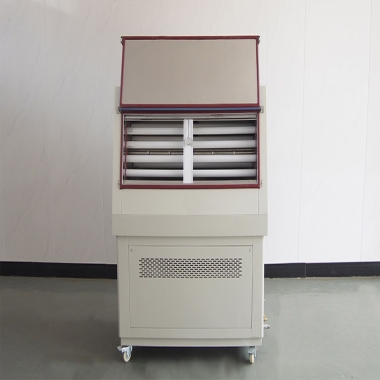
UV protection testing equipment provides precise measurement data to help scientists study sun-protective fabrics. Using data, rather than empirical estimates, allows for more accurate formulation development. The need for blind experimentation is eliminated.
Excessive UV radiation can cause various harms to human health and the environment, including skin damage, eye diseases, immunosuppression, and photoaging. Long-term exposure may also increase the risk of skin cancer, necessitating scientific protection to mitigate these effects.
The Dangers of Strong Ultraviolet Radiation
Different wavelengths of ultraviolet radiation pose varying degrees of harm to the human body. Ultraviolet radiation is categorized into long-wave (UVA), medium-wave (UVB), and short-wave (UVC) wavelengths. UVA (wavelength 320–400 nm), also known as long-wave ultraviolet radiation causing tanning, is present in sunlight. Over 98% of UVA in sunlight penetrates the ozone layer and clouds to reach the Earth's surface. UVA can directly reach the skin's outer layer, damaging elastic fibers and collagen fibers, causing tanning and premature aging. Prolonged exposure can lead to skin cancer. UVB (wavelength 275–320 nm), also known as medium-wave ultraviolet radiation causing erythema, is mostly absorbed by the ozone layer, with less than 2% reaching the Earth's surface. It is particularly intense in summer and during the afternoon. UVB ultraviolet radiation has an erythema effect on the human body, promoting mineral metabolism and vitamin D formation. However, prolonged or excessive exposure can cause tanning, erythema, inflammation, and premature aging; in severe cases, it can lead to skin cancer. UVC wavelengths (200-280nm), biologically known as short-wave germicidal ultraviolet radiation, are completely absorbed by the ozone layer in sunlight. UVC is very harmful to the human body; short-term exposure can burn the skin, and long-term or high-intensity exposure can cause skin cancer. Ultraviolet lamps emit UVC short-wave ultraviolet radiation. 222nm ultraviolet radiation (human-friendly ultraviolet radiation) falls within the UVC range, but it differs from ordinary UVC. Japanese researchers have found that 200-230nm ultraviolet radiation has weak penetrating power and cannot penetrate the cornea and skin, allowing direct exposure to the human body; it is considered safe ultraviolet radiation.
Human Perception of Ultraviolet Radiation
The human visual system can perceive ultraviolet radiation, but this perception ability changes with age and eye structure. The lens usually filters out most ultraviolet radiation, protecting the eyes from harm. However, for most people, while the lens filters out most ultraviolet radiation and protects the eyes, most young people can still perceive some ultraviolet radiation. In a small study published in the journal *PLOS ONE* in 2018. all participants at the University of Georgia in the United States could see ultraviolet light at around 315 nanometers. Participants all reported seeing a light that appeared as an unsaturated violet-blue. This ability appears to begin to decline around age 30. suggesting that aging reduces people's ability to see ultraviolet light. Some people can also see a wider ultraviolet spectrum. Some cataract patients who require surgery to remove their lens can see ultraviolet light immediately after the procedure. For these individuals, and for those born without a lens, ultraviolet light appears as a pale blue or pale purple.
Main Methods of Ultraviolet (UV) Detection
Physical Detection Methods
1. Fluorescence Method: Utilizes the property of certain materials (such as phosphors and dyes) to emit light under UV irradiation. UV intensity can be indirectly determined by observing fluorescence intensity or color changes.
Photosensitive Material Method: UV-sensitive materials (such as photochromic coatings) change color or transparency under UV light, suitable for qualitative detection.
Chemical Detection Methods
2. Photosensitive Test Strips: Test strips containing photosensitive reagents, when exposed to UV light, show color changes to determine the presence and intensity of UV light. For example, some test strips show color in the UV-A band (315-400 nm).
Photolysis Reaction Detection: Utilizes UV light to induce the decomposition of specific chemical substances; the UV intensity is inferred by measuring the concentration of decomposition products.
Electronic Detection Methods
3. Photoelectric Sensors: Use UV-sensitive photodiodes or photomultiplier tubes to convert light signals into electrical signals, directly measuring UV intensity. These devices are commonly used in industrial or laboratory environments.
Spectrometer: It separates ultraviolet light of different wavelengths through spectral separation technology and combines detectors to quantitatively analyze the energy distribution of each wavelength band, making it suitable for high-precision scientific research scenarios.
Multi-faceted Support
The UV protection tester is more than just a simple testing tool; it's a "scientific assistant" perfectly suited to the needs of the R&D process. It provides comprehensive support for formulation improvement in three key areas: real-time feedback, multi-dimensional analysis, and scenario adaptation.
1. Real-time data feedback enables R&D teams to complete trial-and-error cycles faster. The speed at which researchers can validate formulation changes determines their efficiency in completing R&D work. The R&D process is time-consuming because third-party testing agencies require several days to provide results. The UV protection tester system enables R&D teams to perform testing operations at high speed. The R&D laboratory can provide instant test results without sample preparation, allowing researchers to conduct tests directly. The R&D laboratory allows researchers to immediately evaluate the effects of improvements on fibers and processing methods. The system enables users to quickly generate new formulation combinations while minimizing unnecessary testing procedures.
2. Analyzing from multiple perspectives to explore optimization methods. Sunscreen fabrics need two basic characteristics to achieve high-quality protection against UVA and UVB radiation while meeting UPF value requirements. Furthermore, it is crucial that the fabric maintains its protective properties during washing. Standard testing methods only generate a single UPF value, failing to provide researchers with detailed analytical information. The formulation evaluation process is extremely challenging for scientists due to the need to test specific problems. For example, a formulation might exhibit excellent UPF protection but insufficient UVA protection. Sunscreen ingredients added to the formulation by researchers might lose their effectiveness after fabric washing.
This UV protection tester generates test results containing multi-dimensional data. It not only displays the UPF value but also accurately shows the amount of UVA and UVB radiation penetrating the material. The collected data allows researchers to identify deficiencies in the formulation. Researchers need to optimize the formulation through two key improvements: improving UVA protection and adding wash-resistant additives. Using this method, scientists can precisely adjust the formulation to produce higher-performance sun-protective fabrics.
3. Adaptable to various R&D scenarios and compatible with different materials and fabrics. Sun-protective fabrics are mainly derived from three materials: natural fibers, synthetic fibers, and their blends. The production process of these fabrics involves three separate steps: knitting, weaving, and coating treatment. Specific testing equipment is required for conducting multiple R&D projects. Equipment that can only test one type of material or process limits research potential, as research institutions would need to purchase additional equipment for other tests.
This UV protection tester boasts advanced capabilities, enabling researchers to conduct a wide range of R&D studies. Users can utilize this equipment to test sun-protective fabrics made from different materials and manufacturing methods. The device provides reliable and accurate test results for all fabrics, from lightweight summer sun-protective fabrics to heavy outdoor textiles. It tests raw materials before finishing and coating processes. Scientists can evaluate multiple formulation combinations on a single testing unit without requiring hardware modifications between experiments.
Previous: FAQs About Carbon Black Content Tester
N e x t : What are the main types of artificial intelligence?
