





What is the Filter Media Tester G350?
2025/12/30
Share:

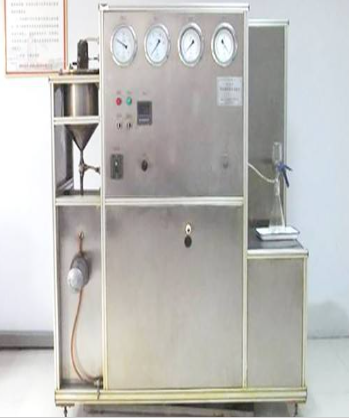
What types of filter media testers are there?
8130A Automatic Filter Media Tester: Suitable for testing special respirator filter media, disposable face shields, and various filter media. It features high sensitivity and resolution, with a filtration efficiency of up to 99.9999%.
MFP 3000 Modular Filter Media Test Stand: Used for testing flat filter media and micro-filters. It features high automation and self-diagnostic capabilities, simplifying operation, increasing test volume, and improving overall testing performance.
G505 Filter Media Filtration Performance Tester: Simulates the use of filter bags in baghouse dust collectors, quickly obtaining performance evaluation parameters for filter media, and accurately evaluating the quality, performance, and lifespan of filter materials. The GK-1000 Filter Media Comprehensive Performance Tester is suitable for testing various air filter materials, medical masks, and some personal protective equipment. It incorporates advanced design concepts from similar international equipment.
These instruments provide data for product performance verification in scientific research, testing, and industrial production, making them the optimal choice for new filter material development, product quality control, and material performance verification.
Principle: Air is first introduced into a vertical dust-generating duct, creating a dirty airflow filled with dust. The dust disperses within the dust generator with the compressed air, forming a uniform concentration that is then evenly distributed throughout the vertical duct and flows downwards. Some dust reaches the horizontal duct and is carried by the intake airflow through the test filter media, exposing it to a constant airflow and dust concentration to simulate the operation of a cleanable filter media. The dust forms a powder cake, causing an increase in pressure drop. A differential pressure sensor monitors the pressure drop across the test filter media in real time. Once the pressure drop reaches a preset value, the system releases a pulse of clean compressed air towards the powder cake formed on the dirty side, performing backflushing (online cleaning) without affecting the airflow. Afterwards, the test filter media re-filters dust, and this cycle repeats. The cleaning pulses must be precisely timed and highly repeatable to ensure that the pressure surface across the filter media is even and consistent each time. The removed powder cake and remaining dust fall downwards with the vertical airflow to a dust collector at the bottom of the dirty air duct. The instrument is also equipped with a dirty gas filter to prevent dust from redispersing upstream of the dirty gas on the test filter material, which would result in an unclear dust concentration and invalidate the measurement (especially the important parameter: residual pressure drop). This design enables error-free long-term operation without the need for frequent and complete interruptions to measurements due to cleaning dust deposits.
Operating Instructions
Preparation
1. Check Equipment Connections: Ensure the air compressor and test hose are correctly connected. Check all interfaces on the tester for secure connections.
2. Power On and Preheating: Turn on the tester's main power switch and press the "Heating" button (for some tests that do not require heating, such as DEHS, DOP, PAO, and paraffin oil aerosol tests, the "Heating" switch should be turned off). Set the heating temperature to 120°C (this may vary depending on the specific tester model). Simultaneously press the "Fan" button. Adjust the pneumatic clamp pressure regulating valve of the tester to between 0.3 MPa and 0.4 MPa. Maintain the air supply flow rate at 50-70 L/min using the air supply regulating valve. Preheat the entire unit for 5 minutes or longer (the specific preheating time depends on the equipment requirements).
3. Prepare Aerosol Solution: Add the test aerosol solution (such as 2% NaCl, DEHSDOP/PAO, or paraffin oil aerosol solution) to the aerosol generator. Ensure the hose connections are correct. When changing to different aerosol solutions, it is best to close the air compressor valve and ensure the "Spray" button switch is in the off position to prevent solution overflow from the aerosol generator and corrosion of the tester panel.
Procedure
1. Open the software and interface settings: Turn on the computer and double-click the test software icon (such as FilterestV1.0.0.8 or PEFTester) to enter the test interface. Select the appropriate test mode and parameter settings according to the test requirements.
2. Place the sample: Place the sample to be tested in the designated position on the tester, such as on a stainless steel mesh, ensuring the sample is flat and wrinkle-free. For surface-mounted samples, unfold any wrinkles and fix them to the sample holder to ensure the target area is a single layer of material.
3. Set the test parameters: Set the test parameters on the test interface, such as concentration adjustment, mass concentration setting, test time, etc. The operation steps may vary depending on the specific tester model and software version.
4. Start the test: Click the "Start Test" button or press the start button to begin the test. The tester will automatically perform the filtration efficiency test and generate a test report.
5. Result Processing: After the test is completed, you can view the test results through the testing software and choose to print or save the test report. If you need to continue testing, simply repeat the above steps.
Routine Maintenance and Management
Regular inspections are crucial for ensuring the stable operation of instruments during routine maintenance. Maintenance personnel must conduct comprehensive and meticulous inspections of all parts of the instrument according to established schedules. This includes the electrical system, carefully checking for aging or short circuits in the wiring to ensure stable current transmission; testing the sensitivity and accuracy of sensors to ensure accurate data signal capture and transmission; and checking the tightness of mechanical components for looseness or deformation, ensuring the instrument functions properly in all aspects.
Cleaning is also essential. Over time, dust, dirt, and other impurities accumulate on the instrument's surface and inside, affecting performance. Therefore, regular cleaning is necessary, especially of sensors and test chambers. Dirt on sensor surfaces can interfere with signal reception and transmission, and an unclean test chamber can affect the accuracy of test results. Regular cleaning maintains instrument performance and keeps it in good condition.
Lubrication is vital for the instrument's mechanical and transmission components. Friction occurs between parts during operation; insufficient lubrication increases energy consumption, accelerates wear, and shortens the instrument's lifespan. Maintenance personnel must lubricate with a suitable lubricant at prescribed intervals to ensure smooth operation of components and maintain overall instrument performance.
During instrument use, vulnerable parts will wear down over time. For example, sealing rings, which prevent leaks, will experience severe wear, leading to internal leaks and affecting operation; worn and aged connecting pipes will affect performance and safety. Therefore, worn spare parts should be replaced regularly to prevent malfunctions and ensure continuous and stable instrument operation.
Even with the above maintenance measures, the instrument may still malfunction. Do not attempt to disassemble and repair it yourself if a malfunction occurs. The instrument has a complex internal structure and tightly interconnected components; improper operation by non-professionals can further damage the instrument or even cause safety accidents. Contact professional repair personnel immediately. They are experienced and can accurately diagnose the cause of the malfunction and effectively repair it, quickly restoring the instrument to operation.
As a key tool for evaluating the performance of filter materials, the filter media tester ensures the reliability of test results and the stability of instrument operation through its precise testing capabilities, standardized operating procedures, and comprehensive daily maintenance management. Whether for scientific research exploring the potential of new filter materials or for rigorous quality control in industrial production, the filter media tester plays an indispensable role. Proper use and careful maintenance will provide strong support for the development of the filter materials field, propelling the industry to new heights.
Previous: FAQs About Vehicle Fabric Abrasion Tester
N e x t : What is Mask Leakage Tester?
