





UV Aging Test Chamber ,ASTM G154
2025/12/31
Share:

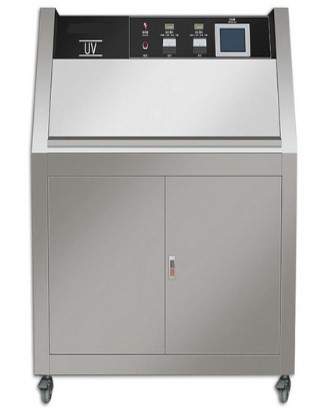
In ultraviolet (UV) aging testing, numerous tests, standards, and methods exist. Weng Kai provides interpretations of various UV aging test standards to help customers better assess product durability.
The most widely used UV aging test standards are ASTM G154 and ASTM G155. Both standards can test the accelerated aging of materials. Although these two tests are similar, their applications and purposes differ significantly. Understanding the differences between ASTM G154 and ASTM G155 can help customers choose the better test standard to meet their needs.
Differences between ASTM G154 and ASTM G155
The most significant difference between ASTM G154 and ASTM G155 is that ASTM G154 uses fluorescent lamps to simulate UVA and UVB, while ASTM G155 uses xenon arc lamps to simulate materials exposed to natural light.
Both light sources can accurately predict the effects of sunlight on products based on accelerated aging. While both methods can simulate indoor and outdoor sunlight exposure, xenon arc lamps are more similar to natural sunlight; therefore, xenon arc lamps are a better choice for testing outdoor products. With this in mind, ASTM G154. which uses fluorescent lighting equipment, is generally recommended for indoor UV testing, such as exposure to sunlight through a window.
ASTM G154 is one of several methods used for QUV (Quasi-Ultraviolet) testing to simulate UV exposure to surface finishes, coatings, and polymers. Because it uses fluorescent lamps, ASTM G154/QUV testing is generally not used to assess color changes over time.
Both UV exposure testing methods provide good results and, through accelerated aging tests, can effectively demonstrate your product's durability under natural sunlight.
Principle
Ultraviolet (UV) radiation is one of the main factors causing material aging. Its energy can damage the molecular structure of materials, leading to problems such as color fading, surface cracking, embrittlement, and decreased strength. The box-type UV aging test chamber (GB/T 14522) simulates the UV components of sunlight using high-intensity UV lamps (such as UVA-340 and UVB-313), combined with a controlled temperature and humidity environment, to simulate the natural aging process of materials outdoors over several years or even decades in a short period (such as hundreds to thousands of hours).
Application Scenarios
Coatings and Inks: Testing the weather resistance of automotive paints, architectural coatings, and printing inks, and evaluating color stability and gloss retention.
Plastics and Rubber: Testing the UV resistance of plastic products (such as pipes and films), rubber seals, and tires to prevent cracking or performance degradation.
Textiles and Leather: Evaluating the lightfastness of outdoor tents, sun-protective clothing, and automotive seat leather to ensure that color and strength meet usage requirements.
Building Materials: This test assesses the durability of glass curtain wall coatings, aluminum composite panels, and stone materials, verifying their performance stability under long-term sunlight exposure.
Main Parameters
The main parameters of the UV aging test chamber may vary depending on the brand and model, but generally include the following: Temperature Range: Typically RT+10℃~70℃, i.e., room temperature plus 10℃ to 70℃. This temperature range simulates temperature changes under different climatic conditions, meeting various testing needs. Humidity Range: Generally, humidity is required to be no less than 95% RT to simulate high humidity conditions in the natural environment. High humidity helps accelerate the aging process of materials and improves the accuracy of the test. Lamp Distance: The distance between lamps is usually 70mm to ensure uniform UV irradiation. This distance can be adjusted according to actual testing needs. Sample and Lamp Distance: The distance between the sample and the lamp is generally 50mm, and they should be parallel. This distance ensures that the sample receives sufficient UV irradiation while avoiding excessive irradiation that could cause rapid aging. Ultraviolet Wavelength: Ultraviolet aging test chambers typically use two light sources: UVA-340 and UVB-313. UVA-340 can simulate the sunlight spectrum in the critical short-wavelength range (wavelength range of 295~360nm), while UVB-313 is used for maximum accelerated testing. Users can choose the appropriate light source according to their actual testing needs.
The UV accelerated aging test chamber, also known as a UV accelerated weathering tester, simulates the ultraviolet light and humidity conditions of the natural environment to test the weather resistance of materials and help evaluate their durability in practical use. It mainly comes in two types: box-type and inclined tower-type.
Box-type UV accelerated weathering test chamber
1. Structural design: The chamber is square or rectangular in shape, with a horizontal test area where samples are placed on a flat surface inside the chamber. The chamber and interior are mostly made of stainless steel, manufactured using CNC equipment, resulting in smooth lines and an aesthetically pleasing appearance. The lamps are the core component, using high-quality light sources that provide uniform irradiance, meet standards, and have a long lifespan. It is equipped with a high-precision temperature sensor and a circulating air duct to ensure uniform and stable temperature inside the chamber.
2. Working principle: It typically uses a circulating test. The ultraviolet lamps are fixed to the top of the test chamber, and a fan circulates and agitates the air to subject the samples to ultraviolet radiation. It simulates environmental conditions such as ultraviolet radiation, rain, high temperature, high humidity, condensation, and darkness found in natural sunlight. By controlling parameters such as the wavelength, irradiance, exposure time, and temperature of ultraviolet light, it accelerates the aging process of materials, reproducing the damage caused by outdoor exposure over several months to years in a short time.
3. Ease of Operation: Utilizing an advanced control system with programmable design, it allows users to easily set and adjust test parameters. It also features an automatic alarm function, providing timely alerts in case of malfunctions or misoperation, ensuring accurate and safe testing. Sample placement and replacement are easy, the structure is simple, and maintenance and cleaning are relatively simple. It is suitable for test items with irregular or regular shapes and a thickness greater than 1 cm.
Inclined Tower UV Accelerated Weathering Chamber
1. Structural Design: The chamber is tower-shaped with an inclined test area, where samples are placed on the test platform. The chamber body is made of 1.2mm thick 304SUS high-grade stainless steel, manufactured using CNC equipment. The internal air duct is a single-circulation system, equipped with an imported axial flow fan to enhance airflow and heating capacity. 1. **Test Chamber:** The test chamber contains eight UVA or UVB ultraviolet lamps with a lifespan exceeding 1600 hours. The sample holder is made of stainless steel or aluminum alloy, ensuring durability.
2. **Working Principle:** Generally employs a radiation-type test. The ultraviolet lamps are fixed to the side of the test platform, and the sample is placed statically, directly irradiated by the lamp radiation. Similarly, fluorescent ultraviolet lamps simulate the ultraviolet spectrum in sunlight. Combined with temperature and humidity control devices, it simulates the damage caused by sunlight, rain, and dew to materials. The synergistic effect of ultraviolet light and humidity accelerates material aging.
3. **Operational Convenience:** The test area is tilted, making sample placement and replacement relatively difficult. The tower-shaped structure is complex, and maintenance and cleaning are troublesome. Test samples are typically standard parts such as 75×150 mm thin sheets, with relatively fixed dimensions, limiting the selection of test samples.
These two types of testing machines are widely used in industries such as plastics, packaging, automotive materials, paint coatings, inks, and textiles. They help relevant companies evaluate the lightfastness, weather resistance, and photoaging properties of materials, providing important data for product development and quality control.
Ultraviolet (UV) accelerated aging test chambers play an irreplaceable role in materials research and product quality control. Their primary function is to simulate the damage caused to materials by UV radiation in natural environments, accelerating the aging process and allowing materials to exhibit the aging characteristics of long-term outdoor exposure in a relatively short time.
At the materials research and development level, these chambers significantly shorten the development time required. For example, in the automotive industry, new polymer materials can undergo accelerated aging tests in the chamber for only a few weeks before being put into use, yielding aging data equivalent to several years of outdoor exposure. This data helps researchers quickly improve material performance, thereby driving technological innovation across the industry.
In product quality control, the chambers are equally crucial. In the coatings industry, they accurately assess the weather resistance of coatings, ensuring that coatings used in construction and automotive applications do not fade or peel during long-term use. The textile industry uses them to evaluate the UV resistance of fabrics; for example, outdoor clothing fabrics tested can be guaranteed to remain colorfast and undeformed during prolonged outdoor activities. By using testing chambers, companies can identify potential quality issues before product launch, avoiding losses such as returns and recalls due to material aging, effectively reducing costs and enhancing product competitiveness in the market.
Furthermore, in the fields of failure analysis and lifespan prediction, when products exhibit aging issues during actual use, testing chambers can reproduce the aging process, helping to pinpoint the root cause of the problem. For example, if outdoor tent fabric exhibits embrittlement, simulation testing can identify insufficient UV protectant levels, allowing for improvements in the production process. Moreover, international and industry standards typically include UV aging testing as a mandatory component of material weather resistance testing; testing chambers ensure products meet durability requirements, guaranteeing product quality and safety.
Previous: What is the High Acceleration Shock Test System?
N e x t : What are the key points of cigarette paper filtering?
