





What is the High Acceleration Shock Test System?
2025/12/31
Share:

In fields with high reliability requirements, such as aerospace, military equipment, automotive electronics, and consumer electronics, a product's ability to withstand extreme impact environments is a core indicator determining its performance and lifespan. High Acceleration Shock Test Systems (HASTS), as key equipment for simulating extreme impact scenarios, provide rigorous reliability verification for products by precisely controlling the impact waveform and peak acceleration. This article will systematically analyze the core technologies and application value of this precision testing equipment from four dimensions: working principle, operation method, practical application, and maintenance.
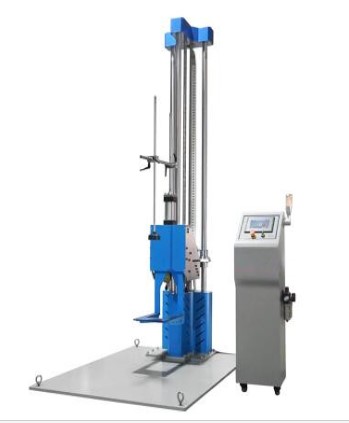
Working Principle
The core principle of the HASTS is based on a pneumatic energy storage-instantaneous release mechanism. The system stores energy in an energy storage device (such as a cylinder or air bladder) using a high-pressure air source (usually compressed air). When the preset pressure is reached, a rapid release valve controls the instantaneous expansion of the energy storage device, driving the test platform (or "impact table") to impact a fixed obstacle or free-falling object with extremely high acceleration, thereby generating a short-duration, high-amplitude impact load on the test sample.
1. Technical Advantages of Pneumatic Drive
High Controllability: By adjusting the air source pressure (typically ranging from 0.1-10 MPa), the peak impact acceleration (up to 50.000 g) and pulse width (as low as 0.05 ms) can be precisely controlled. For example, one system can achieve an acceleration of 3.000 g at 0.3 MPa pressure, and with the assistance of a waveform amplifier, the peak value can exceed 10.000 g.
Simplified Structure: Compared to hydraulic systems, pneumatic drives eliminate the need for hydraulic oil circulation, avoiding the risk of oil leakage and reducing mechanical friction, significantly improving system reliability. In one extreme high-speed system, the impact frequency increased to 120 times/minute after adopting pneumatic drive, far exceeding the 30 times/minute of hydraulically driven equipment.
High-Speed Response: The instantaneous release characteristic of pneumatic systems allows them to quickly reach the target acceleration. For example, a small testing system can increase acceleration from 0 to 50.000 g within 0.5 ms, meeting the simulation requirements of transient impacts for military equipment.
2. Precise Control of Impact Waveforms The system can generate various impact waveforms, such as half-sine waves, sawtooth waves, and square waves, by adjusting the expansion rate of the energy storage device, the mass distribution of the test platform, and the material properties of the obstacles. For example, one model of the system optimized the opening curve of the cylinder release valve, compressing the pulse width of the half-sine wave from 2ms to 0.1ms while maintaining a waveform distortion rate of less than 5%.
Operating Procedures
1. Pre-Test Preparation
Sample Fixing: Secure the test sample to the impact table surface using a dedicated clamp, ensuring no relative movement between the sample and the table surface. For fragile samples (such as electronic components), a buffer layer (such as a silicone pad) should be added between the sample and the table surface to reduce localized stress concentration.
Parameter Setting: Input test parameters via the control panel, including target acceleration, pulse width, impact direction (horizontal/vertical), and number of impacts. For example, in a certain automotive electronics test, it is necessary to simulate a 150g, 11ms half-sine wave impact on the dashboard during a vehicle collision. The system can automatically calculate the required air source pressure (approximately 0.8MPa) and adjust the release valve opening.
Safety Check: Confirm that the test chamber door is closed, the safety interlock device is activated, and check that the air source pressure is within the safe range (usually not exceeding 1.2 times the system's rated pressure).
2. Test Execution and Monitoring
Impact Trigger: After the system is started, the energy storage device begins to charge. When the pressure reaches the set value, the release valve automatically opens, and the impact table accelerates and impacts the obstacle within 0.1-5ms. Real-time Monitoring: Acceleration data during the impact process is acquired in real time using accelerometers (such as piezoelectric sensors), and the waveform is displayed on an oscilloscope or dedicated software. For example, one system can simultaneously acquire X, Y, and Z-axis acceleration signals at a sampling frequency of up to 1MHz, ensuring the capture of microsecond-level transient impacts.
Data Recording: The system automatically saves key parameters such as impact waveforms, peak acceleration, and pulse width, and generates test reports. Some high-end models support interface with external data acquisition systems (such as LabVIEW) to achieve multi-parameter synchronous analysis.
Practical Applications
1. Military Equipment Testing: In missile guidance system testing, it is necessary to simulate transient impacts during launch (peak acceleration up to 10.000g, pulse width 0.5ms). One system successfully reproduced the actual launch environment by optimizing the cylinder structure and release valve response time, helping the R&D team optimize the impact-resistant design of the circuit board.
2. Automotive Electronics Verification: Automotive airbag controllers need to reliably trigger upon collision (approximately 50g, 15ms impact). A system generates impact waveforms conforming to SAE J211 standards by adjusting the mass of the impact platform and the material of the obstacle, verifying the controller's stability under extreme conditions.
3. Consumer Electronics Reliability Assessment
Smartphones may experience transient impacts of 2000-5000g upon drop. A small testing system (40mm platform size) simulates a 1.5m drop scenario using a combination of free fall and pneumatic acceleration, helping manufacturers optimize the connection structure between the screen and motherboard.
Maintenance
1. Routine Maintenance
Air Source Cleaning: Regularly check the air source filter, removing oil and moisture to prevent impurities from entering the cylinder and causing wear on the seals. It is recommended to replace the filter element every 500 tests.
Lubrication Maintenance: Apply high-temperature grease (such as molybdenum disulfide grease) to the impact platform's guide rails, bearings, and other moving parts every 3 months to reduce friction and wear.
Sensor Calibration: Calibrate the system sensors annually using a standard accelerometer (such as the PCB 356A series) to ensure measurement accuracy. The calibration error should be controlled within ±2%.
2. Troubleshooting
Impact Waveform Distortion: If the waveform oscillates or overshoots, it may be due to insufficient response speed of the release valve or poor cylinder sealing. Check the resistance of the release valve solenoid coil (normal value is approximately 50Ω) and replace the aged sealing ring.
Low Acceleration Value: This may be due to insufficient air supply pressure or leakage in the energy storage device. Check the air supply pressure gauge (normal value should match the set value) and use soapy water to check for leaks at the cylinder connections.
System Failure to Start: This may be due to the safety interlock device not being activated or a control circuit malfunction. Check the hatch switch status and whether the fuse (rated current 10A) is blown.
Technological Development Trends
With the advancement of materials science and control technology, high-acceleration impact testing systems are evolving towards greater intelligence and precision. For example, a new system, by integrating AI algorithms, can automatically identify sample types and recommend optimal test parameters; another model uses a laser interferometer to replace traditional accelerometers, improving measurement accuracy to 0.1g. These innovations provide stronger technical support for product reliability verification.
As a core device for extreme environment simulation, the high-acceleration impact testing system embodies the deep integration of precision engineering and materials science in its technical principles, operating methods, and application scenarios. Through scientific maintenance and continuous innovation, this equipment will continue to safeguard the research and development and production of high-reliability products.
In fields with stringent reliability requirements, such as aerospace, military equipment, automotive electronics, and consumer electronics, high-acceleration impact testing systems, with their unique working principles, standardized operating procedures, wide range of practical applications, and meticulous maintenance points, have become key gatekeepers for ensuring product quality and performance. With the continuous advancement of technology, the trend towards intelligence and high precision injects new vitality and potential into this field. In the future, it will undoubtedly help various industries make continuous breakthroughs in the pursuit of ultimate reliability with its superior performance and more powerful functions, and contribute an indispensable force to promoting the high-quality development of high-end manufacturing.
Previous: What is Mask Leakage Tester?
N e x t : UV Aging Test Chamber ,ASTM G154
