





What is a water repellency tester?
2026/01/04
Share:

Technical Principles
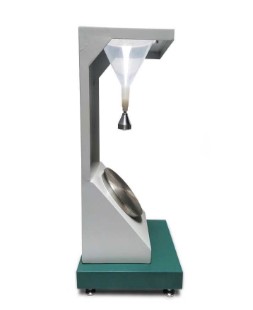
The core design concept of the waterproof performance tester lies in reproducing the dynamic process of natural rainfall. Taking the classic Bundesmann test method as an example, its testing system consists of a rainfall simulation device and a sample testing unit:
Rainfall Simulation System: 300 precision drippers uniformly spray at a flow rate of 100-300 ml per minute, forming a rainfall area with a diameter of approximately 1.5 meters. The drippers employ a specially designed flow channel structure to ensure that the water droplet shape is highly consistent with natural rainfall, avoiding test deviations caused by water droplets that are too large or too small.
Sample Testing Unit: Four 100mm diameter test cups are installed at a 15-degree angle to simulate the tilting state of the fabric in actual use. Each test cup is equipped with a cross-shaped squeegee that rubs the sample surface 20 times per minute, simulating dynamic contact under wind and rain. This design effectively assesses the waterproof durability of fabrics under dynamic conditions.
Modern testing instruments have upgraded this technology by introducing a closed-loop water circulation system, increasing water resource utilization to over 99%. For example, a new instrument uses a three-stage filtration system for water circulation, combined with an intelligent flow control system, to keep testing errors within ±2%, significantly improving the reliability of repeatable tests.
Test Methods
Based on the needs of different application scenarios, waterproof performance testing has formed three core methodologies:
1. Dynamic Rain Test Method
This method simulates a continuous rainfall environment to quantitatively evaluate the waterproof performance of fabrics. During the test, the system continuously records three key parameters:
Surface Wetting Area: High-precision image recognition technology is used to capture the real-time water stain diffusion range on the sample surface.
Water Absorption: The mass change of the sample before and after testing is measured using a precision balance.
Water Permeability: The liquid level sensor built into the collection cup can accurately measure water permeability data to 0.1 ml.
A research institution conducted comparative tests on 30 types of outdoor sports fabrics and found that the test results using the dynamic rain method had a 92% consistency with actual outdoor use scenarios, an improvement of 37% compared to the traditional static test method.
2. Spray Rating Test Method
Referring to the AATCC 22 standard, this method uses a 45-degree angle spray device to continuously spray the sample at a distance of 150 mm. After testing, the samples were graded from 0 to 100 points based on the morphology of water stains on the surface:
0: Completely wetted (water stain coverage > 90%)
50: Moderately wetted (water stain coverage 40-60%)
100: Completely water-repellent (no visible water stains) A certain brand of outdoor jacket achieved a score of 95 in this test. Its fluorine-free waterproof coating remained dry after 30 minutes of continuous spraying, verifying the excellent performance of the new environmentally friendly coating.
3. Capillary Absorption Test Method For scenarios requiring long-term waterproof performance, such as building waterproofing materials, the capillary absorption test method evaluates waterproof performance by measuring the height of water absorbed by the fabric within a specified time. The test sample is suspended vertically with the lower end immersed in water 2cm. The water rise is measured after 24 hours. A new type of waterproof roll material absorbed only 1.2mm of water in this test, 82% less than traditional materials, significantly improving the durability of building structures.
Applications
1. Outdoor Sports Equipment
In the field of high-end outdoor equipment such as mountaineering clothing and skiwear, waterproof performance testing instruments are driving breakthroughs in materials science. A research team discovered through dynamic rain testing that fabrics with nanoscale porous structures can achieve a waterproof index of 30.000 mmH₂O (equivalent to no penetration after 3 hours of continuous heavy rain) while maintaining breathability. This discovery directly spurred the development of a new generation of lightweight waterproof fabrics.
2. Military Protective Equipment
Military equipment such as tents and combat uniforms have stringent requirements for waterproof performance. A military research institution used an improved testing instrument to test the waterproof stability of a new composite material under extreme temperature conditions ranging from -30℃ to 60℃. Test data showed that the material could remain dry internally even in gale-force winds accompanied by heavy rain, providing reliable protection for field operations.
3. Building Waterproofing Engineering
In the testing of building waterproof membrane rolls, the accuracy of the testing instrument is directly related to the quality of the project. After introducing a high-precision testing system, a testing center found that the water permeability of traditional rolls at the seams was three times that of the smooth areas. This discovery prompted the industry to revise construction standards, requiring double waterproofing at joints, reducing building leakage rates by 65%.
Technological Evolution
Current testing instruments are developing in two directions:
Intelligent Upgrades: Testing systems integrating IoT technology can upload test data to the cloud in real time, using AI algorithms to analyze material performance degradation patterns. One company's intelligent testing platform has implemented predictive maintenance, providing 30-day advance warning of equipment failures.
Green Transformation: New water recycling systems reduce water consumption per test from 50L to 0.5L. Combined with solar power, a single device can reduce carbon emissions by 1.2 tons per year. Certification from an environmental agency shows that testing instruments using closed-loop systems have a 78% lower carbon footprint over their entire lifecycle compared to traditional equipment.
Challenges and Prospects
Despite significant technological advancements, the industry still faces two major challenges:
Lack of testing standards for fluorine-free waterproofing agents: With increasingly stringent environmental regulations, fluorine-free waterproofing agents have reached a 40% market share, but existing testing methods have not yet established an evaluation system specifically for their unique performance.
Insufficient simulation of extreme environments: Existing equipment largely focuses on conventional rainfall conditions, and its ability to simulate extreme environments such as acid rain and salt spray needs improvement.
In the future, with breakthroughs in materials science, testing instruments will develop towards greater precision and scenario-based capabilities. It is projected that by 2030. intelligent systems capable of coupling multiple environmental factors will become mainstream, providing technical support for the development of waterproofing materials adapted to extreme climates.
In summary, waterproofing performance testers have evolved from simple performance detection tools into a core engine driving technological innovation in waterproofing materials. They not only provide a precise and reliable data foundation for product development and quality control, but also deeply empower innovative breakthroughs in key areas such as outdoor equipment, military protection, and construction engineering through continuous iteration of testing methods and intelligent upgrades. Faced with increasingly complex application scenarios and sustainable development requirements, future testing technologies will evolve towards greater precision, intelligence, and greenness. While overcoming challenges such as the evaluation of fluorine-free materials and the simulation of extreme environments, they will pave the way for the development of next-generation high-performance, environmentally adaptable waterproof materials, ultimately safeguarding humanity in the face of ever-changing nature and cutting-edge technologies, and building safer and more reliable living and working spaces.
Previous: International Standards for Robots
N e x t : Photovoltaic module wire tube bending testing machine IEC61730-2:2004
