





What is a Flat End Type of Thread End Suction Machine?
2026/01/12
Share:

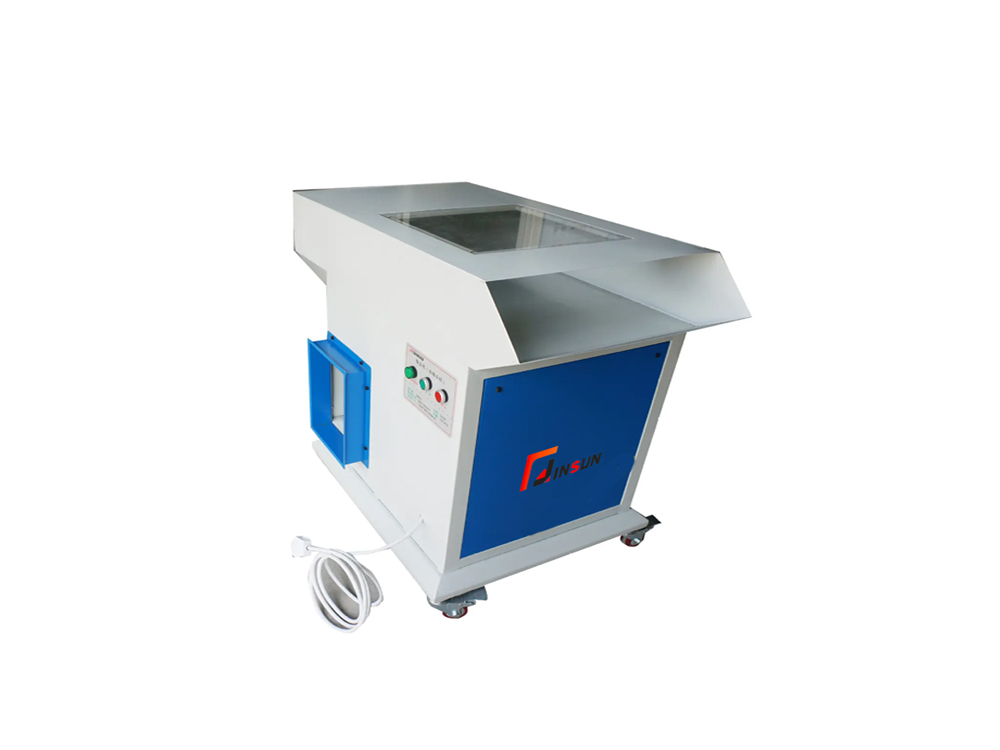
What Is a Thread End Suction Machine
A Thread End Suction Machine is a specialized mechanical device that uses suction to remove loose thread ends, lint, fiber fragments, and other attached impurities from textile materials and finished garments. Based on the principle of negative pressure airflow, it extracts residual loose threads, broken yarns, and fine fiber debris left on garment surfaces or within seams after sewing. The primary goal is to improve product cleanliness and enhance overall appearance quality.
In industrial garment production, a large number of fine thread ends and fibrous debris are inevitably generated after sewing operations. These residues not only affect the visual appearance of the product but may also influence wearing comfort and quality evaluation by consumers. Therefore, thread end suction has become a standard and essential step before inspection, packaging, and shipment.
The Flat End Type Thread End Suction Machine is a specific configuration of this equipment. Its suction nozzle is designed with a flat shape, making it suitable for broader contact with garment surfaces and enabling more efficient coverage during cleaning operations.
Structural Characteristics
The flat end type thread end suction machine mainly consists of the following key components:
1. Flat Suction Nozzle
The suction nozzle adopts a wide, flat structure, allowing a larger area of negative pressure coverage on flat fabric surfaces. This design enables efficient removal of laterally distributed thread ends, lint, and fiber dust. Compared with traditional narrow nozzles, the flat structure provides higher efficiency and more uniform cleaning results.
2. Negative Pressure Fan and Suction System
A powerful negative pressure fan is installed inside the machine. Through continuous airflow extraction, it draws thread ends and fiber debris into a dust collection box or filter bag, preventing secondary contamination. Stable airflow and suction pressure are required to ensure effective cleaning while maintaining acceptable noise levels.
3. Operating Platform and Worktable Design
The machine is usually equipped with a flat worktable, allowing operators to spread garments smoothly during operation. The flat end design enables operators to clean different garment areas conveniently without frequent repositioning, thereby improving labor efficiency.
4. Mobility and Support Structure
Some flat end type machines are equipped with mobile frames and swivel casters, allowing flexible movement within large workshops. This mobility ensures efficient operation on garments of different sizes and styles without spatial limitations.
Working Principle
The working principle of the flat end type thread end suction machine is straightforward yet highly efficient:
Negative Pressure Suction
The internal fan generates negative pressure, creating airflow through the flat suction nozzle. This airflow draws thread ends, fiber dust, and small debris from the garment surface into the machine.
Filtration and Dust Collection
The suctioned air passes through a filtration system, where solid particles such as threads and fibers are trapped in a dust container or filter bag. Clean air is then discharged from the machine, reducing dust dispersion in the workshop environment.
Continuous Cleaning Operation
Modern designs allow operators to clean entire garments continuously without interruption or manual thread picking, significantly improving productivity.
This operating mechanism enables the machine to remove not only visible thread ends but also fine fiber dust, thereby optimizing the overall quality of post-finishing processes.
Core Functions and Application Scenarios
The flat end type thread end suction machine is primarily used in textile and garment finishing, but its application scope continues to expand.
1. Finished Garment Cleaning
After garment production, numerous thread ends and fiber residues remain on the surface and along seam edges. Using a thread end suction machine ensures a clean, smooth appearance, significantly enhancing the visual quality of finished products.
For fabrics such as cotton, linen, and yarn-dyed materials—which are prone to loose fibers—the cleaning effect is particularly noticeable, greatly reducing the time and cost associated with manual trimming.
2. Textile Product Finishing
Textile mills often use this equipment to clean fabric surfaces after production. Unremoved yarn fragments can negatively affect subsequent processes such as dyeing, printing, and finishing. Early-stage surface cleaning improves overall process stability and product quality.
3. Export Trade and Quality Compliance
Export garments are typically subject to strict quality requirements, including the absence of visible thread ends and fiber debris. Flat end type thread end suction machines help products meet these standards, reducing rejection rates and inspection failures while improving competitiveness in international markets.
4. Brand Retail and Display Preparation
In some retail environments and brand stores, this equipment is used for final cleaning before product display. Ensuring garments are free of visible thread ends enhances customer perception and overall shopping experience. While not a primary industrial application, this use is becoming increasingly valued as a supplementary finishing step.
Design Advantages
Compared with traditional thread handling methods—such as manual trimming or handheld vacuum tools—the flat end type thread end suction machine offers several advantages:
1. Improved Ergonomics
The wide coverage of the flat suction nozzle allows quick cleaning of entire garments without frequent angle adjustments, improving efficiency and reducing operator fatigue.
2. More Comprehensive Cleaning
Negative pressure suction combined with flat nozzle geometry ensures uniform removal of thread ends and fiber dust across different garment areas, minimizing missed spots.
3. Flexible Operation
The machine can be adapted for standing or seated operation, accommodating various workshop layouts. Mobile designs further enhance space efficiency.
4. Suitability for Mass Production
The flat end structure is well suited for high-volume garment processing, offering significant time and labor savings compared with manual or handheld methods.
Typical Operating Procedure
In production workshops, flat end type thread end suction machines are commonly operated according to the following steps:
Garment Placement
Lay the garment flat on the worktable or beneath the suction nozzle, ensuring no obstructions on the surface.
Machine Startup and Suction Adjustment
Start the machine and adjust suction strength according to fabric type to prevent deformation of lightweight materials.
Section-by-Section Cleaning
Move the flat suction nozzle steadily across the garment, covering the surface systematically from one area to another.
Dust Container Maintenance
Regularly inspect and clean the dust collection unit or filter to prevent clogging and maintain suction performance.
Proper workflow organization ensures consistent cleaning quality while maximizing equipment efficiency and service life.
Development Trends
With the advancement of industrial automation and rising garment quality standards, the importance of thread end suction machines continues to grow:
Quality Enhancement: Automated cleaning reduces human error and significantly improves garment cleanliness and texture.
Efficiency Improvement: Compared with manual trimming, labor input and processing time are greatly reduced.
Consistency in Quality Standards: Standardized processes ensure stable output quality that meets increasingly strict inspection requirements.
In the future, as garment and textile manufacturing evolves toward greater intelligence and integration, thread end suction machines are expected to develop in directions such as wireless operation, modular design, and programmable control.
The Flat End Type Thread End Suction Machine is an indispensable piece of specialized equipment in textile and garment finishing processes. By utilizing negative pressure suction, it efficiently removes thread ends and fiber debris from garment surfaces. Its flat suction nozzle design enhances both cleaning efficiency and effectiveness, making it especially suitable for batch production environments. As quality standards in the apparel industry continue to rise, this type of equipment is becoming an essential component of efficient, standardized manufacturing systems.
Previous: What is a brushing machine used for?
N e x t : What is a bag opener?
