





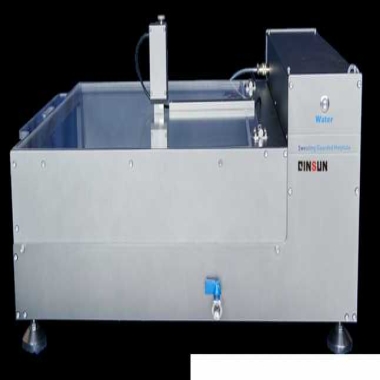
G259A Sweating Guarded Hotplate-EN,ISO11092
2026/01/14
Share:

Basic Concepts
1. Heat Conduction and Traditional Hot Plate Methods
Heat conduction is the process by which thermal energy is transferred from a region of higher temperature to a region of lower temperature. This property is characterized by the thermal conductivity (λ or k) of a material, which quantifies its ability to conduct heat. Traditional guarded hot plate methods are designed to measure thermal conductivity or thermal resistance under dry, steady-state conditions by establishing a controlled one-dimensional heat flow through a test specimen.
2. From Guarded Hot Plate to Sweating Hot Plate
Conventional guarded hot plate methods are primarily intended for dry heat transfer measurements. However, when evaluating human thermal comfort and clothing performance, heat conduction alone does not adequately represent real-world conditions. Human skin not only transfers heat but also releases moisture through sweating, accompanied by water vapor diffusion. These coupled heat and moisture interactions play a critical role in perceived comfort.
To address this limitation, the guarded hot plate concept was extended to incorporate moisture transport, leading to the development of the guarded sweating hot plate method. This method integrates heat transfer and water vapor transmission measurements, allowing simultaneous determination of thermal resistance and evaporative resistance.
Principles and Measurement Parameters
1. Operating Principle
The guarded sweating hot plate method operates under controlled temperature conditions using a “sweating” hot plate to simulate human skin or a thermal source. A material specimen is placed on top of the hot plate, while the opposite side of the specimen is exposed to a controlled environmental condition. The hot plate is maintained at a temperature close to human skin temperature and releases both heat and water vapor to simulate sweat evaporation. The transfer of heat and moisture through the material is continuously monitored.
Key elements of the method include:
Controlled heat source temperature: The hot plate temperature is typically maintained near human skin temperature (approximately 33–36 °C) to simulate physiological conditions.
Steady-state operation: Measurements are conducted under steady-state conditions, where temperatures and transfer rates remain stable over time.
Coupled heat and moisture transfer measurement: In addition to heat flow data, water vapor transport is analyzed to determine evaporative resistance and its contribution to heat transfer.
2. Main Measurement Parameters
The guarded sweating hot plate method enables the determination of several important performance indicators:
Thermal Resistance (R): Represents the material’s resistance to heat flow; higher values indicate better insulation performance.
Evaporative Resistance (Re): Represents the resistance to water vapor diffusion; lower values indicate better moisture permeability.
Total Heat Loss (THL): The total heat dissipated under sweating conditions, including both sensible heat transfer and latent heat from evaporation.
Together, these parameters provide a comprehensive assessment of a material’s thermal comfort and breathability under realistic conditions.
Instrument Structure and Test Configuration
1. Hot Plate System
A guarded sweating hot plate system typically consists of a central test plate, a guard plate, and a base or cold plate. Their functions are as follows:
Central test plate: Acts as the primary heat source, maintaining a constant temperature to simulate heat output from human skin.
Guard plate: Surrounds the central plate and controls edge temperatures to minimize lateral heat losses, ensuring predominantly one-dimensional heat flow through the specimen.
Base or cold plate: Provides a stable temperature boundary on the opposite side of the specimen, establishing a consistent heat flow path.
The system usually employs precise temperature control mechanisms, such as PID controllers, along with multiple sensors for continuous monitoring of temperature and heat flux.
2. Moisture Simulation and Sweating System
To simulate sweating conditions, the hot plate is equipped with additional components, including:
Water supply system: Delivers a controlled amount of water to the plate surface, enabling evaporation and water vapor generation.
Humidity sensors: Monitor moisture levels at the plate surface and in the surrounding air.
Airflow control system: Regulates air velocity and direction to minimize unwanted convective effects and improve measurement accuracy.
This configuration allows the test to represent both dry heat transfer and moisture-related heat exchange processes.
Test Procedure
1. Sample and Instrument Preparation
Representative material specimens, such as fabrics or composite materials, are selected and cut to fit the test plate area. Samples are typically conditioned in a controlled temperature and humidity environment prior to testing.
The instrument is preheated and allowed to reach stable operating conditions. This includes setting the hot plate temperature, controlling ambient humidity, supplying water to the sweating system, and verifying the accuracy of humidity and temperature sensors.
2. Test Execution and Data Recording
Once the system reaches the target temperature (for example, 35 °C), data acquisition begins. The following parameters are recorded:
Electrical power input to the hot plate;
Temperature and humidity on the specimen’s outer surface;
Environmental conditions such as ambient temperature and air velocity.
Measurements are considered valid only after steady-state conditions are achieved, which may require a testing period ranging from several tens of minutes to several hours.
3. Data Processing and Parameter Calculation
After steady-state data are obtained, the main performance indicators are calculated as follows:
Thermal resistance (R) = temperature difference ÷ heat flux density;
Evaporative resistance (Re) = humidity gradient ÷ water vapor flow rate;
Total heat loss (THL) = sum of sensible heat transfer and evaporative heat loss.
Numerical analysis and graphical representation of the results provide a comprehensive evaluation of the material’s thermal comfort performance.
Application Scenarios
1. Application Fields
The guarded sweating hot plate method is widely applied in the following areas:
Textile and clothing material development: Evaluating thermal and moisture comfort properties of fabrics;
Sportswear assessment: Analyzing thermal management performance of functional and athletic apparel;
Protective clothing design: Assessing heat dissipation and moisture resistance under hot and humid conditions;
Building materials and insulation systems: Providing reference data for thermal resistance and moisture transfer behavior.
2. Advantages of the Method
Compared with methods that measure only dry thermal conductivity, the guarded sweating hot plate method offers several advantages:
Closer simulation of real human conditions by mimicking skin temperature and sweating behavior;
Comprehensive evaluation by simultaneously considering heat and moisture transfer;
High degree of standardization, with testing procedures aligned with internationally recognized standards such as ASTM F1868 and ISO 11092.
Limitations and Considerations
Despite its advantages, several factors must be considered when using the guarded sweating hot plate method:
Achieving steady-state conditions requires strict control and relatively long testing times;
Results are sensitive to environmental variables such as air velocity and humidity, which must be carefully regulated;
The method represents one-dimensional heat and moisture transfer and may need to be combined with other techniques when evaluating complex, multilayer clothing systems.
The guarded sweating hot plate method is a highly valuable technique in the evaluation of thermal comfort performance. By simulating both skin temperature and sweating behavior, it provides insights into not only thermal resistance but also moisture transport characteristics. This makes it an essential tool for the research, development, and evaluation of textiles, clothing, and functional materials. With continued refinement of standards and instrumentation, its importance in both scientific research and engineering applications is expected to grow further.
Previous: 10kN Universal Testing Machine, ASTM D5587
N e x t : What is a water penetration test?
