





10kN Universal Testing Machine, ASTM D5587
2026/01/14
Share:

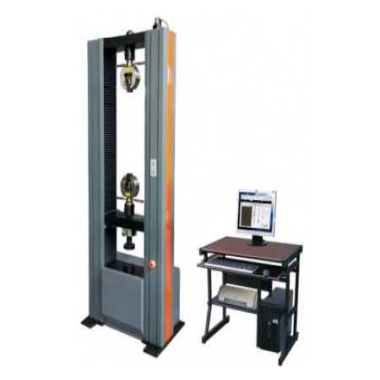
A universal testing machine (UTM) is a general-purpose device capable of conducting multiple types of mechanical performance tests on materials or components. The term “universal” indicates that the machine is not limited to measuring force–displacement responses during tensile and compression tests, but can also be used for bending, shear, peel, and other deformation-related loading tests. For machines with a rated capacity of 10 kN, the load range is suitable for testing medium-strength materials such as thin metal sheets, plastics, rubber, composite materials, and textiles.
In terms of design, 10 kN universal testing machines typically combine compact structure with high measurement accuracy, allowing them to be deployed in laboratory environments, educational laboratories, or small- to medium-scale quality control settings. These machines are capable of performing standardized mechanical tests in accordance with international or national standards such as ISO, ASTM, GB, and DIN, while collecting precise force–displacement data to support material performance analysis and quality evaluation.
Definition
A 10 kN universal testing machine refers to a universal material testing device with a maximum test force of 10.000 N (approximately 1000 kgf). It applies controlled forces to materials or components within its rated load range and records the corresponding response of load versus deformation. In mechanical property testing, the universal testing machine is a fundamental and core piece of equipment, mainly used to determine tensile strength, yield strength, elongation, modulus of deformation, compressive strength, fracture elongation, and stress–strain curves.
In addition to basic mechanical testing, 10 kN universal testing machines are commonly equipped with multifunctional grips and accessories that enable various test modes. By replacing fixtures such as tensile grips, compression platens, or bending supports, different types of tests can be performed. The data acquisition system typically includes high-precision load cells and displacement measurement devices to ensure accuracy and repeatability of test results.
Working Principle
The core working principle of a 10 kN universal testing machine is based on applying a gradually increasing controlled load to a specimen while simultaneously measuring its deformation response. This process generally includes the following key stages:
Load Application and Measurement
A servo motor or stepper motor drives a screw mechanism or hydraulic actuator, enabling the crosshead of the testing machine to apply load to the specimen at a preset speed. The load cell continuously measures the applied force and feeds real-time data back to the control system.
Displacement and Deformation Measurement
Displacement is measured using encoders or photoelectric sensors that track the movement of the crosshead, thereby determining specimen deformation. Testing software processes force and displacement data in real time, generating force–displacement and stress–strain curves.
Data Acquisition and Control System
A high-performance control system processes sensor signals in real time and regulates the loading process to ensure that tests are conducted according to predefined speeds and parameters. The system also prevents overloading or excessive loading rates that could damage the specimen or the equipment.
Throughout the testing process, the accuracy of force and deformation measurement, loading speed control, and data processing algorithms directly affect the reliability of test results.
Structural Components
A standard 10 kN universal testing machine generally consists of the following main components:
1. Main Frame
The main frame serves as the supporting and load-bearing structure of the equipment. Its rigidity and precision determine whether unwanted deformation occurs during load transmission. Most machines adopt dual-column or portal-frame structures made of high-strength steel to ensure vertical alignment and stability of the crosshead.
2. Load Cell
The load cell is used to measure the force applied to the specimen in real time. High-precision strain-gauge or spoke-type sensors are commonly used, with measurement accuracy reaching ±0.5% or better. The electrical signals generated are amplified and converted before being transmitted to the control system.
3. Drive System
The drive system typically consists of a servo motor, precision ball screw, and gear reduction mechanism. It converts the rotational motion of the motor into linear vertical movement of the crosshead, enabling precise load application.
4. Grips and Accessories
Grips are critical components that connect the specimen to the testing machine. Different test types require different grip configurations. For example, tensile tests use wedge or symmetric grips, while compression tests require compression platens.
5. Control and Data Acquisition System
Modern universal testing machines are equipped with computer-based control systems and testing software. These systems allow users to set test parameters, control loading processes, collect test data, and generate analysis reports. The software supports automatic evaluation of mechanical parameters in accordance with standards such as ASTM and ISO.
Classification Methods
Although 10 kN universal testing machines are primarily classified by maximum load capacity, they can also be categorized based on control method, structural form, and degree of automation.
1. By Control Method
Computer-Controlled Type
Uses a computer and specialized software to achieve automated control of loading, data acquisition, analysis, and report generation, offering strong data processing capabilities.
Digital Display Type
Relies mainly on digital instruments to display force and displacement values, with relatively basic functionality.
2. By Structural Form
Dual-Column Portal Structure
Provides high stability and is suitable for standardized material testing, commonly used in laboratories and research environments.
Single-Column Benchtop Structure
Compact in size and space-saving, suitable for environments with limited space.
3. By Degree of Automation
Semi-Automatic
Requires manual adjustment of loading position and partial manual setting of test parameters.
Fully Automatic
Features automatic gripping, automated loading, and intelligent analysis functions, suitable for high-throughput testing applications.
Functional Features and Advantages
1. Multifunctional Testing Capability
The equipment can perform tensile, compression, bending, shear, peel, and low-cycle fatigue tests, making it suitable for a wide range of materials including metals, plastics, rubber, and textiles.
2. High-Precision Data Output
With high-resolution sensors and closed-loop control systems, the machine provides accurate mechanical parameters and stress–strain curves that meet international testing standards.
3. Powerful Software Processing
Advanced testing software enables real-time curve analysis, parameter calculation, and result export, supporting report generation for research and quality control purposes.
4. Flexible Grip Configuration
A wide range of grips and accessories allows users to switch between different test modes easily, meeting the requirements of complex testing scenarios.
Typical Application Fields
1. Materials Science Research
Used to evaluate basic mechanical properties of new materials, providing experimental data for material design and modification.
2. Product Quality Inspection
Applied in industries such as aerospace, automotive manufacturing, construction materials, and packaging to verify compliance with mechanical performance standards.
3. Universities and Research Institutions
Serves as an essential experimental device for mechanics courses, graduation projects, and scientific research, helping students and researchers understand material behavior.
4. Standardized Laboratory Testing
Combined with international and national standards, it ensures consistent evaluation of product performance and quality.
Experimental Procedures and Precautions
Typical testing procedures include:
Specimen Preparation
Prepare specimens according to standard dimensions and ensure appropriate surface conditions.
Grip Installation
Install suitable grips based on the test type.
Parameter Setting
Input test load range, loading speed, and termination conditions.
Test Execution
Start the test program, during which the machine applies load and records data automatically.
Data Analysis
Obtain force–displacement curves, stress–strain curves, and key parameters such as tensile strength and elastic modulus.
During testing, proper equipment condition and adherence to standard operating procedures are essential to avoid measurement errors or equipment damage.
Development Trends
With the advancement of Industry 4.0 and intelligent manufacturing, the development of 10 kN universal testing machines is moving toward the following directions:
1. Intelligent Automation
Automatic gripping, online calibration, and adaptive loading strategies will further improve testing efficiency and data consistency.
2. Big Data and Cloud Integration
Testing data will be connected to cloud platforms, enabling remote monitoring, data analysis, and collaborative research, thereby accelerating testing cycles.
3. Integration with Virtual Simulation
Linking testing machines with numerical simulation software allows virtual prediction before physical testing, reducing test frequency and material consumption.
As a multifunctional mechanical testing device, the 10 kN universal testing machine holds significant value in material development, product quality inspection, engineering experimentation, and higher education. Through reliable force application and deformation measurement systems, it accurately evaluates tensile, compression, and bending properties while delivering repeatable and standardized test results. With ongoing advancements in control technology and data processing capabilities, this equipment continues to evolve toward higher intelligence, stronger analytical capability, and greater functional versatility, providing robust support for engineering testing and materials science research.
Previous: GMA Ultra-filtration Membrane Porometers,ASTM F316-2003
N e x t : G259A Sweating Guarded Hotplate-EN,ISO11092
