





What is a breathing test for respirators?
2026/01/15
Share:

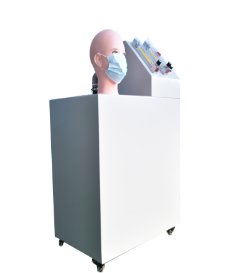
Fundamental Purpose: Ensuring an Effective Seal
A respirator breathing test is a professional procedure used to evaluate whether a tight seal is formed between the respirator and the wearer’s face. The main objective is to confirm that air must pass through the filter material rather than leaking through gaps around the mask.
This is extremely important because no matter how advanced the filtration material is, any leakage around the edges of the mask allows contaminated air to bypass the filter. In such cases, the respirator fails to provide adequate protection. The fit test is therefore designed to prevent this type of seal failure.
Why Is Respirator Fit Testing Necessary?
1. Differences in Facial Structure Affect Fit
Every person has a unique facial shape, including differences in cheekbone height, nose width, and jawline structure. Even the same respirator model may fit differently on different individuals. Fit testing helps determine whether a specific respirator model and size truly provide an effective seal for a given wearer.
2. Legal and Occupational Safety Requirements
In many countries and regions, occupational safety regulations require that workers who use respirators in hazardous environments must undergo fit testing before exposure to dangerous airborne contaminants. Additionally, periodic retesting is often required to ensure continued protection.
3. Prevention of Occupational Diseases
Many occupational illnesses—such as silicosis or chemical poisoning—are caused by long-term inhalation of hazardous substances. Fit testing reduces the risk of side leakage and significantly lowers the chance of respiratory protection failure, thereby protecting workers’ health.
Types of Respirator Fit Testing
There are two primary types of respirator fit tests:
1. Qualitative Fit Test (QLFT)
This is a sensory-based method that relies on the wearer’s ability to detect a test substance by taste or smell.
The general procedure includes:
The wearer dons the respirator and is covered with a hood.
A test agent (such as a sweet or bitter aerosol) is introduced into the hood.
The wearer performs normal breathing and simple movements.
If the wearer can taste or smell the agent, it indicates that air is leaking into the mask.
Characteristics of qualitative testing include:
It is based on human sensory response.
Results are simply “pass” or “fail.”
Equipment is relatively simple and low-cost.
This method is suitable for basic respiratory protection but can be influenced by individual sensitivity to taste or smell.
2. Quantitative Fit Test (QNFT)
This method uses specialized instruments to measure the concentration of particles inside and outside the respirator and calculates a numerical fit factor.
During testing:
A controlled number of test particles are released into the air.
Instruments measure particle concentration both inside and outside the mask.
A fit factor is calculated based on the ratio of these concentrations.
Compared with qualitative testing, quantitative testing:
Provides objective numerical results.
Does not rely on the wearer’s perception.
Is better suited for high-protection respirators such as full-face masks.
General Fit Testing Procedure
Although specific steps may vary by institution, the core process typically includes:
1. Selecting a Respirator
The wearer chooses a respirator model and size appropriate for their work environment.
2. Donning and Initial Seal Check
The wearer adjusts the mask properly and may perform a user seal check by gently inhaling or exhaling while blocking airflow to detect leaks.
3. Conducting the Test
In qualitative testing, a test agent is introduced and the wearer reports any detection.
In quantitative testing, instruments collect data and compute the fit factor.
The wearer is also asked to perform various movements such as talking, turning the head, and deep breathing to simulate real working conditions.
4. Evaluating Results
Qualitative tests result in pass/fail outcomes, while quantitative tests produce a numerical fit factor. Higher values indicate better sealing performance.
Importance and Value of Fit Testing
1. Ensuring Real-World Protection
Even highly efficient filters are ineffective if the mask does not seal properly. Fit testing ensures that the respirator functions as intended in practical use.
2. Reducing Health Risks
In environments such as chemical plants, mines, painting operations, and healthcare facilities, airborne hazards are common. Proper fit testing significantly reduces workers’ exposure to harmful substances.
3. Compliance and Legal Responsibility
Many safety regulations mandate fit testing before exposure to hazardous environments. Compliance protects both employees and employers from health risks and legal liabilities.
Common Misconceptions and Considerations
Misconception 1: Filter Efficiency Alone Is Enough
Even the best filter fails if air leaks around the mask. Proper sealing is just as important as filtration.
Misconception 2: Qualitative Testing Is Inferior
Although qualitative testing lacks numerical data, it is still widely accepted and effective in many standard protection scenarios.
Important Notes
Fit testing should be repeated periodically, especially if the wearer’s facial features change due to weight loss, injury, or surgery.
Testing equipment must be properly maintained and calibrated to ensure accuracy.
Respirator fit testing is not merely a technical check of equipment; it is a critical process that ensures effective protection for individual users in real-world conditions. By scientifically verifying the seal between the mask and face, fit testing confirms whether a respirator can perform its intended protective function.
In any environment where hazardous airborne contaminants are present, respirator fit testing is essential—not only as a technical requirement but also as a fundamental measure for safeguarding health, safety, and regulatory compliance.
Previous: Why do I feel like I can't breathe when wearing a mask?
N e x t : What does a combustion leak tester do?
