





What are the methods of flammability testing?
2026/01/19
Share:

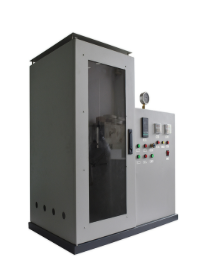
Flammability test results are critical for industries such as construction materials, electrical enclosures, automotive interiors, textiles, and plastic products. They serve as essential evidence that products meet safety requirements before entering the market.
What Is Flammability Testing?
Flammability testing refers to a series of experiments conducted under controlled conditions in which materials or finished products are exposed to flames, heat sources, or radiant heating. Researchers observe and record ignition behavior, combustion characteristics, flame propagation, and smoke production. The results are typically used to evaluate flame retardancy, fire spread tendency, and heat release behavior.
These tests are not only fundamental to fire safety engineering but also form the basis for regulations and mandatory standards established by governmental and international organizations. To ensure comparability and reliability, flammability tests are usually performed in accredited laboratories following standardized procedures.
Common Flammability Testing Methods
Depending on testing objectives, material types, and regulatory requirements, flammability testing methods can be categorized into several groups, including surface burning tests, horizontal/vertical burning tests, needle flame tests, limiting oxygen index tests, cone calorimeter tests, and smoke density tests. Each method evaluates different aspects of fire behavior.
Surface Burning Test (Steiner Tunnel / ASTM E84)
The Surface Burning Characteristics Test is used to evaluate how quickly flames spread across a material’s surface and how much smoke is produced. It is one of the most important fire performance tests for building materials and interior finishes.
1. Steiner Tunnel Test
The Steiner Tunnel test is a classic method incorporated into standards such as ASTM E84. UL 723. and NFPA 255. In this test, a sample is mounted in a long horizontal tunnel, with a gas burner providing continuous flame at one end. During the test, flame spread distance and speed along the sample surface are recorded to calculate two key indices:
Flame Spread Index (FSI) — indicates how rapidly flames travel across the material surface.
Smoke Developed Index (SDI) — measures the amount of smoke produced during combustion.
Based on these indices, materials are classified into different fire performance categories such as Class A, Class B, or Class C under ASTM E84. where higher classes indicate better fire resistance.
2. Applications
This method is widely used for evaluating fire performance of interior wall panels, ceilings, floor materials, and certain transportation components and composite materials.
UL 94 Horizontal and Vertical Burning Tests
UL 94 is one of the most widely used flammability standards for plastics and foams. It assesses whether a material continues to burn after ignition and how flames propagate.
1. Horizontal Burning Test (HB)
In the HB test, a specimen is positioned horizontally and exposed to a flame at one end. The test measures burning rate or the length burned before the flame self-extinguishes. This classification is commonly applied to thin plastic sheets and films.
2. Vertical Burning Test (V-0. V-1. V-2)
In the vertical test, a sample is mounted upright and ignited from below. Observations include:
Duration of after-flame,
Whether the material continues burning,
Whether burning droplets fall from the sample.
Based on results, materials are classified as V-0. V-1. or V-2:
V-0: Shortest burn time with rapid self-extinguishing.
V-2: Allows flaming drips and longer burning duration.
3. Scope of Application
UL 94 is widely used for plastics in electronics housings, household appliances, and industrial components, and is frequently referenced in material selection and safety certification.
Limiting Oxygen Index (LOI) Test
The Limiting Oxygen Index (LOI) test evaluates the minimum concentration of oxygen required to sustain combustion. A sample is placed vertically in a controlled oxygen–nitrogen mixture, and the oxygen level is gradually adjusted to determine the lowest concentration at which the material continues burning.
A higher LOI value indicates better flame resistance in normal air. This test is commonly performed in accordance with ISO 4589 and is widely used for plastics, fibers, and composite materials.
Cone Calorimeter Test
The cone calorimeter is an advanced instrument used to analyze comprehensive fire behavior. It applies a controlled heat flux to a specimen and measures key parameters including:
Time to ignition,
Heat release rate (HRR),
Mass loss rate,
Smoke production.
The test is based on the oxygen consumption principle, which assumes that heat release is directly related to the amount of oxygen consumed during combustion. This method provides more detailed fire behavior data than simple ignition tests.
Cone calorimeter testing is widely used in building materials, aerospace composites, automotive interiors, and textiles, and plays a central role in fire engineering research.
Needle Flame and Glow-Wire Tests
Needle Flame Test
The needle flame test simulates small ignition sources, particularly in electrical and electronic applications. A standardized needle-shaped flame is applied to a material to evaluate:
Ease of ignition,
Whether combustion continues,
Duration of burning.
This method is commonly used for cables, insulation materials, and plastic components.
Glow-Wire Test
The glow-wire test simulates hot electrical components such as resistive heating elements. A heated wire is brought into contact with the material at a specified temperature to determine whether ignition occurs and whether burning persists.
This test is widely applied under IEC 60695 standards, especially for household appliances and electronic equipment.
NFPA 701 for Textiles and Films
NFPA 701 is a U.S. standard for the flammability of textiles and film materials, commonly applied to curtains, draperies, and decorative fabrics.
The standard defines two test methods: Method 1 for lightweight materials and Method 2 for heavier materials. While the principles are similar, test conditions such as flame size and exposure time differ to better reflect real-world use scenarios.
Smoke Density and Toxicity Testing
In many fire risk assessments, it is insufficient to only evaluate flame spread. Smoke density and toxic gas emissions must also be considered.
Smoke density tests, such as ISO 5659. measure how much light is obscured by smoke to quantify smoke concentration.
Additionally, specialized standards such as BSS 7239 and SMP 800C are used to measure toxic gases like carbon monoxide and nitrogen oxides released during combustion, providing a more comprehensive assessment of life safety risks.
Integrated Analysis of Testing Methods
Different flammability tests focus on different aspects of fire behavior:
Small-scale tests (UL 94. needle flame) — assess ignition and flame persistence.
Medium-scale tests (ASTM E84) — evaluate surface flame spread.
Large-scale tests (cone calorimeter, furniture tests) — analyze heat release and fire growth.
Smoke/toxicity tests — evaluate environmental and human safety impacts.
Together, these methods provide a comprehensive evaluation of material behavior under fire conditions.
Flammability testing is a core component of material and product safety assessment. Different methods provide insights into ignition behavior, flame spread, heat release, smoke production, and toxic emissions.
ASTM E84 evaluates surface flame spread.
UL 94 assesses plastic combustion behavior.
LOI quantifies intrinsic flame resistance.
Cone calorimeter analyzes heat release and fire dynamics.
Needle flame, glow-wire, and NFPA 701 tests address application-specific risks.
A thorough understanding of these methods helps engineers develop safer materials, comply with regulations, and improve product competitiveness in the global market.
Previous: Mask Respiratory Resistance Tester,EN 12941
N e x t : Static Honest Meter,JIS L1094
