





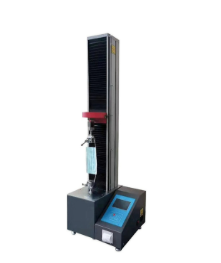
Mask Tensile Testing Machine,ISO13934-1
2026/01/21
Share:

Purpose of Tensile Testing in Mask Production
Masks consist of a combination of layers, typically non-woven fabrics, melt-blown filtration media, and elastic ear loops or ties. During wear, these masks undergo physical forces such as stretching and bending. A tensile testing machine helps determine:
Tensile strength and breaking force of mask materials and straps
Elongation and deformation behavior when subjected to tension
Mechanical integrity of connection points, such as where ear loops attach to the mask body
Resistance to tearing and static tension relevant to daily usage and handling
Understanding these properties ensures that the mask performs reliably in real-world conditions without premature failure. Tensile testing is also crucial for comparing material batches, validating new materials, and ensuring compliance with product specifications and regulatory requirements.
How a Mask Tensile Testing Machine Works
A tensile testing machine applies controlled uniaxial pulling force to a material sample until it breaks, measuring force and elongation throughout the test. Core components and principles include:
Clamps / Grips
The sample, such as a mask ear loop or a section of the mask body, is securely held between two fixtures that pull in opposite directions.
Load Cell
A precision sensor measures the applied force. Modern machines use high-resolution load cells to ensure accurate and repeatable results.
Drive System
A motorized lead screw or servo-driven system provides controlled and consistent movement of the grips at a predefined test speed.
Control System and Display
A digital interface allows users to set test parameters, monitor force and displacement in real time, and generate test reports. Many systems support data export to connected software for analysis and documentation.
During testing, the machine records the force–displacement relationship as the sample is stretched. From this data, key parameters such as maximum tensile force, elongation at break, and deformation behavior can be derived.
Features of Tensile Testing Machines for Masks
Although designs vary, mask tensile testing machines typically share several core features:
Digital displays or touch-screen interfaces for intuitive operation
Support for multiple measurement units, such as newtons, kilograms-force, and pounds-force
High measurement resolution and accuracy through precision sensors and data acquisition systems
Safety functions, including overload protection and automatic return mechanisms
Multiple testing modes, enabling not only tensile tests but also compression, bending, peeling, shear, and tear tests
These features make tensile testing machines suitable for both routine quality inspection and research applications requiring detailed mechanical evaluation.
Common Standards and Testing Protocols
Mask tensile testing is performed in accordance with national and international standards that define test conditions, sample preparation, test speed, and evaluation criteria. Commonly referenced standards include:
National textile tensile testing standards
International standards for textile and non-woven material tensile properties
ASTM methods related to seal strength and mechanical performance
Medical mask–specific standards that define mechanical performance requirements for surgical and protective masks
By following standardized procedures, manufacturers and laboratories ensure that test results are repeatable, comparable, and suitable for certification and regulatory assessment.
Typical Tests Performed
Breaking Strength
This test determines the maximum force a material or component can withstand before rupture. It is especially relevant for ear loops and attachment points.
Static Tensile Test
A controlled, steady pulling force is applied until failure occurs. Results include tensile strength, elongation, and deformation behavior.
Peel Strength
Peel tests measure the force required to separate bonded components, such as ear loops attached to the mask body.
Tear and Puncture Tests
These tests evaluate resistance to tearing or puncture during handling, packaging, and use. Some machines support interchangeable fixtures for these evaluations.
Applications in Quality Control
In mask manufacturing, tensile testing machines are widely used for routine quality inspection. Samples are taken from production batches to verify that mechanical properties remain within specified limits. Parameters such as strap strength at defined elongations and breaking force are monitored to ensure consistency and compliance.
Tensile testing also supports product design and development. Engineers can evaluate new materials or structures before large-scale production, helping optimize durability, comfort, and safety.
Broader Uses and Material Versatility
Although optimized for masks, tensile testing machines are often multifunctional and suitable for testing a wide range of materials, including:
Textiles and non-woven fabrics
Elastic materials and plastic films
Adhesive tapes and packaging materials
Rubber, leather, and synthetic composites
This versatility makes them valuable tools in textile engineering, packaging development, and materials research laboratories.
Interpreting Test Results
Proper interpretation of tensile data is essential:
High tensile strength indicates strong resistance to breaking under load
Elongation at break reflects material flexibility and comfort during use
Force–displacement curves reveal elastic and plastic deformation behavior
These insights support material selection, specification development, and failure analysis.
Challenges and Best Practices
Accurate tensile testing requires careful sample preparation and strict adherence to test procedures. Samples must be properly aligned in the grips, and environmental conditions should be controlled to minimize variability. Regular calibration and maintenance of load cells and displacement sensors are essential to ensure long-term accuracy and reliability.
A mask tensile testing machine is a fundamental tool for evaluating the mechanical performance of mask materials and components. By measuring strength, elongation, and deformation under controlled tension, it supports quality control, regulatory compliance, and material development. Its ability to test a wide range of materials further enhances its value as a core instrument in laboratories focused on material performance and product reliability.
Previous: Medical Mask Differential Pressure Tester, ASTM F2100
N e x t : What is the permeability test for fabric?
