





What is the use of UV curing machine?
2026/01/21
Share:

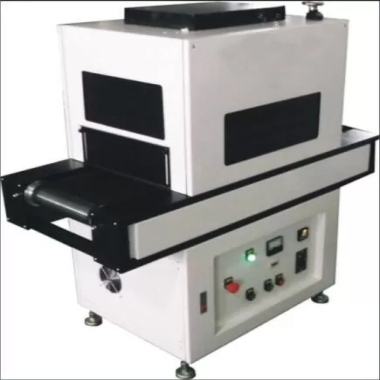
What is a UV Curing Machine?
A UV curing machine is a device that uses high-intensity ultraviolet light to trigger photochemical reactions, causing photosensitive materials such as coatings, adhesives, and inks to rapidly transition from a liquid to a solid or cured state. Unlike traditional thermal drying or solvent evaporation methods, UV curing relies on activating photoinitiators within the material, initiating polymerization and cross-linking reactions that solidify the material in a very short time.
In simple terms, a UV curing machine emits ultraviolet light typically within the wavelength range of 200–400 nanometers, which activates light-sensitive components in the material and triggers internal chemical reactions that quickly form a stable structure. Compared to conventional methods, UV curing does not require high temperatures or prolonged drying times, offering advantages such as faster processing and lower energy consumption.
Working Principle
The core mechanism of a UV curing machine is based on photochemical reactions:
Emission of UV light: The machine is equipped with high-intensity UV lamps, such as mercury lamps or LED UV light sources, which emit specific wavelengths of ultraviolet radiation.
Absorption by photoinitiators: When UV light irradiates materials containing photoinitiators, these substances absorb photons and generate reactive free radicals or ions.
Polymerization and cross-linking: These reactive species initiate polymerization and cross-linking among monomers and oligomers within the material.
Material solidification: As a result, the liquid material rapidly transforms into a solid polymer network, achieving “instant curing.”
The entire curing process can be completed within seconds or even less, without relying on heat or solvent evaporation, significantly improving production efficiency.
Main Applications
1. Printing and Packaging Industry
UV curing machines are most widely used in the printing sector, especially in high-speed, full-color printing lines. Key applications include:
UV ink curing: Traditional inks require long drying times, whereas UV curing allows immediate solidification within seconds after printing, greatly enhancing productivity.
Surface coating of packaging materials: Packaging boxes, labels, and plastic films coated with UV varnish can be instantly cured, improving appearance and wear resistance.
Special visual effects: Gloss finishes, textured coatings, and embossed effects can be rapidly achieved using UV curing technology.
These capabilities make UV curing an essential technology in modern packaging and label printing.
2. Coatings and Surface Finishing
In furniture, woodworking, automotive, and metal finishing industries, UV curing machines are used for:
Curing protective coatings on wood and metal surfaces.
Creating durable layers resistant to abrasion, chemicals, and scratches.
Producing decorative finishes with high gloss or specialized textures.
Since UV curing does not require high temperatures, it minimizes thermal damage to heat-sensitive materials.
3. Electronics Industry
UV curing plays a critical role in electronic manufacturing, including:
Encapsulation of electronic components such as printed circuit boards (PCBs) and semiconductors.
Rapid curing of UV adhesives used in component bonding.
Formation of protective coatings that guard against moisture and dust.
The low-temperature and fast-curing characteristics are particularly beneficial for heat-sensitive electronic parts.
4. Medical and Dental Applications
Beyond industrial use, UV curing machines are also applied in medical and dental fields:
Assembly and bonding of reusable medical devices.
Curing dental resins and restorative materials in clinical settings.
These applications rely on the rapid, low-temperature curing process to ensure material stability and biocompatibility.
5. 3D Printing and Precision Manufacturing
With the rise of photopolymer-based 3D printing technologies such as SLA and DLP, UV curing machines are used for:
Post-curing printed parts to enhance mechanical strength and durability.
Rapid prototyping using UV-curable resins for high-precision models.
Key Advantages
Fast curing speed
UV light can solidify materials within seconds, significantly shortening production cycles.
Energy efficiency and environmental benefits
UV curing does not require heat drying, reducing energy consumption. It also eliminates solvent emissions, lowering volatile organic compound (VOC) release and supporting eco-friendly manufacturing.
High-quality curing results
UV-cured materials form robust polymer networks that exhibit excellent abrasion resistance, chemical stability, and durability.
Broad applicability
UV curing is suitable for a wide range of industries, including printing, coatings, electronics, healthcare, and 3D manufacturing, and can accommodate various material shapes and types.
Classification of UV Curing Machines
Depending on application requirements, UV curing machines can be categorized as:
Spot curing systems for localized precision curing.
Line curing systems for linear curing applications.
Area curing systems for uniform treatment over large surfaces.
Conveyor-based UV curing systems for continuous high-speed production lines.
Additionally, the development of LED UV technology has improved energy efficiency, extended lamp lifespan, and provided more stable wavelength output, further advancing UV curing capabilities.
Future Development Trends
Future advancements in UV curing technology are expected to focus on:
Greater automation and intelligent control systems with real-time monitoring and parameter optimization.
Further reductions in energy consumption and environmental impact through advanced LED UV sources.
Integration with digital manufacturing systems, including industrial internet platforms and cloud-based production management.
As an efficient, environmentally friendly, and precise curing technology, UV curing machines have become deeply integrated into multiple manufacturing sectors. Their advantages—rapid processing, energy savings, superior curing quality, and versatility—have driven technological progress in printing, coatings, electronics, and medical industries. With continued improvements in light source technology and automation, UV curing machines will play an increasingly important role in industrial upgrading and sustainable manufacturing.
Previous: Mask Synthetic Blood Penetration Tester,ISO 22609:2004
N e x t : Medical Surgical Masks Air Exchange Pressure Difference Tester,EN 14683:2014
