





Medical Surgical Masks Air Exchange Pressure Difference Tester,EN 14683:2014
2026/01/22
Share:

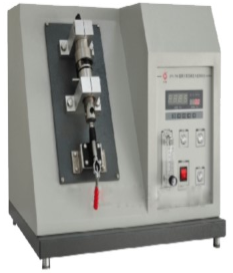
This article provides a comprehensive introduction to the concept, technical principles, test standards, instrument structure, operating procedures, and the importance of this tester in mask inspection and research and development.
What Is Differential Pressure (Gas Exchange Pressure Difference) Testing?
“Gas exchange pressure difference,” commonly referred to as differential pressure (Differential Pressure / Delta P), is a core indicator for evaluating mask breathability and breathing resistance. It measures the pressure difference between the two sides of a mask material when air passes through it at a specified airflow rate.
A lower differential pressure indicates that air can pass through the material more easily, meaning better breathability and lower breathing resistance for the wearer. Conversely, a higher differential pressure indicates greater resistance. While higher resistance may be associated with improved filtration performance, it can reduce wearing comfort. Therefore, differential pressure is a critical parameter used in various medical mask standards to assess breathing resistance.
Testing Principle
The basic principle of differential pressure testing is to allow air to pass vertically through a mask sample at a constant airflow rate and then measure the pressure difference between the upstream and downstream sides of the sample. During testing, a constant airflow rate (for example, 8 L/min) is typically applied, and a high-precision differential pressure sensor measures the pressure change across the mask material.
In simple terms, once a mask specimen (usually with a test area diameter of about 25 mm) is clamped into the tester, the internal air source generates a stable airflow that passes through the material. During this process, the differential pressure sensor continuously detects the pressure difference before and after the sample and converts it into a readable value. The result is usually expressed in pascals (Pa) or mmH₂O/cm². This value directly reflects the airflow resistance of the mask material and is a key indicator of breathability and comfort.
Significance of Differential Pressure Testing
In mask performance evaluation, breathing resistance is just as important as filtration efficiency and bacterial protection. Excessive breathing resistance can make the wearer feel short of breath, fatigued, or uncomfortable. On the other hand, extremely low resistance may improve comfort but can sometimes be associated with reduced filtration performance.
By measuring differential pressure, manufacturers and testing institutions can find a reasonable balance between protective performance and breathing comfort. According to relevant standards, both medical surgical masks and disposable medical masks have clearly defined requirements for differential pressure to ensure adequate protection while maintaining acceptable comfort for the wearer.
Differential Pressure Requirements in Standards and Regulations
Testing of medical surgical masks must comply with multiple national and international standards. For example, Chinese standards such as YY 0469-2011 and the updated YY 0469-2023 specify technical requirements and test methods for medical surgical masks. The European standard EN 14683 includes Annex C, which describes the method for measuring differential pressure (Delta P). In the United States, ASTM F2100 also requires the measurement of breathing resistance and defines acceptable ranges.
International standards generally specify that:
A constant airflow rate (such as 8 L/min) is applied through the sample.
A differential pressure sensor records the pressure difference across the sample.
The measured value is compared with standard limit values to determine compliance.
Under standards such as EN 14683. differential pressure is typically expressed in Pa/cm² or mmH₂O/cm², with defined upper limits to ensure sufficient breathability and wearer comfort.
Basic Structure and Working Method of the Tester
A differential pressure tester for mask gas exchange typically consists of the following core components:
Constant Air Source System
The instrument usually uses a suction-type air source or a built-in air pump to generate a stable airflow. Compared with external air sources, this design is less dependent on laboratory infrastructure and is more convenient for routine testing.
Flow Control Device
Airflow must be precisely controlled at the value specified by the test standard (for example, 8 L/min). Flowmeters or digital flow sensors are used to ensure stable and repeatable test conditions.
Differential Pressure Sensor
A high-precision differential pressure sensor is the core component of the tester. It measures the pressure difference across the sample in real time. Typical measurement ranges cover approximately 0–500 Pa, which is suitable for most medical mask applications.
Sample Clamping Device
To ensure accuracy and repeatability, the tester is equipped with a specially designed sample holder that tightly seals the test area of the mask and prevents edge leakage that could affect results.
Display and Control Interface
Modern testers are usually equipped with digital displays or touch-screen interfaces, allowing real-time data display, parameter setting, data storage, and result output.
By integrating these components, the tester can perform automatic constant-flow testing, real-time differential pressure measurement, and data recording, enabling efficient and reliable testing in laboratory environments.
Applications
The main applications of differential pressure testers include:
Mask Performance Testing
Differential pressure testing is an essential part of mask inspection and product development. It ensures that masks meet national and international requirements for breathability and wearing comfort.
Research and Material Development
In the development of new materials, filter media, and optimized mask structures, differential pressure testing helps evaluate the impact of different materials on breathing resistance, providing scientific data for material selection and product design.
Quality Control and Batch Evaluation
Manufacturers and third-party testing laboratories can use differential pressure testing for batch sampling, ensuring product consistency and long-term stability, improving inspection efficiency, and reducing the risk of nonconforming products.
Instrument Operation and Test Procedure
Although different models may vary, the basic test procedure is generally similar:
Sample preparation: Prepare test samples according to the standard, usually by cutting circular specimens of a specified diameter (for example, 25 mm).
Sample installation: Securely clamp the sample into the airtight test chamber, ensuring proper sealing.
Parameter setting: Set the constant airflow rate and test duration according to the relevant standard.
Test execution: Start the air source and sensors. Air passes through the sample at the preset flow rate while the instrument records the pressure difference in real time.
Data recording and output: After the test, save the data and compare the results with standard limit values as required.
This process ensures that test results comply with standard requirements and provide reliable data for product quality evaluation.
Common Precautions
When measuring differential pressure, the following points should be noted:
Ensure proper sealing: Any air leakage during testing will directly affect accuracy.
Control environmental conditions: Temperature and humidity may slightly influence results; testing should be conducted under standardized laboratory conditions whenever possible.
Maintain sensors and flow devices: Regular calibration of differential pressure sensors and flow control components is essential to ensure consistent and accurate results.
Role in the Standardized Evaluation System
Within the overall mask performance evaluation system, differential pressure serves as the breathing resistance indicator and works together with parameters such as bacterial filtration efficiency, fluid resistance, and particulate filtration efficiency. For example, EN 14683 specifies clear requirements for breathing resistance in addition to bacterial filtration efficiency, and ASTM standards similarly emphasize the influence of Delta P on wearer comfort.
Low differential pressure generally improves comfort, but it must be balanced against filtration efficiency and protective performance. Excessively high differential pressure may enhance protection but can cause breathing difficulty, potentially reducing real-world protective effectiveness. Therefore, incorporating differential pressure into design, manufacturing, and quality evaluation is both reasonable and necessary.
Overall, the Differential Pressure Tester for Medical Surgical Masks is an indispensable instrument in the mask testing system. By measuring the pressure difference across mask samples under specified airflow conditions, it provides a scientific and quantitative assessment of material breathability and breathing resistance. This information is essential for performance evaluation, quality control, and standards compliance.
Understanding the testing principles, methods, and standard requirements not only helps testing institutions and manufacturers improve product quality, but also supports the development of new materials and optimized mask designs, ultimately enhancing both wearer comfort and protective performance.
Previous: What is the use of UV curing machine?
N e x t : Medical Face Mask Differential Pressure Tester,YY 0469-2011
