





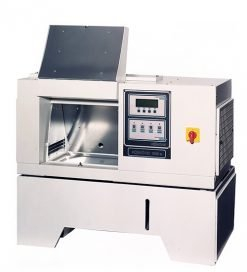
Xenon Arc Lightfastness and Weathering Test Chamber,ISO 2135
2026/01/30
Share:

Background and Significance
Materials exposed long-term to sunlight and external environmental conditions undergo various degradation processes, including fading, chalking, cracking, and embrittlement. These effects not only impact product appearance but can also reduce structural performance and service life. Ultraviolet, visible, and infrared light, combined with temperature and humidity, interact on material surfaces to create complex aging effects. Traditional outdoor testing can take months or years to reveal such degradation, while modern industry demands rapid iterative cycles and reliable validation, driving the development of artificial accelerated aging technologies.
Among accelerated aging instruments, xenon arc weathering chambers are widely regarded as the closest laboratory approximation to natural sunlight. Xenon lamps provide full-spectrum radiation similar to sunlight, allowing the combination of UV, visible, and infrared light to simulate outdoor exposure. This enables materials to exhibit aging effects equivalent to long-term outdoor exposure within days or weeks, greatly improving testing efficiency.
Basic Principle
The core principle of the Xenon Arc Lightfastness and Weathering Test Chamber is to simulate full-spectrum solar radiation using a xenon arc lamp, combined with temperature and humidity control and optional water spray cycles, to reproduce the multiple environmental effects on materials. Its operation involves several key components:
Xenon Lamp Light Source Simulating Solar Radiation
Xenon lamps are high-pressure tubes filled with inert xenon gas. When ignited, they produce an electric arc that emits a broad spectrum, including ultraviolet (UV), visible, and infrared (IR) light. Compared to conventional UV fluorescent lamps, xenon lamps produce a continuous spectrum more closely resembling natural sunlight, particularly in the 290–800 nm range. This makes them one of the best artificial light sources for simulating natural sunlight aging.
Different types of chambers use specific combinations of optical filters to replicate various environmental sunlight conditions. Daylight filters simulate direct sunlight, while window glass filters replicate sunlight after passing through glass. Adjustments to lamp power, irradiance, and spectral range allow compliance with diverse test standards.
Controllable Environmental Factor System
The chamber precisely controls temperature, humidity, and programmable water spray cycles, allowing materials to be tested under combined light, heat, and moisture conditions:
Temperature Control: Integrated heating and cooling systems regulate air and material surface temperatures. Black Panel Temperature (BPT) or Black Standard Temperature (BST) parameters monitor the thermal response of material surfaces in real time.
Humidity Regulation: Relative humidity (RH) can be set to simulate dry, humid, or cyclic moisture environments, critical for coatings, textiles, and other materials.
Water Spray and Condensation Simulation: Some chambers have programmable water spray systems to simulate rain or dew exposure, enabling comprehensive evaluation of material durability under wet-heat conditions.
These three core variables—light, temperature, and humidity—combined allow the chamber to reproduce complex natural climate conditions in the laboratory, triggering realistic aging reactions within a short period.
Key Technical Features
The design of the Xenon Arc Lightfastness and Weathering Test Chamber emphasizes precision, stability, and repeatability:
Light Source and Filter Technology: High-power xenon lamps with advanced optical filters allow accurate simulation of specific spectral ranges. Users can choose filters such as glass filters, daylight filters, and infrared absorption filters to adjust the spectrum entering the test area.
Precise Temperature and Humidity Control: Sensors and control systems maintain environmental parameters within set ranges. BPT/BST control accuracy typically reaches ± 1 °C. Relative humidity can be stabilized within 50–98% RH.
Programmable Test Cycle Control: Modern chambers include programmable controllers with touchscreens or digital panels, allowing customization of light, humidity, temperature, and water spray cycles. Preset programs enable quick setup of common test conditions.
Data Acquisition and Output: Key parameters are continuously monitored and recorded, with data export capabilities for post-analysis and quality documentation.
International Standards and Testing Requirement
Xenon arc weathering chambers are used to meet multiple international and industry standards, including:
ISO 4892-2 — Laboratory light source exposure for plastics (xenon arc lamps)
ASTM G155 — Xenon lamp exposure for non-metallic materials
ISO 105-B02. AATCC TM16 — Textile lightfastness and colorfastness
SAE J2412 and other industry standards specifying spectrum, irradiance, and temperature cycles
Compliance ensures internationally comparable results, suitable for export inspection, supply chain quality control, and regulatory verification.
Industry Value
Xenon arc weathering chambers are widely applied in industries that evaluate long-term environmental performance of materials:
Plastics and Polymers: Predict fading, embrittlement, and mechanical degradation, supporting material formulation and lifespan estimation.
Coatings and Construction Materials: Simulate sunlight, rain, and thermal cycling to assess adhesion, color stability, and chalking.
Textiles and Apparel: Evaluate fabric and dyed yarn durability under light exposure.
Automotive and Aerospace Components: Reveal degradation mechanisms of vehicle trims, dashboards, coatings, and composites.
Packaging and Electronics Housings: Assess mechanical and aesthetic stability under light and thermal cycling.
Advantages and Industry Comparison
Compared with other artificial accelerated aging methods, xenon arc chambers offer:
Closest approximation to natural sunlight across UV, visible, and IR
Comprehensive environmental simulation including temperature, humidity, and water spray
Broad standard compliance for international certification
Time efficiency, greatly reducing the cycle from design to production validation
Xenon arc lightfastness and weathering chambers are indispensable tools for modern material R&D, quality control, and product certification. By simulating full-spectrum solar radiation and controlled environmental conditions, they reveal long-term material performance degradation in a short time, supporting industrial design, material selection, quality assurance, and regulatory compliance.
As materials science and testing technology evolve, these instruments will continue improving in accuracy, automation, and intelligence, meeting the demands of new materials and high-performance products. Standardized and digitalized testing workflows will further enhance development efficiency and product reliability, contributing to the advancement of materials science and high-end manufacturing.
Previous: SUNTEST CPS+ Compact Xenon Arc Weathering Test Chamber,ASTM C1442
N e x t : What is a UV-master UV Aging Test Chamber?
