





What is a UV-master UV Aging Test Chamber?
2026/01/30
Share:

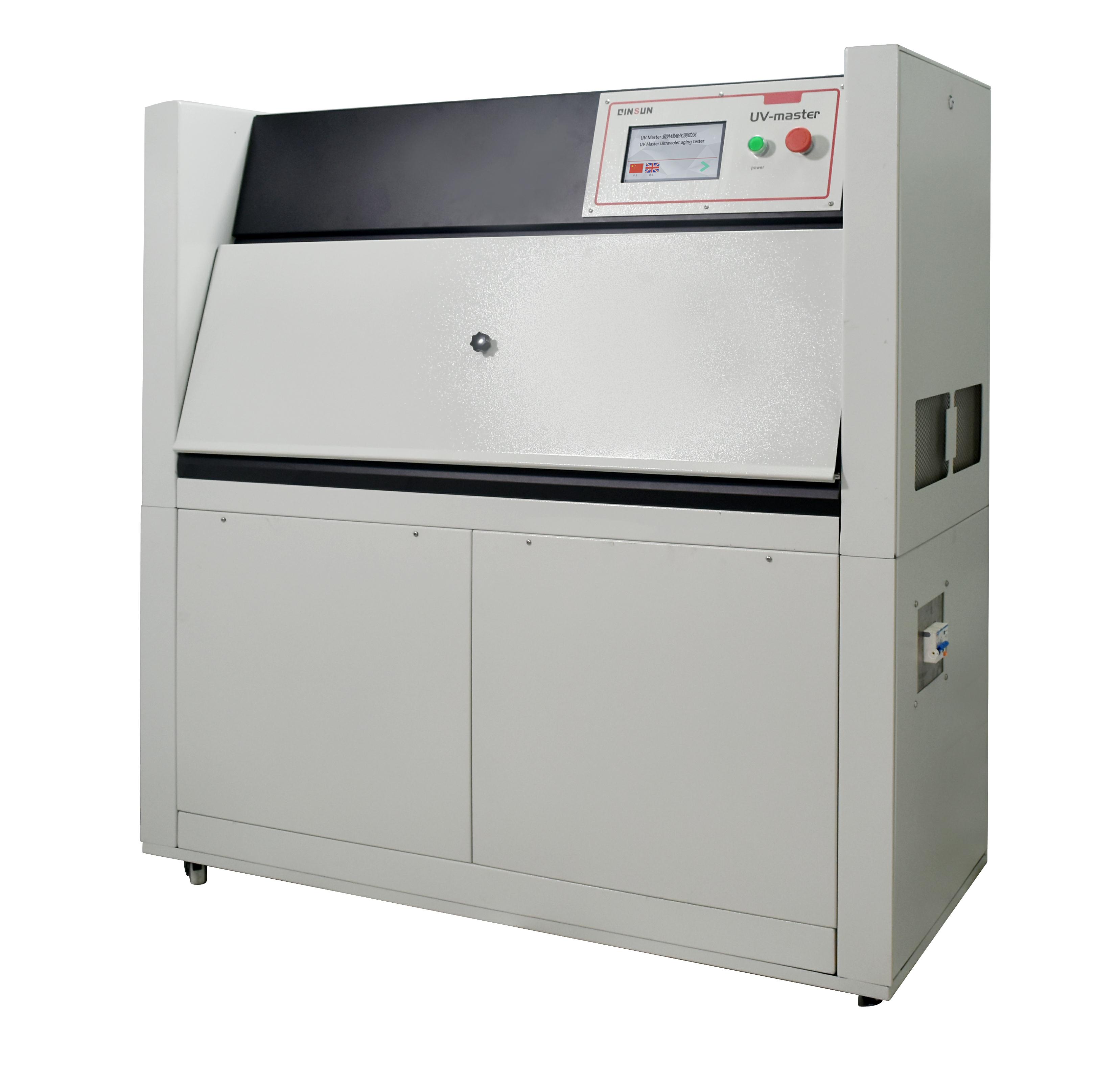
Basic Concept
A UV Aging Test Chamber is a specialized device designed to perform accelerated aging tests on materials and products under controlled laboratory conditions, simulating natural sunlight (especially UV light) and environmental factors. Internationally, it is also referred to as a UV Weathering Test Chamber, UV Lightfastness Test Chamber, or UV Accelerated Weathering Equipment. The primary goal is to expose materials to high-intensity UV radiation over a short period, combined with temperature and humidity cycling, to simulate the impact of outdoor conditions on material performance.
In outdoor environments, ultraviolet radiation is the high-energy portion of solar irradiation and can break chemical bonds in materials, causing fading, chalking, cracking, and embrittlement. Compared with natural exposure tests, UV accelerated aging applies higher light energy and controlled thermal-humidity cycles, allowing products to experience similar stresses in a shorter time. This enables the prediction of potential performance degradation under long-term outdoor use.
The chamber typically uses fluorescent UV lamps as the light source, primarily covering the effective UV range of sunlight, such as UVA‑340 (295–365 nm) and UVB‑313 (280–315 nm), simulating the destructive portion of natural sunlight. Compared with other light sources, such as xenon lamps, fluorescent UV sources are more stable and focus wavelength energy precisely on the spectral range most relevant to material degradation.
Working Principle
UV Light Source Simulating Natural Sunlight
The core component of a UV Aging Test Chamber is its UV light source system, which generally employs high-intensity fluorescent UV lamps emitting specific wavelength radiation to replicate sunlight’s UV portion. For example, UVA‑340 lamps cover the 295–365 nm spectrum, considered the main range responsible for photodegradation of materials, while UVB‑313 lamps provide higher energy for testing durability under more severe UV exposure.
UV light control includes setting irradiance (UV energy intensity), light exposure cycles, and lamp life monitoring. These parameters directly affect sample exposure conditions and test results. Automatic calibration functions often allow the lamp output to be standardized, ensuring consistency and repeatability across cycles and batches.
Temperature Control System
UV aging testing involves more than light exposure; precise temperature control is critical. Changes in ambient temperature accelerate internal chemical reactions and increase the activation energy of photodegradation, playing a key role in material aging. The chamber allows the setting of stable temperature ranges, typically monitored and controlled via Black Panel Temperature (BPT) or surface temperature sensors, simulating the actual surface temperature of materials exposed to sunlight.
Humidity Cycling and Water Simulation
In natural environments, materials also experience dew, rain, and other wet conditions that can accelerate degradation. Modern UV chambers often include humidity control modules, enabling simulation of high-humidity environments, condensation, and water spray cycles to replicate dew and rainfall. Humidity cycling significantly impacts materials such as coatings, plastics, and wood, as moisture accelerates light-induced oxidation, expansion, and cracking.
Programmed Cycles and Automated Control
UV chambers typically feature programmable control systems, operated via touchscreen or digital panels, to set light, humidity, and temperature cycling programs, including light‑condensation‑water spray sequences. Users can configure cycle parameters such as exposure time, darkness duration, and condensation period, replicating diurnal cycles or complex climate variations to closely mimic real-world aging conditions.
Key Technical Features and Performance Parameters
Multiple UV Wavelength Options
Chambers support various UV lamps, including UVA, UVB, and UVA‑351. allowing customization according to material types and test standards. Users can select the spectral range based on testing requirements or material characteristics.
High-Precision Temperature and Humidity Control
High-quality UV chambers provide precise control of temperature and humidity. Temperature ranges are typically adjustable from ambient to 90 °C or higher, while relative humidity can be controlled between 10% and 98% RH. Some systems maintain black panel temperature with ±1–2 °C accuracy, ensuring stable testing conditions and reliable results.
Flexible Cycling Modes
Modern chambers support multiple cycles, including UV exposure, heat-humidity, condensation, and combinations with water spray or darkness cycles. This flexibility allows testing environments to approximate complex natural aging conditions more closely.
Automated Control and Data Recording
With intelligent controllers, UV chambers can pre-set multiple standard programs and record real-time data on UV irradiance, temperature, and humidity. Some systems allow data export and remote monitoring via USB, RS‑485. or network interfaces, facilitating convenient data analysis.
Compatibility with Multiple Standards
Advanced UV chambers comply with ASTM, ISO, SAE, and other national or international standards, such as ASTM G154. ISO 4892‑3. and SAE J2020. This ensures broad industry recognition and comparability of results.
Typical Applications
Plastics and Polymers
Plastics exposed to prolonged sunlight may yellow, crack, or lose mechanical performance. UV aging tests evaluate the durability of different polymers and additives under light and thermal-humidity cycles, aiding in the development of more weather-resistant materials.
Coatings and Paint Performance Evaluation
Outdoor coatings and building paints are exposed to sunlight, rain, and heat-humidity cycles, affecting color stability, adhesion, and gloss. UV chambers simulate these processes to measure performance degradation and optimize formulations.
Automotive Components Weathering Tests
Exterior automotive parts, dashboards, and seals can degrade under long-term UV and high temperatures. Accelerated testing helps engineers evaluate UV resistance, optimizing material selection during the design phase.
Textiles and Outdoor Products
Fabrics, awnings, tents, and marine textiles can fade or become brittle under UV exposure. UV testing assesses fiber and dye lightfastness, providing reference data for quality control.
Electronics and Packaging Materials Reliability
Electronic housings, packaging materials, labels, and adhesives exposed to sunlight may degrade. UV chambers replicate these conditions in the lab to evaluate reliability and service life.
Standards and Evaluation Indicators
UV aging tests follow international standards such as ASTM G154. ISO 4892‑3. and SAE J2020. These standards specify UV irradiance, cycle duration, and temperature-humidity control, ensuring comparability and reproducibility of results.
Evaluation indicators include color change (ΔE), material hardness, surface chalking, mechanical property changes, and crack formation. Comparison of pre- and post-aging performance allows assessment of material durability.
Safety Precautions
Although testing occurs in a controlled environment, strict operational and safety measures are necessary:
Sample Preparation: Install samples according to standard dimensions and fixation methods to avoid inconsistencies.
Test Condition Setup: Configure UV wavelength, black panel temperature, and humidity cycles according to standards or material requirements.
Equipment Maintenance: UV lamps, sensors, and other components require regular calibration and replacement to ensure consistent conditions.
Safety Protection: The chamber emits high-intensity UV radiation. Operators should avoid direct exposure and follow all equipment guidelines.
Development Trends
UV Aging Test Chambers have become essential tools in modern material R&D and quality control. By accurately simulating UV radiation, temperature, and humidity, they can assess weather resistance in a short time and predict long-term performance under outdoor conditions.
With ongoing technological advances and standards refinement, future UV chambers will offer higher precision, smarter control, and more efficient automated data recording. These improvements will provide stronger testing capabilities for materials science, industrial manufacturing, and green material development, ensuring products remain reliable and durable in complex natural environments.
Previous: Xenon Arc Lightfastness and Weathering Test Chamber,ISO 2135
N e x t : What is the UV cabinet method?
