





UV-master UV Aging Test Chamber
2026/02/02
Share:

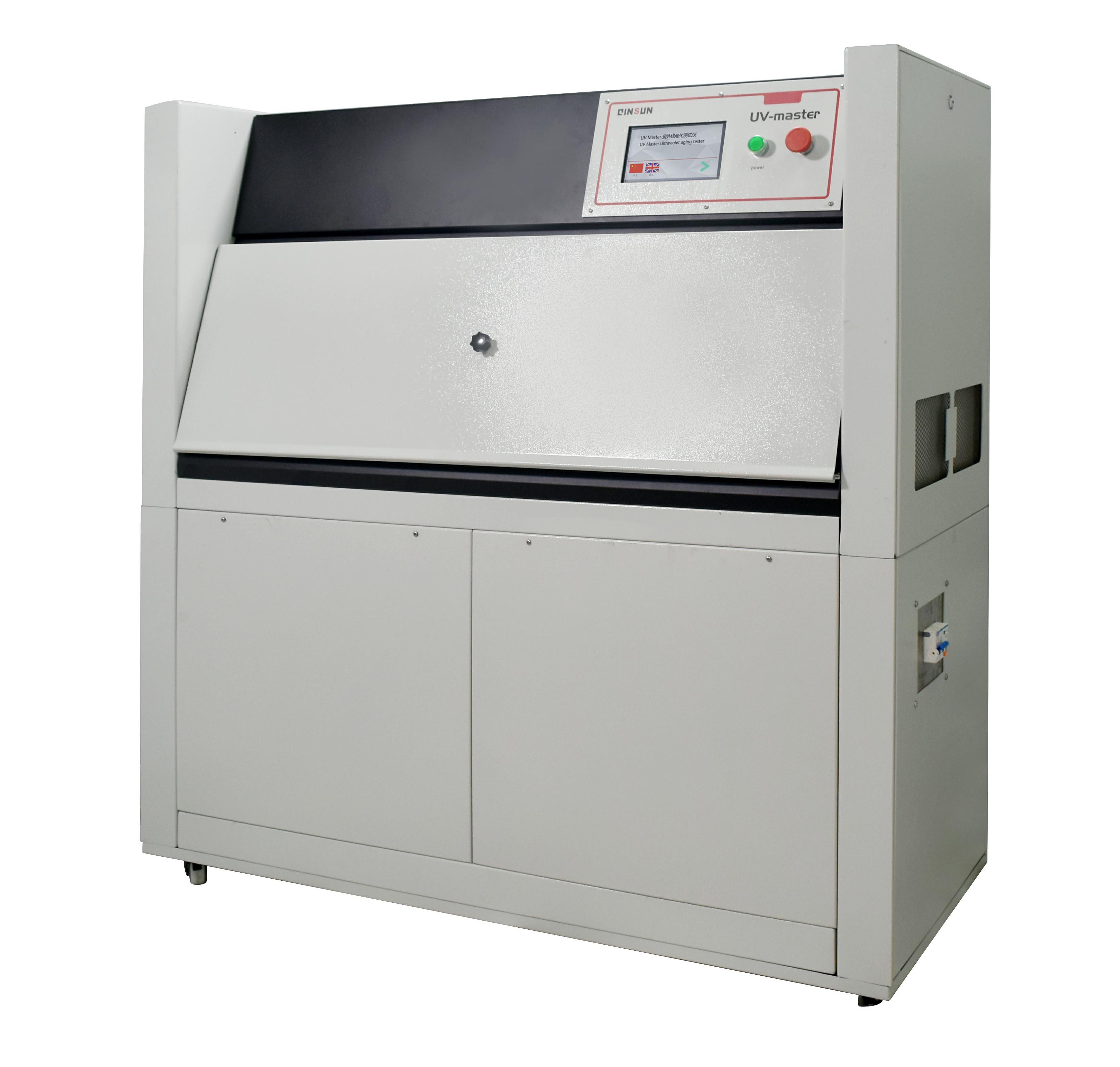
Basic Function and Working Principle
A UV test chamber is an environmental testing device designed to simulate the effects of ultraviolet radiation under controlled laboratory conditions. In outdoor environments, prolonged exposure to sunlight causes materials to fade, lose mechanical strength, crack, or powder. These degradation phenomena are primarily driven by ultraviolet radiation. By using controlled UV light sources together with temperature and humidity regulation, UV test chambers accelerate the aging process and allow rapid evaluation of weather resistance performance.
Inside the chamber, key controllable parameters typically include UV irradiance intensity, temperature, humidity, and condensation or water spray cycles. By appropriately adjusting these parameters, aging effects that normally take months or years outdoors can be reproduced within hours or weeks. For example, UV lamps emitting radiation in the 290–400 nm wavelength range are commonly used to simulate sunlight-induced material degradation.
Classification Criteria
According to industry practice, UV test chambers can be classified based on the following criteria:
Light source type
Functional capabilities and control conditions
Intended testing applications
This article introduces UV test chambers in detail according to these three classification approaches.
Classification by Light Source Type
The light source is the core component of a UV test chamber. Different light sources determine the testing capability, accuracy, and applicability of the equipment. Based on light source type, UV test chambers can be categorized as follows:
1. Fluorescent UV Lamp Test Chambers
Fluorescent UV lamp test chambers use fluorescent ultraviolet lamps as the radiation source, emitting long-wave and medium-wave ultraviolet light such as UVA and UVB to simulate the ultraviolet portion of natural sunlight. This type is one of the most widely used UV aging test chambers and is particularly suitable for material weather resistance testing.
Key characteristics include:
UV-focused spectral output: Primarily emits UV-A and UV-B radiation in the 290–400 nm range, which is the most damaging portion of sunlight for many materials.
Adjustable irradiance intensity: UV intensity can be adjusted to achieve different acceleration factors for aging tests.
Combined environmental cycles: Can be equipped with temperature control, humidity control, and water spray functions to simulate sunlight, rain, and dew conditions.
Fluorescent UV test chambers are widely used for testing coatings, plastics, rubber, textiles, adhesives, and inks, and are especially suitable as rapid screening tools during product development.
Spectral Subtypes: UVA and UVB Lamps
Fluorescent UV lamps can be further divided based on wavelength:
UVA lamps: Emit long-wave ultraviolet radiation in the 320–400 nm range, closely matching the UV portion of natural sunlight and providing good correlation with long-term outdoor exposure.
UVB lamps: Emit shorter-wave radiation in the 280–315 nm range with higher energy, resulting in faster aging effects, though the spectral match to natural sunlight is less accurate.
Lamp selection should be based on the material type and the relevant testing standards.
2. Xenon Arc Test Chambers
Xenon arc test chambers use xenon discharge lamps as the light source, generating a broad spectrum that includes ultraviolet, visible, and infrared radiation. Unlike fluorescent UV lamps, xenon arc lamps provide a more complete simulation of natural sunlight.
Key characteristics include:
Full-spectrum simulation: Emission typically covers wavelengths from approximately 290 nm to 2500 nm, including UV, visible, and infrared light.
High simulation accuracy: Suitable for evaluating long-term lightfastness and weathering behavior under realistic sunlight conditions.
Higher complexity and cost: Compared with fluorescent UV chambers, xenon arc systems are more complex in design and require higher investment and maintenance.
Due to these characteristics, xenon arc test chambers are commonly used for applications requiring high realism, such as color fastness evaluation, appearance change analysis, coating durability testing, and comprehensive weathering studies.
3. Carbon Arc Test Chambers
Carbon arc test chambers use carbon electrodes to generate an electric arc in air. This technology was widely used in early light aging tests. However, due to limitations in spectral accuracy and environmental simulation, it has largely been replaced by fluorescent UV and xenon arc systems. Carbon arc test chambers may still appear in certain legacy or specialized testing standards.
Key characteristics include:
High radiation energy: Produces high energy output, resulting in strong aging acceleration effects.
Limited spectral realism: The spectral distribution differs significantly from natural sunlight, reducing correlation with real outdoor exposure.
Reduced application scope: Modern standards increasingly favor more accurate light sources, limiting the current use of carbon arc systems.
Overall, carbon arc test chambers are suitable for rapid and intensive UV aging studies but are less effective for precise simulation of natural environmental conditions.
Classification by Functional Capabilities and Control Conditions
Based on testing functions and environmental control capabilities, UV test chambers can be divided into the following categories:
1. Basic UV Aging Test Chambers
Basic UV aging test chambers primarily provide ultraviolet irradiation to evaluate material degradation under UV exposure. These systems typically do not include temperature or humidity control and focus solely on the effects of UV radiation.
They are suitable for preliminary screening of UV sensitivity, especially when temperature and humidity effects are not critical.
2. UV Test Chambers with Temperature and Humidity Control
These chambers add temperature and humidity control to the basic UV exposure function. Since material aging is often influenced by the combined effects of UV radiation, heat, and moisture, this configuration provides a more comprehensive simulation of outdoor environments.
Key features include:
Adjustable temperature range: Allows simulation of material heating caused by sunlight exposure.
Humidity control or condensation cycles: Simulates dew formation and moisture exposure in outdoor conditions.
Flexible cycle programming: Enables UV exposure, moisture, and dark phases to be combined in programmable cycles.
This type of UV test chamber is widely used in weather resistance evaluation and offers improved correlation with real-world exposure conditions.
3. Advanced Climate Simulation UV Test Systems
Advanced UV climate simulation systems integrate UV radiation, temperature, humidity, water spray, precise temperature profiling, automated control, and data logging. These systems can simulate complex outdoor weather cycles, including sunlight exposure, heating, rainfall, condensation, and cooling.
Such systems are typically used for high-level durability testing, certification testing, and research applications, particularly in industries with stringent environmental performance requirements, such as automotive, aerospace, and construction materials.
Classification by Testing Application Purpose
UV test chambers can also be classified according to their intended testing applications:
1. Material Weather Resistance Testing
This is the most common application, focusing on evaluating the durability of materials such as coatings, plastics, rubber, fibers, and wood under UV exposure. Typical degradation phenomena include fading, chalking, cracking, and surface deterioration.
Standardized testing is usually conducted in accordance with relevant international or national standards, such as ISO or ASTM methods.
2. Light Stability and Color Fastness Testing
For materials sensitive to light exposure, such as textiles and pigmented coatings, long-term color stability must be evaluated. Xenon arc test chambers are particularly suitable for these applications due to their full-spectrum light simulation.
3. Quality Control and Accelerated Screening
In manufacturing environments, UV test chambers are commonly used for quality control and batch consistency evaluation. Accelerated testing helps identify potential aging-related failures early, reducing the risk of product degradation during actual use.
UV test chambers are versatile environmental testing systems available in various configurations based on light source type, control capability, and application requirements. Fluorescent UV lamp chambers, xenon arc chambers, and carbon arc chambers each have distinct characteristics and are suitable for different testing objectives. From basic UV exposure units to advanced climate simulation systems, these chambers can meet a wide range of testing needs, from simple screening to comprehensive outdoor environment simulation. Selecting the appropriate UV test chamber based on material properties, testing standards, and application goals is essential for obtaining accurate and reliable aging test results.
Previous: What is the UV cabinet method?
N e x t : What is an UV chamber used for?
