





What is the UV cabinet method?
2026/01/30
Share:

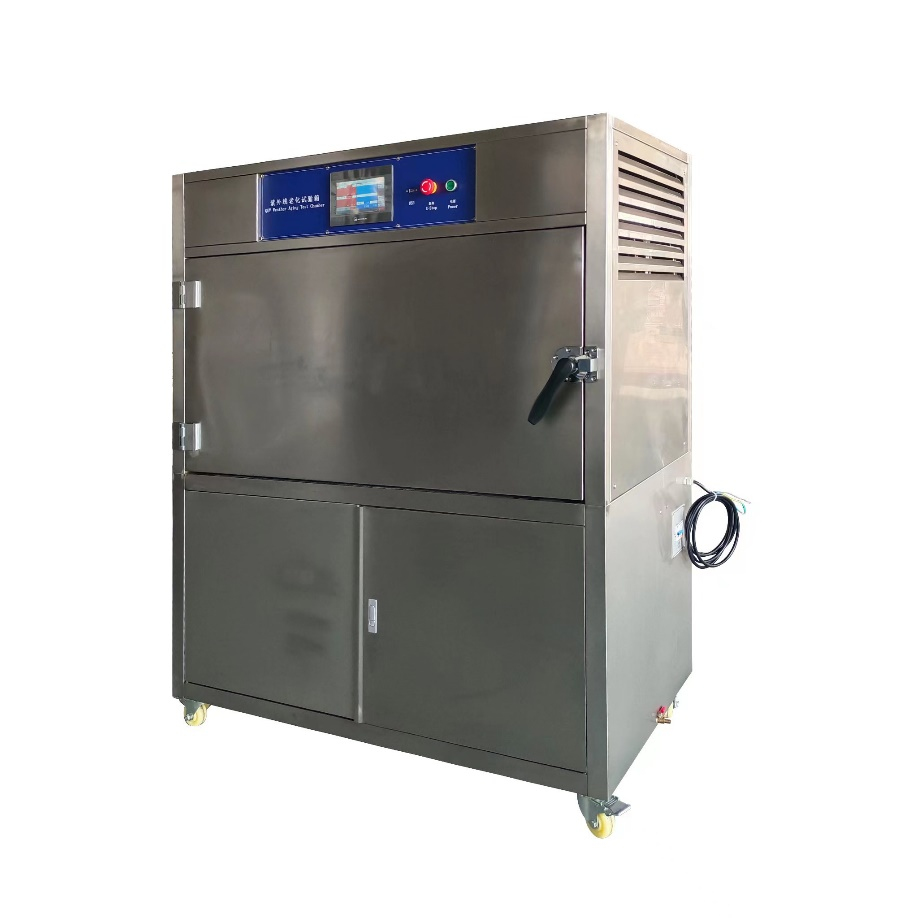
This article provides a comprehensive overview of the Cabinet‑Type UV Aging Test Chamber, covering definitions and basic principles, key components and technical parameters, main test methods and standards, application areas, and practical implementation.
Concept
The Cabinet‑Type UV Aging Test Chamber is a device that performs accelerated aging tests on samples by artificially controlling UV light sources and environmental conditions. It typically uses fluorescent UV lamps to simulate the destructive UV spectrum of sunlight, combined with controllable temperature, humidity, condensation, or water spray cycles. This allows samples to experience accelerated aging similar to years of outdoor exposure in a short period.
In natural environments, sunlight contains UV, visible, and infrared light, with UV being one of the primary factors causing material degradation. UV radiation has high energy and strong penetration, breaking molecular structures and triggering chemical reactions that lead to performance decline. Natural exposure tests are time-consuming and affected by climatic fluctuations, whereas the Cabinet‑Type UV Aging Test Chamber can reproduce years of natural aging under controlled laboratory conditions in a short time, providing rapid evaluation for product development and quality assessment.
This testing method is highly valuable for material selection, formulation optimization, process improvement, quality control, and reliability assessment. It is commonly used in industries such as plastics, coatings, rubber, textiles, automotive components, and construction materials.
Working Principle
The basic working principle of the Cabinet‑Type UV Aging Test Chamber is to accelerate the aging of sample materials under controlled conditions by simulating natural UV radiation and combining variables such as temperature, humidity, and water cycles. The core processes include:
1. UV Light Source Simulating Solar Radiation
The chamber uses fluorescent UV lamps, such as UVA‑340 and UVB‑313. which primarily emit wavelengths similar to the UV portion of natural sunlight (approximately 280 nm to 400 nm), the most active range for photochemical degradation. By configuring lamps of different wavelengths, the chamber can simulate varying degrees of UV aging.
Key characteristics of fluorescent UV lamps include:
Energy concentrated in the UV range most effective at causing material degradation.
More stable spectrum compared with other light sources, allowing standardized UV simulation.
Adjustable UV irradiance for repeatable and controllable testing.
2. Temperature and Black Panel Temperature Control
Besides UV exposure, environmental temperature is a significant factor influencing material aging. The chamber can precisely control internal temperature during both light and condensation/humidity phases to simulate surface heating effects of sunlight. Black Panel Temperature (BPT) measures the temperature of the sample surface or absorber plate, reflecting a more realistic thermal condition.
Automated PID control systems ensure uniform temperature throughout the chamber, providing reliable and comparable test data.
3. Humidity and Condensation Cycles
Most UV aging tests include humidity or condensation stages to simulate dew formation, wet environments, or rain exposure. Programs usually alternate between light and condensation phases, exposing samples to both UV radiation and high-humidity conditions, providing a more comprehensive simulation of outdoor aging.
The humidity control system, using humidifiers and air circulation, can achieve relative humidity levels up to 95% or higher, which is critical for testing coatings, rubber, and textile materials.
4. Water Spray Simulation (Optional)
Some advanced cabinet-type UV chambers include water spray systems to replicate the effects of rain on materials. Combining spraying with condensation cycles exposes samples to realistic stresses from light, heat, humidity, and water cycles.
By integrating these environmental factors into programmable cycles, the chamber can reproduce years of outdoor aging in weeks or hundreds of hours, significantly improving testing efficiency and accuracy.
Key Components and Technical Parameters
The Cabinet‑Type UV Aging Test Chamber consists of multiple key components that work together to execute tests accurately according to pre-set programs. Common components include the light source system, environmental control system, sample racks, and automated control system.
1. Light Source System
The core of the chamber, typically includes:
UV lamps: Fluorescent lamps such as UVA‑340 or UVB‑313.
Lamp quantity: Usually 4–8. depending on chamber size.
Irradiance: Adjustable or fixed to specific UV energy levels to meet different aging intensity requirements.
The light source system must provide stable UV output to ensure consistent irradiance for comparable test results.
2. Internal Environmental Control System
Includes:
Temperature control: PID-controlled, adjustable within ranges such as RT + 10 °C to 70 °C or higher.
Humidity control: Adjustable from 50% to 95% RH.
Condensation control: Simulates nighttime moisture or dew formation.
The system must be sensitive and stable to maintain uniform environmental parameters throughout the test cycles.
3. Sample Racks and Arrangement
Adjustable sample racks allow flexible placement according to sample size and quantity, ensuring uniform exposure to UV and environmental cycles. Standard sample sizes may be 75 × 150 mm, but racks can be customized as needed.
4. Automated Control and Data Recording
Modern chambers feature touchscreens or programmable controllers to set test programs (UV exposure, condensation, spray cycles, etc.). Real-time monitoring and recording of key parameters such as temperature, humidity, and irradiance facilitate analysis and evaluation of results.
Main Test Standards and Specifications
Results from the Cabinet‑Type UV Aging Test Chamber are used to meet national and international standards, ensuring materials and products meet weathering requirements. Common standards include:
ISO 4892‑3: Laboratory light exposure methods for plastics (UV radiation).
ASTM G154: Standard practice for fluorescent UV light exposure of nonmetallic materials.
SAE J2020: UV weathering evaluation for automotive materials.
GB/T 14522. GB/T 16422.3: Chinese national standards for UV aging of plastics.
ISO 11507: UV weathering standards for coatings, inks, and other materials.
These standards define UV wavelength selection, irradiance settings, test cycle arrangements, and environmental controls, providing a framework for consistent and comparable results across laboratories.
Application Areas
1. Plastics and Polymer Materials
Plastics and polymers may yellow, become brittle, or crack under prolonged UV exposure. UV testing predicts outdoor performance and assists in formulation optimization.
2. Coatings and Surface Treatments
The weather resistance of paints, varnishes, and coatings is a key quality indicator. Cabinet-type UV chambers evaluate color retention, gloss changes, and surface durability.
3. Textiles and Leather
Outdoor fabrics, awnings, and leather products are sensitive to UV, prone to fading and fiber degradation. UV testing provides lightfastness evaluation for material selection and product design.
4. Automotive and Construction Materials
Plastic parts, seals, interior components, and construction materials like window seals and curtain wall elements must maintain long-term performance under UV exposure. Testing identifies potential quality issues in advance.
5. Printing Materials and Packaging
Inks, labels, and plastic packaging may fade, become brittle, or degrade under UV. UV testing assesses material reliability under natural environmental conditions.
Testing Procedures and Quality Assessment
Sample Preparation and Installation: Prepare samples according to standards and test objectives, mounting them uniformly on racks for even exposure.
Parameter Setting: Configure UV irradiance, temperature range, humidity, and light-condensation cycles.
Cycle Testing: Start the chamber to run samples through programmed cycles, completing multiple aging repetitions within the set test duration.
Result Analysis: After testing, evaluate changes using visual inspection, colorimetry, mechanical testing, etc., assessing fading, cracking, chalking, or strength loss.
Comparisons with reference samples allow quantitative evaluation of material weather resistance.
Development Direction
Advantages
Realistic simulation: UV exposure and environmental cycles closely mimic outdoor aging conditions.
Short testing cycle: Reproduces years of natural exposure in days or weeks.
High controllability: Parameters are precisely adjustable for repeatable and comparable results.
Broad applicability: Suitable for materials science, product design, quality testing, and standards compliance.
Limitations
Spectral differences: Fluorescent UV lamps cannot fully replicate the full solar spectrum, potentially limiting accuracy for some materials.
Environmental complexity: While humidity and spray cycles are simulated, factors like wind and pollution are not fully represented.
Combining multiple test methods and natural exposure data is recommended for comprehensive evaluation.
Future Development
Upgraded light sources: More advanced lamp combinations for more realistic UV spectrum simulation.
Smart control and data analysis: Real-time monitoring, remote control, and automatic report generation.
Enhanced standardization: Refined industry standards for more comparable and authoritative results.
The Cabinet‑Type UV Aging Test Chamber is a vital accelerated aging tool that simulates years of outdoor exposure in the laboratory through controlled UV, temperature, humidity, and cycle programs. Understanding its principles, technical features, applications, and operational procedures is essential for professionals in material testing, product development, and quality control. Proper use of this equipment improves product quality, optimizes material performance, and supports the development of durable, reliable materials and products.
Previous: What is a UV-master UV Aging Test Chamber?
N e x t : UV-master UV Aging Test Chamber
