





What is a Flat-Panel Air-Cooled Xenon Lamp Weathering Test Chamber?
2026/02/02
Share:

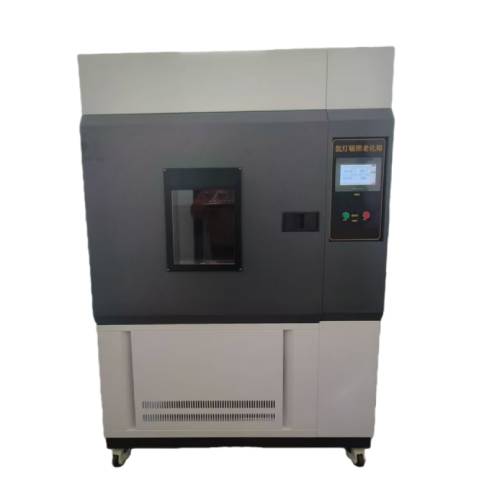
This type of chamber combines full-spectrum xenon arc light simulation, air-cooling technology, and a flat-panel specimen exposure structure. It is widely used to simulate the combined effects of natural sunlight, temperature, humidity, and rainfall on materials and products, helping to predict long-term performance under real environmental conditions.
This article explains the working principles of flat-panel air-cooled xenon lamp weathering test chambers and provides a comprehensive overview of their applications, testing methods, applicable industries, and technical advantages, highlighting their role in modern engineering and scientific research.
Core Principles
What Is a Xenon Lamp Weathering Test Chamber?
A xenon lamp weathering test chamber is a type of environmental testing device specifically designed to simulate full-spectrum natural sunlight. It uses a xenon arc lamp as the light source, which emits radiation closely matching the solar spectrum, including ultraviolet (UV), visible, and infrared (IR) wavelengths. By combining controlled light exposure with temperature regulation, humidity control, and water spray systems, the chamber reproduces the environmental conditions responsible for material aging in outdoor use.
The primary objective of a xenon lamp weathering test chamber is to recreate long-term outdoor exposure within a laboratory environment. Through accelerated exposure to light and environmental stressors, materials can exhibit degradation and performance changes equivalent to several years of natural weathering within days or weeks.
Role of the Xenon Arc Light Source
The xenon arc lamp is a high-intensity light source with a spectral power distribution closely resembling natural sunlight. It generates a continuous spectrum across a wide wavelength range, rather than being limited to specific ultraviolet bands. This distinguishes xenon lamps from conventional UV lamps, which simulate only part of the solar spectrum.
As a result, xenon lamp weathering tests provide a more realistic simulation of prolonged exposure to sunlight, thermal cycling, and humidity variations. This enables more accurate prediction of material durability, aging behavior, and degradation mechanisms under real environmental conditions.
Air-Cooling and Flat-Panel Structural Design
In xenon lamp weathering test chambers, air cooling is one method used to dissipate heat generated by the light source. Unlike water-cooled systems, air-cooled xenon chambers do not require an external water supply. Instead, fans promote air circulation to remove heat from the lamp, simplifying system design while reducing maintenance requirements and operating costs. Air-cooled configurations are commonly used in small to medium-sized laboratories or in applications where extreme thermal loads are not required.
The flat-panel design refers to a horizontal specimen exposure surface, with the xenon lamp positioned above the samples. This configuration allows specimens to be directly exposed to the light source from above. Flat-panel structures are particularly suitable for testing large-area samples, complex shapes, or three-dimensional components, as specimen placement is more flexible and handling is easier.
Primary Applications
As an accelerated weathering testing system, the flat-panel air-cooled xenon lamp weathering test chamber is widely used to evaluate the performance and service life of materials and products exposed to natural environmental stressors. Its main applications include the following:
Simulation of Natural Aging and Accelerated Weathering
Natural weathering is a slow and complex process involving ultraviolet radiation, temperature fluctuations, humidity, and rainfall. Xenon lamp weathering test chambers reproduce these factors under controlled laboratory conditions. By applying accelerated exposure cycles, they significantly shorten testing time while providing meaningful aging trend data.
Within the chamber, specimens are exposed to full-spectrum xenon light combined with temperature and humidity cycling. This allows materials to experience aging effects similar to months or years of outdoor exposure within a short testing period. For example, ultraviolet radiation can cause polymer chain scission at material surfaces, while temperature and humidity changes intensify moisture-related degradation. These processes can be effectively reproduced through programmed test cycles.
Color Fastness and Light Stability Testing
Materials exposed to sunlight often experience discoloration, fading, loss of gloss, or changes in appearance. Flat-panel xenon lamp weathering test chambers are widely used to evaluate color fastness and light stability, particularly in industries such as textiles, coatings, inks, and plastics.
In textile testing, xenon lamp exposure conducted in accordance with standardized methods enables quantitative evaluation of fading rates and color change trends under simulated sunlight conditions.
Mechanical Property Degradation and Durability Evaluation
In addition to visual changes, long-term outdoor exposure can lead to deterioration of mechanical properties, such as embrittlement, cracking, fracture, and reduced tensile strength. By simulating combined light exposure, heating, and humidity cycling, flat-panel xenon chambers induce structural changes within materials that allow assessment of aging-related mechanical degradation.
These results are valuable for designing more durable materials and optimizing formulations for long-term environmental resistance.
Material Formulation Screening and R&D Evaluation
During new material development or formulation improvement, researchers must evaluate how different compositions affect weather resistance. Flat-panel xenon lamp test chambers serve as essential tools in the research and development process, enabling direct comparison of aging performance under controlled conditions.
Compared with natural outdoor exposure, this approach is faster, more repeatable, and more controllable, helping accelerate development timelines while reducing overall costs.
Life-Cycle Prediction and Quality Assurance
Xenon lamp aging tests are commonly used to predict product life cycles and identify potential failure modes before market release. These results support quality assurance programs, warranty planning, and risk assessment, particularly in industries with strict durability requirements such as automotive manufacturing, outdoor equipment, and construction materials.
Technical Features and Testing Methods
Flat-panel air-cooled xenon lamp weathering test chambers typically consist of several integrated systems, each serving a specific testing function:
Xenon Arc Light Source System
The light source system is the core component of the chamber. Xenon arc lamps provide full-spectrum radiation covering ultraviolet, visible, and infrared wavelengths. Due to their close similarity to natural sunlight, these lamps are widely recognized in international accelerated aging standards.
To meet specific testing requirements, optical filter systems are often used to adjust the emitted spectrum. Different filter combinations allow selection of specific wavelength ranges and irradiance levels, enabling compliance with various test standards.
Flat-Panel Specimen Exposure Structure
In flat-panel chambers, specimens are placed on a horizontal exposure surface, with the xenon lamp mounted above. This design is ideal for large, three-dimensional, or irregularly shaped specimens that cannot be easily mounted in rotating drum systems.
The flat exposure area also enables uniform irradiation of large panels, coatings, and sheet materials, ensuring consistent environmental conditions across the entire specimen surface.
Environmental Cycling and Control Systems
These chambers integrate temperature control, humidity control, and water spray systems to simulate a range of environmental conditions. Test programs can be configured to replicate different exposure stages, such as high-temperature dry light exposure followed by moisture or condensation cycles that simulate rain or dew.
The control system typically supports multiple programmable steps and cycles, allowing precise regulation of irradiance intensity, exposure duration, spray intervals, temperature settings, and humidity changes to form complete weathering test profiles.
Irradiance and Temperature Measurement
To ensure test repeatability and consistency, modern xenon lamp chambers are equipped with irradiance sensors and temperature measurement devices such as black standard or black panel thermometers. These sensors continuously monitor exposure conditions and provide feedback to the control system for automatic adjustment and precise control.
Testing Standards
Xenon lamp weathering tests are governed by widely recognized international and industry standards, including but not limited to:
ISO 4892-2: Plastics — Methods of exposure to laboratory light sources using xenon arc lamps
ASTM G155: Standard practice for operating xenon arc light apparatus for exposure of nonmetallic materials
AATCC TM16.3: Colorfastness to light testing for textiles
These standards define test conditions, cycle parameters, irradiance settings, and evaluation methods, ensuring data comparability across laboratories and compliance with industry requirements.
Advantages and Limitations
Advantages
Full-spectrum sunlight simulation
Xenon arc lamps provide comprehensive spectral output, making test results highly representative of real outdoor exposure, especially for materials sensitive to color change and light stability.
Flexible flat-panel specimen layout
Compared with rotating drum designs, flat-panel configurations are better suited for large or irregular three-dimensional specimens and allow easier observation and documentation.
Simplified structure through air cooling
Air-cooled systems eliminate the need for water circulation, reducing installation complexity and maintenance costs, making them suitable for small and medium-sized laboratories.
Programmable environmental cycles
Advanced control systems allow complex combinations of light exposure, temperature, humidity, and water spray to enhance simulation accuracy.
Limitations
Cooling capacity constraints
Compared with water-cooled xenon systems, air-cooled designs offer lower heat dissipation efficiency under high irradiance or long-duration high-power testing conditions.
Relatively higher cost
Although air cooling simplifies system design, xenon arc lamps themselves are costly, and overall equipment and operating expenses remain higher than those of basic UV-only systems.
Dependence on standardized test cycles
Standardized xenon testing often requires long test durations and complex parameter settings, placing higher demands on operator expertise.
Application Fields
Flat-panel air-cooled xenon lamp weathering test chambers are widely used in industries including, but not limited to:
Building materials and coatings: Evaluating exterior coatings, panels, and sealants for fading, chalking, cracking, and long-term durability
Automotive and transportation components: Assessing the weather resistance of coatings, plastics, and rubber parts exposed to sunlight and moisture
Textiles and outdoor products: Testing color fastness and light resistance of fabrics, awnings, and outdoor equipment
Plastics, rubber, and composite materials: Evaluating surface degradation, mechanical property changes, and long-term reliability
Packaging and printing industries: Assessing durability and appearance stability of packaging materials and inks during storage and transportation
The flat-panel air-cooled xenon lamp weathering test chamber is one of the most important tools in modern material and product testing. By simulating full-spectrum natural sunlight in combination with temperature, humidity, and programmable environmental cycles, it enables accelerated reproduction of long-term outdoor exposure conditions under laboratory control.
Compared with traditional ultraviolet aging equipment, this type of chamber provides more comprehensive and realistic spectral simulation, making it an essential solution for evaluating overall material degradation, life-cycle prediction, and product quality assurance. As testing standards continue to evolve and control technologies advance, xenon lamp weathering testing will remain a cornerstone of accelerated aging evaluation.
Previous: What is an UV chamber used for?
N e x t : What is a High-Temperature Aging Chamber?
