





Glove Thermal Insulation Tester, ISO 12127
2026/02/09
Share:

Background and Significance
Importance of Thermal Insulation
Thermal insulation refers to the ability to reduce heat transfer between materials and is a key metric for evaluating how well protective gloves can safeguard against heat. In high-temperature environments or scenarios with alternating hot and cold conditions, gloves must effectively block heat to protect the wearer’s skin from burns or frostbite. Gloves with poor thermal insulation may allow heat to reach the hands quickly, creating safety hazards. Therefore, accurately measuring a glove’s insulating properties under thermal conditions is essential.
Thermal Insulation Testing within PPE Performance Systems
In both international and domestic standards for protective gloves, thermal insulation testing is typically part of a broader performance evaluation. For example, the European EN 407 standard includes tests for heat resistance and thermal insulation. These standards evaluate glove performance under high temperatures and thermal radiation, providing manufacturers, testing institutions, and end users with reliable assessment criteria.
Principles and Basic Structure
Overview of Testing Principles
The Glove Thermal Insulation Tester works by simulating heat contact or thermal loading between a glove and a heat source. The tester evaluates the glove’s ability to block heat by monitoring temperature changes. A common method uses a heated cylinder or heat source in contact with the glove surface while measuring temperature changes inside the glove or on the opposite side over time. This allows determination of the rate and extent of heat transfer through the material.
This method, based on temperature rise rates or changes in thermal resistance, objectively quantifies a material’s ability to conduct heat under high-temperature conditions. It is a universal approach for evaluating insulating or heat-resistant materials.
Typical Equipment Composition
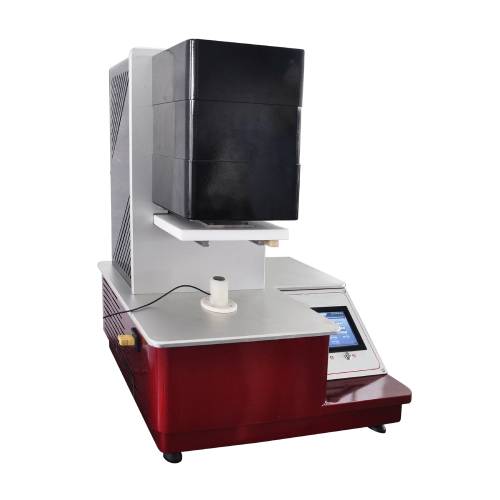
A Glove Thermal Insulation Tester generally includes the following components:
Heating Unit: Usually a temperature-controlled cylinder or heating plate that acts as the heat source in direct contact with the glove surface. The heat source must provide precise, stable temperature output.
Temperature Sensors: Positioned inside the glove or on the rear side of the material to measure temperature changes. High-precision sensors provide reliable data on heat flow through the glove, which is essential for evaluating thermal insulation performance.
Control and Display System: Interfaces such as touchscreen panels or computer software allow users to set testing parameters, record temperature data, and calculate thermal resistance or conductivity.
Data Output and Analysis: Temperature control and data recording ensure repeatable testing, and results can be used for statistical analysis or report generation.
The overall design emphasizes high precision, controllable heat sources, and reliable temperature control to ensure stable and trustworthy results.
Standards and Methods
International and Regional Standards
Thermal insulation testing is typically conducted according to specific standards that define testing conditions, measurement methods, and evaluation criteria, ensuring comparability and compliance.
EN 407 (European Protective Gloves Thermal Performance Standard): This comprehensive standard specifies tests for fire resistance, thermal radiation, and heat conduction. Thermal insulation testing under EN 407 evaluates how glove materials respond to specified thermal loads, determining the level of heat protection.
Cold Environment Thermal Resistance Standards: For cold-weather gloves, standards such as EN 511 or China’s GB/T 38304-2019 simulate low-temperature conditions. Thermal resistance is calculated from a constant temperature difference, assessing the glove’s ability to minimize heat loss.
Classification of Testing Methods
Common thermal insulation testing methods include:
Contact Heat Testing: In this method, a heated surface or cylinder is in direct contact with the glove material under controlled pressure and time. Internal temperature rise is recorded over time to calculate the glove’s ability to resist heat transfer. This method is widely used for gloves in industries such as welding and metallurgy, where direct heat contact protection is required.
Convective/Environmental Heat Testing: This method evaluates glove performance in hot airflow environments. In a simulated environmental chamber, controlled airflow and temperature gradients expose the glove to convective heat, while internal temperature is monitored to assess thermal resistance.
Radiant Heat Testing: Gloves are exposed to a specific intensity of radiant heat, and the resulting heat transfer to the interior is measured. Radiant heat sources simulate conditions such as high-temperature light exposure, assessing the glove’s insulation against radiative heat.
By integrating these testing methods, thermal insulation testers provide a comprehensive assessment of gloves’ ability to resist various types of thermal challenges.
Thermal Insulation Data and Evaluation Standards
Key Metrics
Thermal insulation testing typically focuses on:
Thermal Resistance: Represents a material’s ability to resist heat transfer. Higher thermal resistance indicates slower heat conduction.
Temperature Rise Rate: Monitors the rate of internal temperature increase over time, indicating how quickly heat penetrates the material.
These metrics are calculated from test curves and used to determine if materials meet specific thermal insulation performance levels.
Evaluation Criteria and Classification
Standards define different levels of thermal protection based on thermal resistance and temperature rise thresholds. For instance, EN 407 assigns grades for different types of heat exposure, including contact and radiant heat. Thermal insulation data from testing can classify glove performance levels, providing guidance for compliance, product development, and market positioning.
Practical Applications and Industry Significance
Industrial and Production Environments: In industries such as metallurgy, casting, welding, and high-temperature processing, gloves must maintain effective thermal insulation to ensure operator safety. Testing before product release helps minimize risks.
Cold-Weather and Outdoor Equipment: In extreme cold, gloves’ thermal insulation affects wearer comfort and health. Evaluating insulation for different materials and designs helps guide product selection for outdoor activities.
Product Development and Quality Control: For manufacturers, thermal insulation testing supports quality assurance and provides critical data for developing new materials and glove structures, optimizing thickness and composition to improve competitiveness.
Testing Institutions and Standard Verification: National standards agencies and third-party laboratories use thermal insulation testers to ensure gloves meet regulatory requirements, enhancing market transparency and product safety.
Future Development Trends
With the advancement of intelligent testing systems, thermal insulation testers are evolving toward automation, higher precision, and data-driven analysis. Integrated software systems improve testing efficiency and depth of analysis, while machine learning models for thermal performance prediction could further enhance design and rapid testing.
Advances in material science, including nano-structured insulation and phase-change materials, are expected to influence glove design, requiring continuous updates to testing methods and equipment.
The Glove Thermal Insulation Tester is a critical tool for evaluating thermal safety in gloves. It plays a key role in improving product quality, protecting users, and ensuring compliance with standards. Through rigorous testing principles, standardized methods, and systematic data analysis, it serves not only as a testing device but also as a bridge connecting research, standard verification, and safe production. Whether in high-temperature operations or extreme cold conditions, the connection between human interface and heat transfer data relies on this specialized thermal insulation testing technology.
Previous: What is retroreflectivity testing?
N e x t : How to test abrasion resistance of fabric?
