





What is retroreflectivity testing?
2026/02/06
Share:

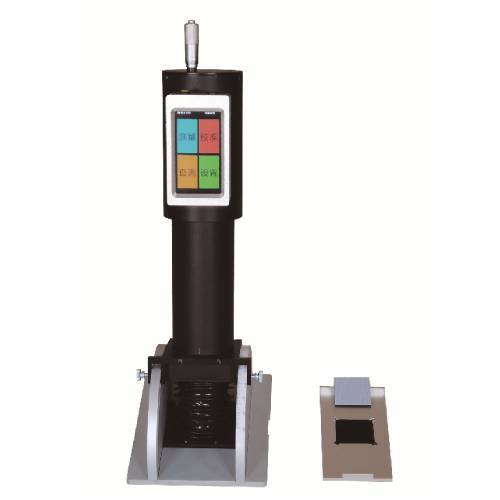
So-called retroreflectivity testing refers to a class of test methods used to quantitatively evaluate a material’s ability to reflect incident light back toward the original light source under specified geometric conditions.
This article systematically explains retroreflectivity testing from multiple perspectives, including basic definitions, physical principles, testing techniques, relevant standards, application fields, and practical testing procedures and precautions, helping readers gain a comprehensive understanding of this critical performance test.
What Is Retroreflectivity
Retroreflectivity is a property that describes a material’s ability to efficiently return incident light back toward the original light source. Unlike conventional reflection, where light is scattered in many directions or reflected according to the law of reflection, retroreflective materials return most of the incident light back along its original path. This characteristic greatly improves visibility under nighttime or low-light conditions.
Retroreflectivity is quantified using the coefficient of retroreflection, which measures the ratio of the returned luminous intensity to the incident illuminance. It is commonly expressed in units of candela per lux per square meter (cd/lx/m²). A higher value indicates a stronger ability of the material to return light to its source, making it easier to be seen in dark or low-visibility environments.
Principle of Retroreflectivity Testing
The core principle of retroreflectivity testing is based on the optical phenomenon of retroreflection. When light strikes the surface of a retroreflective material at a specific angle, the microstructures within the material—such as microscopic glass beads or microprismatic structures—refract and reflect the light so that it returns in a direction close to the original incident path, with only a slight angular deviation, allowing it to be received by the observer or the light source.
This behavior is fundamentally different from specular reflection. Specular reflection follows the law of reflection, directing light to a predictable angle, whereas retroreflection emphasizes the return of light toward the source.
In more technical terms, retroreflectivity testing focuses on the coefficient of retroreflected luminance, often abbreviated as RL or RA. This parameter quantitatively describes the relationship between incident light and retroreflected light. For safety products such as pavement markings and reflective garments, the magnitude of this value directly affects nighttime visibility and safety performance.
From a physical standpoint, retroreflection relies on specially engineered internal structures, such as arrays of glass beads or microprisms. These structures cause the light to undergo multiple refractions and reflections before returning toward the source. This structural design allows retroreflective materials to achieve significantly higher reflected luminance than conventional reflective materials.
Common Methods of Retroreflectivity Testing
Retroreflectivity testing can be performed both in laboratory environments and in the field using portable instruments. Depending on the application scenario and performance requirements, testing methods can generally be divided into the following categories.
Portable Field Measurement
This is the most commonly used form of retroreflectivity testing, especially for pavement markings, traffic signs, and safety garments that require on-site evaluation. Portable retroreflectometers project light onto the test surface and measure the intensity of the returned light. Based on predefined geometric conditions—such as entrance angle and observation angle—the instrument calculates the retroreflection coefficient.
The main advantage of field testing is speed and convenience, making it suitable for large-scale inspections, such as full-length pavement marking assessments, traffic sign inspections, and real-time quality monitoring of construction materials. However, portable instruments may have slightly lower accuracy compared to laboratory equipment due to environmental influences such as ambient light and geometric alignment errors.
Laboratory Standard Testing
Laboratory testing is conducted using standardized instruments under strictly controlled environmental conditions. Parameters such as light source characteristics, geometric configuration, and illumination intensity are defined by international or national standards. Laboratory retroreflectivity testing provides higher measurement accuracy and is particularly suitable for material development, product validation, and certification.
Standardized laboratory tests typically use photometric instruments or dedicated retroreflectivity testers designed in accordance with specifications issued by international standardization bodies. These instruments operate under defined light source conditions and fixed geometric parameters to ensure repeatable and comparable results.
Image-Based Measurement Methods
An advanced testing approach involves digital image acquisition technology. By capturing images of the reflected light at different entrance and observation angles and analyzing the luminance distribution, the retroreflection coefficient can be calculated. This method is mainly used in research and advanced material analysis, as it allows flexible angle configurations and provides more comprehensive data for performance evaluation.
Key Parameters in Retroreflectivity Testing
Several parameters play a critical role in retroreflectivity testing:
Entrance Angle and Observation Angle
The entrance angle refers to the angle at which light strikes the material surface, while the observation angle refers to the angle between the direction of retroreflected light and the observer or detector. Standard tests define specific combinations of entrance and observation angles to simulate real-world lighting and viewing conditions. Different angle configurations can significantly affect measured retroreflectivity values, so standardized conditions are essential.
Coefficient of Retroreflection
The coefficient of retroreflection is the core quantitative indicator of retroreflective performance. It represents the ratio of returned luminous intensity to incident illuminance and is expressed in cd/lx/m². Higher values indicate better retroreflective performance. This coefficient is widely used to compare different materials under standardized test conditions.
Standards and Specifications for Retroreflectivity Testing
To ensure scientific validity and comparability of test results, various standards and specifications for retroreflectivity testing have been established worldwide.
International Standards
International organizations have issued standards covering the definition of retroreflective properties, measurement geometry, light source specifications, and instrument requirements. These standards ensure consistency and reliability of test results across laboratories and regions.
For large-scale or high-precision testing, international standards impose strict requirements on parameters such as light source characteristics, color temperature, and geometric configuration to ensure consistent results in laboratory and research applications.
ASTM Standards
Certain ASTM standards specify detailed test methods for measuring the retroreflectivity of pavement markings under different conditions, including dry and wet surfaces. These standards cover not only measurement procedures but also instrument calibration, environmental controls, and data processing requirements.
National and Industry Standards
Many countries have established national standards that define minimum retroreflectivity requirements for specific products, such as children’s schoolbags, safety garments, and warning accessories. These standards aim to improve nighttime safety by ensuring adequate visibility of reflective materials used in daily life.
Practical Applications of Retroreflectivity Testing
Retroreflectivity testing is widely applied in real-world scenarios, especially in fields directly related to personal and public safety.
Traffic Safety
One of the most important applications of retroreflectivity testing is the evaluation of road traffic facilities. Pavement markings, traffic signs, reflective studs, and roadside delineators must meet specific retroreflectivity requirements to remain clearly visible at night or in low-light conditions. Scientific testing ensures sufficient recognition distance and reaction time for drivers, helping to reduce traffic accidents.
Traffic sign materials, in particular, must exhibit strong retroreflective performance to remain legible during nighttime driving. As a result, regular on-site retroreflectivity inspections are commonly conducted to verify continued compliance with safety requirements.
Safety Clothing and Personal Protective Equipment
For workers, cyclists, and pedestrians who need enhanced visibility at night, the performance of retroreflective materials used in safety vests, protective clothing, and accessories is critical. Retroreflectivity testing helps assess whether these products meet practical safety requirements for real-world use.
Children’s Product Safety
National regulations often specify minimum retroreflectivity values for reflective materials used on children’s schoolbags and uniforms. These requirements aim to improve children’s visibility during early morning or nighttime travel, reducing the risk of traffic accidents.
Importance of Retroreflectivity Testing
Retroreflectivity is a key optical performance parameter in safety evaluation. It directly determines whether a reflective object can be effectively seen under nighttime or low-light conditions. Test results influence product certification outcomes and play a crucial role in public safety and user experience.
For transportation authorities, regular retroreflectivity testing of pavement markings and traffic signs is essential for determining whether infrastructure still provides sufficient nighttime visibility.
For quality supervision and certification bodies, retroreflectivity testing ensures that reflective products on the market meet minimum safety performance requirements.
For consumers, test results provide a scientific basis for selecting safety equipment with reliable nighttime visibility.
Testing Procedures and Precautions
Although specific procedures vary depending on equipment and standards, a typical retroreflectivity testing process includes the following steps:
Sample Preparation
Prepare and mount the test sample according to standard size and positioning requirements to ensure consistent test conditions.
Instrument Warm-Up and Calibration
Before testing, warm up and calibrate the retroreflectometer or photometric instrument in accordance with standard procedures to ensure stable light output and detector response.
Geometric Configuration
Set the entrance angle, observation angle, and other geometric parameters as specified by the relevant standard.
Measurement and Data Collection
Illuminate the sample with the specified light intensity and record the returned light intensity.
Data Calculation and Evaluation
Convert the measured data into the standard retroreflection coefficient (cd/lx/m²) and compare it with applicable performance requirements.
During actual testing, attention must be paid to factors such as ambient light interference and instrument stability, as these can affect measurement accuracy.
Retroreflectivity testing is a scientific method used to quantitatively evaluate a material’s ability to return light toward its source under low-light or nighttime conditions. It is widely applied in traffic safety, personal protection, and safety equipment evaluation. Through retroreflectivity testing, it is possible to:
Quantitatively assess nighttime visibility of materials
Determine whether safety facilities meet minimum performance requirements
Provide technical support for material development and product certification
Improve the effectiveness of road safety measures and personal protective equipment
The value of retroreflectivity testing lies not only in the data it produces, but in its role in ensuring safety and reliability in real-world environments. As standards continue to evolve and testing technologies advance, retroreflectivity testing will play an increasingly important role across a broader range of applications.
Previous: What is the drying rate test?
N e x t : Glove Thermal Insulation Tester, ISO 12127
