





What is a Walk-in Constant Temperature and Humidity Test Chamber?
2026/02/10
Share:

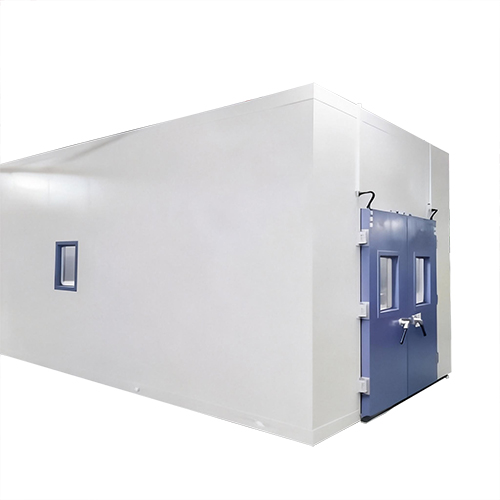
Among such equipment, the Walk-in Constant Temperature and Humidity Test Chamber is a specialized testing system designed to provide a large internal space with adjustable temperature and humidity conditions. It can simulate a wide range of environmental scenarios and is widely used for environmental adaptability testing, aging tests, stability analysis, and long-term reliability studies of materials, components, and complete products.
This article systematically introduces walk-in constant temperature and humidity test chambers from the perspectives of definition, basic structure and operating principles, key performance indicators, typical application fields, operation and safety management, and technological development trends, helping readers gain a comprehensive understanding of this important environmental testing device.
Basic Definition and Nature
A walk-in constant temperature and humidity test chamber is a large-scale environmental simulator whose core function is to create a controllable and stable space with constant temperature and fixed humidity conditions. It is used to test changes in performance and durability of products or samples under specific climatic conditions.
Unlike conventional benchtop or small test chambers, a walk-in constant temperature and humidity test chamber provides sufficient internal space to accommodate complete machines, large components, or batch samples. It also offers a wider and more precise range of temperature and humidity control, enabling combined high-temperature, low-temperature, high-humidity, and low-humidity testing. In simple terms, it is an “environmental simulation room” that allows personnel to walk inside or easily place large test objects, enabling evaluation of product adaptability to changing environmental conditions.
Constant temperature and humidity test chambers are primarily used to simulate fixed or variable combinations of temperature and humidity in order to evaluate key performance indicators of test objects, such as thermal and humidity stability of electronic products, aging behavior of materials, and environmental adaptability of mechanical equipment.
Equipment Structure and Core Components
A walk-in constant temperature and humidity test chamber consists of multiple functional modules, each responsible for ensuring precise environmental control and reliable testing outcomes. Overall, the system is composed of the following key components:
Chamber Structure and Support Framework
The chamber body is constructed from high-strength steel structures, insulation materials, and sealing systems. The inner walls are typically made of corrosion-resistant materials to withstand long-term operation in high-humidity environments. High-efficiency insulation layers help enhance temperature and humidity stability while reducing energy consumption. The overall structure is designed to withstand internal environmental pressure, humidity, and routine operational loads, while supporting the placement of test samples and equipment.
Temperature and Humidity Control System
The core control system includes heating elements, refrigeration units, humidification devices, and dehumidification devices.
The heating system raises the internal temperature, while the refrigeration system lowers it. The humidification system increases humidity levels, and the dehumidification system reduces humidity or prevents excessive moisture accumulation.
These subsystems operate in coordination to achieve and maintain the specified environmental parameters. Humidity control is commonly achieved through steam or ultrasonic humidification methods, combined with humidity sensors and proportional feedback control for precise regulation.
Control and Monitoring System
Modern walk-in constant temperature and humidity test chambers are equipped with intelligent digital control systems capable of graphical display of temperature and humidity curves, real-time operating status, and alarm information. Controllers typically support PID control algorithms, programmable test sequences, and real-time data logging. Optional computer interfaces or remote control modules allow remote monitoring and data analysis during testing.
The main functions of the control system include accurate setting of temperature and humidity parameters, configuration of test profiles and cycling modes, real-time monitoring and recording of environmental changes, and alarm output for safety protection.
Ventilation and Uniform Air Circulation System
To ensure uniform distribution of temperature and humidity within the chamber, circulation fans and optimized airflow designs are employed. These systems allow heat and moisture to be evenly distributed throughout the space, preventing localized deviations and ensuring consistency and accuracy of test conditions.
Safety and Protection Devices
To ensure both equipment and personnel safety, multiple protection mechanisms are incorporated, including over-temperature and over-humidity protection, compressor overload protection, automatic shutdown in case of water shortage or system failure, emergency stop devices, and door safety interlocks.
Working Principle and Control Mechanism
The operating principle of a walk-in constant temperature and humidity test chamber is based on a closed-loop control system. Sensors continuously collect real-time temperature and humidity data inside the chamber and compare them with the preset target values. Based on any deviation, the controller adjusts the operation of heating, cooling, humidification, and dehumidification systems, gradually bringing the environment to the desired conditions and maintaining stability.
The overall process can be divided into several stages:
Environment Setting Stage
Operators set the target temperature and humidity according to test requirements. The system prepares the operating sequence and initializes the control modules.
Initial Balancing Stage
When operation begins, heating or cooling systems are activated based on the current chamber temperature, while humidification or dehumidification systems adjust moisture levels according to humidity deviation. The air circulation system operates simultaneously to quickly balance the internal environment and bring conditions close to the target values.
Constant Control Stage
Once stable conditions are achieved, the controller continuously collects sensor data and precisely adjusts subsystem outputs to maintain temperature and humidity within defined tolerance ranges. For example, temperature may be controlled within ±0.5 °C and humidity within ±3 %RH.
Data Recording and Analysis
During testing, the control system continuously records key environmental parameters and generates data reports to support test analysis and quality evaluation.
Key Technical Parameters and Performance Indicators
When evaluating or selecting a walk-in constant temperature and humidity test chamber, several critical technical indicators should be considered:
Temperature Range
This refers to the range of environmental temperatures the chamber can achieve, typically covering conditions from well below ambient temperature to significantly above ambient levels, meeting diverse testing requirements.
Humidity Range
This defines the adjustable humidity range, allowing simulation of dry to highly humid environments.
Temperature Control Accuracy
This indicates the chamber’s ability to maintain the set temperature, with typical accuracy reaching ±0.5 °C or better, which is essential for environment-sensitive testing.
Humidity Control Accuracy
This measures the stability of humidity control, with common accuracy levels around ±3 %RH or better.
Uniformity
Temperature and humidity uniformity describe the consistency of environmental conditions at different locations within the chamber. Good uniformity ensures that all test samples are exposed to identical conditions.
Rate of Change
This parameter describes how quickly temperature and humidity can change from initial values to setpoints. Adjustable rates allow both rapid-response testing and slow, stable environmental transitions.
Application Fields and Typical Uses
Walk-in constant temperature and humidity test chambers are widely applied across various industries and research fields.
Electronics and Electrical Industry
Electronic components and complete products may experience performance drift or circuit failure under different temperature and humidity conditions. Long-term testing in constant temperature and humidity environments helps identify thermal and moisture-related effects, lifespan limitations, and failure modes, supporting product design optimization and reliability improvement.
Automotive and Aerospace
The stability of automotive electronic control units, battery systems, and aerospace electronic components under extreme climatic conditions is a critical reliability indicator. Walk-in chambers can simulate high-temperature and high-humidity environments for weather resistance and accelerated aging tests of these key components.
Materials Science and Composite Research
Materials such as plastics, metals, and composites are sensitive to temperature and humidity variations, which may alter their physical properties. Constant temperature and humidity testing allows analysis of thermal expansion, moisture absorption, and long-term environmental adaptability, providing experimental data for material selection and improvement.
Pharmaceutical and Life Sciences
Certain drugs, reagents, and vaccines may undergo chemical reactions, degradation, or loss of efficacy under varying temperature and humidity conditions. Constant temperature and humidity testing simulates storage and transportation environments, supporting stability evaluation and development of quality and preservation standards.
Product Reliability Evaluation
Before market release, products often need to pass standardized environmental tests to meet international or industry reliability requirements. Constant temperature and humidity test chambers provide standardized environments that ensure test consistency and data comparability.
Operating Methods and Safety Management
Correct and safe use of a walk-in constant temperature and humidity test chamber is essential for reliable test results, personnel safety, and equipment longevity.
Operating Practices
Before starting the system, ensure that setpoints are reasonable and aligned with test requirements. Test samples should be placed evenly inside the chamber without obstructing airflow. Sensors and control systems should be calibrated regularly to ensure accurate readings.
Safety Protection
Verify that safety protection devices such as over-temperature alarms and power-off protection are functioning properly. Ensure proper grounding and minimize external electromagnetic interference. Operators should be familiar with emergency stop functions and control panel operation.
Maintenance and Servicing
Regularly clean air filters, fan blades, and condensation systems. Inspect refrigeration and humidification systems to prevent water accumulation or frosting that may affect control accuracy. Electrical connections and insulation should also be checked periodically.
Technology Development Trends and Future Outlook
With increasing demands for environmental testing, walk-in constant temperature and humidity test chamber technology continues to evolve.
Enhanced Automation and Intelligent Control
Control systems are becoming more advanced, integrating automatic adjustment, historical data analysis, and remote monitoring to make testing more intelligent and reliable.
Energy Efficiency and Environmental Design
Advances in materials and thermal management technologies are improving energy efficiency, enabling stable temperature and humidity control with reduced energy consumption.
Multi-Environment Test Integration
Future designs may integrate constant temperature and humidity testing with additional environmental factors such as light exposure, vibration, and air pressure, providing more comprehensive simulation of complex real-world conditions.
As a large-scale environmental simulation device, the walk-in constant temperature and humidity test chamber plays a vital role in modern industrial research and quality control. By providing highly controllable and stable temperature and humidity environments, it offers a solid experimental foundation for product performance evaluation, reliability testing, and materials research. A thorough understanding of its structure, control principles, performance indicators, application scenarios, and safety management helps engineers, researchers, and quality management teams apply this equipment more effectively, improving testing efficiency and overall product quality.
Previous: What is a Walk-in High-Temperature Aging Chamber?
N e x t : What is a Glow wire tester?
