





What is a Walk-in High-Temperature Aging Chamber?
2026/02/10
Share:

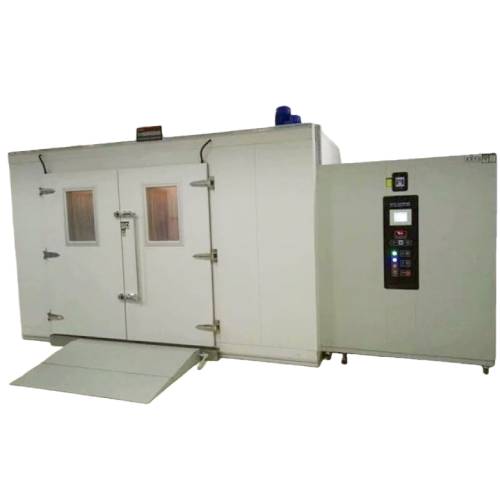
The Walk-in High-Temperature Aging Chamber was developed in this context as a large-scale environmental testing system. By using a precise temperature control system to simulate harsh high-temperature environments, it enables accelerated aging tests, thermal stability evaluation, and long-term reliability assessment of products.
This article provides a systematic overview of walk-in high-temperature aging chambers from the perspectives of equipment concept, technical composition, working principles, key performance indicators, application scenarios, safety, and management, offering a comprehensive reference for in-depth understanding of this testing equipment.
What Is a Walk-in High-Temperature Aging Chamber
A walk-in high-temperature aging chamber is a large environmental testing facility, also known as an aging room, burn-in room, or high-temperature burn-in chamber. It is primarily used to simulate the long-term effects of high-temperature environments on products or materials in order to evaluate performance degradation, stability, and reliability.
The core concept is to operate or store test samples in a controlled high-temperature environment, thereby accelerating physical and chemical changes in internal structures, materials, and electronic circuits, allowing potential failures or lifespan issues to be identified in advance.
Unlike standard small environmental test chambers, walk-in high-temperature aging chambers provide sufficient internal space for personnel access or for placing complete machines. They can accommodate large equipment, entire systems, or batch testing of multiple samples. Their control systems are designed for long-term stable operation, supporting continuous aging tests lasting from several hours to hundreds of hours.
Basic Structure and Core Components
Chamber Structure
The chamber structure forms the physical enclosure of the aging room and is usually constructed from high-strength steel panels or sandwich panels with insulation cores. High-temperature insulation materials are integrated to ensure environmental stability, which directly affects temperature uniformity and energy consumption.
The inner walls are typically made of heat-resistant and corrosion-resistant stainless steel, while the outer walls may use coated steel panels. Effective sealing performance is essential to minimize heat loss and improve operational efficiency and stability.
Heating and Air Circulation System
The heating system is one of the core components of the aging chamber and typically consists of electric heating elements combined with a hot-air circulation system. A forced air circulation system ensures uniform temperature distribution throughout the chamber, preventing cold spots or hot zones and ensuring accurate and repeatable test results.
Circulation fans and airflow duct designs are optimized based on chamber size and load requirements.
Control and Monitoring System
Modern aging chambers are generally equipped with microprocessor-based controllers or programmable logic controllers, enabling temperature setting, program control, real-time monitoring, and data recording.
The control system allows users to configure temperature profiles, time programs, and operational sequences, while displaying and storing system status data. Advanced systems may also support remote monitoring and network-based management.
Safety Protection Devices
Safety is a critical aspect of high-temperature aging testing. Typical protection mechanisms include over-temperature protection, fan failure alarms, overload protection, and emergency stop functions. These measures ensure that the system can automatically shut down or issue alarms under abnormal conditions, protecting both personnel and test samples.
Communication and Data Interfaces
Some aging chambers are equipped with standard communication interfaces such as RS-232. USB, or Ethernet, allowing data export, remote control, and system upgrades. Advanced models may also support mobile applications or web-based monitoring platforms for multi-terminal access and centralized data management.
Working Principle and Test Mechanism
The core working principle of a walk-in high-temperature aging chamber is to simulate high-temperature operating conditions by precisely controlling internal environmental parameters, primarily temperature, and observing product behavior over extended periods.
In practice, high-temperature aging tests typically include the following stages:
Test Condition Setup
Based on product characteristics and applicable standards, test parameters such as temperature range, duration, heating rate, and temperature profiles are configured. Test temperatures are generally higher than normal operating conditions to accelerate aging.
Stabilization and Temperature Equalization
After reaching the target temperature, the chamber enters a stabilization phase. During this period, forced convection and hot-air circulation ensure uniform temperature distribution throughout the chamber, providing consistent test conditions.
Aging Operation Phase
During this main test phase, products operate or remain static inside the chamber at the specified temperature for an extended duration. Continuous thermal stress accelerates aging processes in electronic components, materials, and mechanical parts, causing latent defects to surface within a shorter time frame.
Data Recording and Analysis
Throughout the test, the system continuously records temperature data and operating status. After completion, the collected data are analyzed to assess performance changes, failure modes, and potential risks, providing valuable input for product design optimization.
After testing, the chamber is gradually cooled, cleaned, and the test samples are inspected, followed by report preparation.
Key Performance Indicators and Technical Parameters
Temperature Range
This defines the minimum and maximum temperatures the chamber can achieve. Typical ranges include ambient temperature plus a defined margin up to higher temperature limits, depending on design requirements. Wider temperature ranges allow more demanding thermal endurance tests.
Temperature Control Accuracy
This indicates the chamber’s ability to maintain the set temperature. High control accuracy is particularly important for aging tests of sensitive electronic components.
Temperature Uniformity
Temperature uniformity reflects the consistency of temperature across different locations within the chamber. Good uniformity ensures that all test samples experience the same thermal conditions.
Heating Rate
The heating rate refers to the time required to reach the target temperature and is influenced by heater power, insulation performance, and airflow design.
Control Interface and Program Capacity
Modern systems support programmable temperature profiles, multi-step programs, and cycle repetition to meet complex testing requirements.
Industry Applications and Typical Use Cases
Electronics and Electrical Industry
High-temperature aging tests are used to evaluate the thermal stability of printed circuit boards, power modules, capacitors, and integrated circuits. Aging tests help identify issues such as solder joint failures, component deformation, and parameter drift before products enter the market.
Communication Equipment Testing
Communication devices such as routers and base station modules often generate heat during long-term operation. High-temperature aging tests assess their ability to operate continuously under elevated temperatures without thermal failure.
Automotive and Aerospace Applications
In automotive electronics, electric vehicle controllers, and aerospace avionics, aging chambers simulate extreme thermal conditions such as engine compartment heat or high-altitude solar exposure to evaluate thermal durability of critical components.
Plastics and Composite Material Evaluation
Plastic components may deform, age, or experience mechanical degradation at high temperatures. Aging tests help characterize thermal aging behavior, supporting material formulation optimization and structural design improvements.
Large Equipment and System-Level Evaluation
For large control cabinets or power equipment that cannot fit into standard test chambers, walk-in aging chambers enable full-system testing and operational burn-in under high-temperature conditions.
Safe Operation and Maintenance Management
Operational Safety
Before startup, ensure proper grounding, stable power supply, and absence of flammable materials nearby. Operators should receive professional training and be familiar with emergency stop and power-off procedures.
Routine Maintenance
Insulation materials, fans, heating elements, and control systems should be inspected regularly. Dust accumulation should be removed to prevent temperature control deviations.
Data Recording and Calibration
Temperature sensors and controllers should be calibrated periodically to ensure accurate test data. Test logs and records should be maintained for traceability and quality management purposes.
Risk Prevention
High-temperature testing carries risks of equipment damage or product overheating due to misoperation. Multiple protection measures such as temperature limit protection and time-based alarms are recommended.
Technology Development Trends
Intelligent Control and Remote Management
Future systems will increasingly integrate intelligent control, remote monitoring, data analysis, fault diagnosis, and predictive maintenance capabilities.
Energy Efficiency and Environmental Optimization
Improved insulation materials, optimized airflow design, and intelligent energy management algorithms will reduce energy consumption and enhance efficiency in line with green manufacturing goals.
Standardization and Regulatory Compliance
As reliability standards become more stringent across industries, testing performance requirements and acceptance criteria for aging chambers are becoming increasingly standardized to ensure data comparability and traceability.
As a large-scale environmental testing system, the walk-in high-temperature aging chamber plays an irreplaceable role in electronics, electrical engineering, communications, automotive, aerospace, and materials industries due to its large capacity, precise control, and broad applicability. By simulating high-temperature aging processes, it helps identify potential product defects early, improve design quality, and ensure stable and reliable performance in real-world applications.
A thorough understanding of its structure, operating principles, application scenarios, performance indicators, and safety management enables engineers, quality managers, and research teams to effectively integrate this equipment into product development cycles, safeguarding product quality and reliability.
Previous: Simulated Human Body Underwear Tester,FZ/T 70015-2022
N e x t : What is a Walk-in Constant Temperature and Humidity Test Chamber?
