





What is the indicative fire test?
2026/02/10
Share:

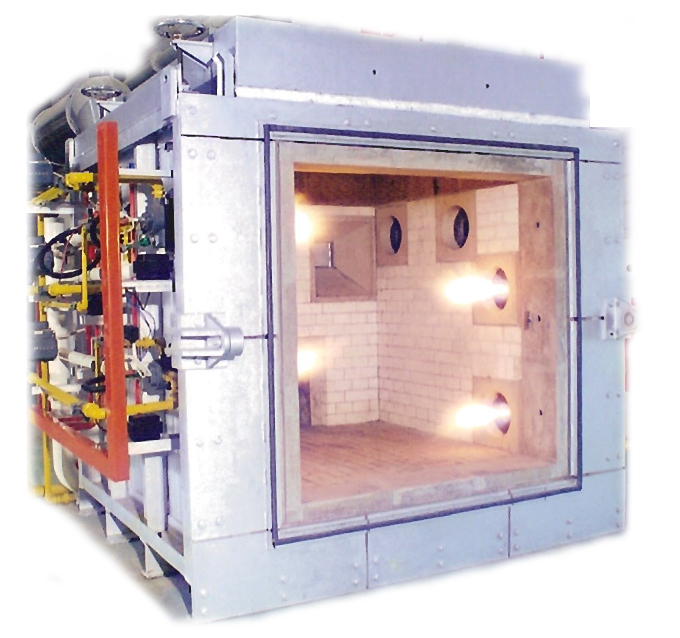
This article presents a systematic explanation of indicative fire testing, covering its basic concept, principles, equipment, differences from standard fire tests, typical applications, standards background, implementation procedures, and advantages and limitations, helping readers gain a comprehensive understanding of this commonly referenced yet often overlooked type of fire test within the fire testing framework.
The Basic Framework of Fire Testing
Before discussing indicative fire tests, it is necessary to understand the broader concept of fire testing. Fire testing essentially comprises a series of methods used to evaluate how materials, components, or systems behave in simulated fire environments. These tests can be categorized by scale, such as:
Standard fire tests: Used for product certification, regulatory compliance, and approval under fire codes. These tests are conducted strictly in accordance with international or national standards (such as ISO, EN, or ASTM) and are performed by accredited laboratories.
Small-scale fire tests: Including small material combustion tests and heat release tests, mainly used for research-oriented quantitative analysis of combustion characteristics and flame spread behavior.
Indicative fire tests: Positioned between research testing and standard fire testing. They are not used for final certification but provide preliminary or reference performance data.
Standard fire tests typically feature clearly defined test environments, loading conditions, and pass/fail criteria, and their results can be used for certification or regulatory approval. Indicative fire tests, by contrast, focus more on observing and analyzing the overall behavior trends of materials or components under fire conditions.
Definition and Nature of Indicative Fire Tests
An indicative fire test refers to exposing materials, components, or structural specimens to fire conditions using a specific fire testing device, furnace, or controlled heat source in order to observe their performance under flames, hot gases, or high temperatures. The test is not intended for final product certification or regulatory compliance, but rather to provide performance-indicative data for research and design stages. Its purpose is to gain an initial understanding of how materials or components may behave under thermal exposure, to support screening, optimization, and preparation for more rigorous testing.
In fire engineering practice, indicative tests are closely associated with pre-evaluation, material screening, research validation, design optimization, and risk analysis. They act as a “pre-check” before large-scale fire resistance testing. By using indicative fire tests early in a project, significant cost and time savings can be achieved, and potential problems can be identified before conducting expensive, full-scale standard tests.
Differences Between Indicative Fire Tests and Standard Fire Tests
One of the clearest ways to understand indicative fire testing is to compare it with standard fire testing:
Purpose:
Standard fire tests provide formal evaluation and compliance certification data.
Indicative fire tests provide preliminary assessment, research reference, and trend analysis.
Standards basis:
Standard fire tests strictly follow formal standards such as ISO, EN, or ASTM.
Indicative fire tests may not follow fixed standards and can be conducted under customized conditions.
Test scale:
Standard fire tests are typically full-scale or component-level tests.
Indicative fire tests may be small-scale or medium-scale.
Assessment significance:
Standard fire tests form the basis for regulations, certification, and market access.
Indicative fire tests support design optimization and research decisions.
Cost and duration:
Standard fire tests are time-consuming and costly.
Indicative fire tests are relatively fast and cost-effective.
Test outcome:
Standard fire tests have clear pass/fail criteria.
Indicative fire tests produce trend-based performance data rather than compliance judgments.
Indicative tests do not provide mandatory certification, but they significantly reduce uncertainty during development, allowing design improvements before committing to standard fire tests.
Principles of Indicative Fire Testing
The core objective of an indicative fire test is to simulate the thermal environment of a fire and observe the behavior of the test specimen, including but not limited to:
Thermal expansion, decomposition, and physical changes of materials at high temperature;
Thermal stability, deformation, and failure behavior of components;
Smoke generation, flame spread, and heat release characteristics;
Performance of fire-protective coatings, fire-stopping systems, and fire-resistant assemblies.
These tests are commonly conducted using a small-scale fire test device known as an Indicative Fire Resistance Test Furnace. The furnace contains combustion equipment or heat sources capable of generating a controlled temperature–time curve. During testing, the behavior of the specimen is observed as temperature increases, and parameters such as temperature, deformation, mass loss, and decomposition are recorded.
Compared with the large furnaces used in standard fire tests, indicative fire furnaces are smaller and have more limited test space. However, the basic thermal exposure process is similar to that of standard tests (such as those based on ISO 834), allowing simulation of thermal shock conditions that specimens may experience in real fires.
Equipment and Test Conditions for Indicative Fire Tests
Indicative fire testing equipment generally consists of the following components:
Fire Test Furnace
A furnace used to simulate fire temperature–time curves. Controlled flames or thermal environments are generated using burners, gaseous fuels, or other heat sources. These furnaces are much smaller than standard fire furnaces, typically accommodating specimens up to the meter scale, yet sufficient to expose samples to realistic thermal conditions.
Temperature Control and Measurement Systems
During testing, flame temperature, specimen surface temperature, and internal temperature must be monitored in real time. Thermocouples, infrared imaging, and data acquisition systems are commonly used.
Specimen Support and Displacement Measurement
Fixtures are used to support specimens and measure deformation, displacement, and crack development during thermal exposure.
Data Recording and Analysis Systems
Collected test data are recorded and visualized to support subsequent analysis and modification of test schemes or designs.
Test conditions can be freely defined according to the test objective, such as:
Whether the temperature–time curve follows a standard fire curve;
Whether direct flame contact or radiant heat exposure is applied;
Differences in heating rate and high-temperature duration to simulate various fire scenarios.
These settings are intended for performance indication rather than certification.
Applicable Scope and Typical Applications
Indicative fire tests are suitable for a wide range of technical applications:
Product Development
During early material or component development, indicative fire tests help identify general response characteristics under flame or high temperature, such as rapid decomposition or excessive thermal expansion. Researchers can adjust formulations or structural designs based on test feedback.
Comparison of Design Options
When multiple design options are available, indicative fire tests can be used to compare performance and select the most promising solutions for subsequent standard fire testing, saving time and cost.
Verification of Fire Protection Concepts
In building projects, fire engineers can use indicative tests to preliminarily evaluate local fire protection designs, façade materials, or insulation systems, guiding construction strategies.
Technical Consulting and Risk Assessment
In fire safety consulting and risk assessment, indicative tests provide visual and quantitative data to support engineering judgments and identify potential performance issues before construction.
These applications highlight the value of indicative fire testing in research, design optimization, early performance assessment, and test cost control.
Typical Procedure for Conducting an Indicative Fire Test
Indicative fire tests generally follow these steps:
Test Preparation
Define test objectives, specimen specifications, and test conditions;
Establish fire exposure curves or thermal exposure modes;
Prepare test equipment, sensors, and data acquisition systems;
Pre-condition specimens if necessary.
Parameter Setting
Set furnace temperature–time curves, heat source intensity, and exposure configuration according to test objectives. Standard fire curves may be used as references, but not for compliance decisions.
Test Execution
Install specimens in the furnace or exposure zone, initiate the system, and expose specimens to fire under controlled conditions while recording thermal and mechanical data.
Observation and Data Collection
Monitor temperature changes, smoke conditions, and structural integrity, and observe significant performance issues such as cracking, excessive deformation, or material degradation.
Data Analysis and Conclusions
Analyze collected data to perform a preliminary evaluation of specimen behavior and produce a test report. This stage is particularly critical for research and development purposes.
Advantages and Limitations of Indicative Fire Tests
Advantages
Lower cost: Smaller equipment and shorter test cycles significantly reduce expenses compared with standard fire tests.
High efficiency: Enables rapid understanding of material or component behavior under fire conditions.
High flexibility: Test conditions can be customized to suit research and development needs.
Risk reduction: Early indicative testing reduces the risk and cost of failure in subsequent standard fire tests.
Limitations
No certification value: Results cannot replace standard fire test outcomes or be used for regulatory compliance.
Limited comparability: Flexible conditions may make results difficult to compare across laboratories or test setups.
Careful interpretation required: Results must be interpreted with professional judgment and aligned with design objectives to avoid misleading conclusions.
Therefore, indicative fire tests should be clearly positioned as tools for performance indication rather than regulatory proof.
Relationship to Fire Rating Systems
Although indicative fire tests are not used directly for final fire ratings or product certification, they play a valuable supporting role. For example:
In building material fire classification systems (such as reaction-to-fire classifications under EN or GB standards), standard fire test results form the basis for classification, while indicative tests help understand material behavior trends and guide design improvements.
In fire testing of cables and insulation materials, indicative tests can serve as pre-screening tools to identify candidates more likely to meet standard requirements.
In essence, indicative fire testing is an auxiliary evaluation method that supports, rather than replaces, standard fire testing.
Indicative fire testing is a method used in fire safety engineering and product development to provide preliminary evaluation of performance under fire exposure. It is not equivalent to standard fire testing used for regulatory compliance and certification, but it offers early insight into the behavior trends of materials and components under thermal exposure. This makes it valuable for design optimization, option comparison, risk assessment, and cost control.
With its flexibility, efficiency, and lower cost, indicative fire testing plays an important role when combined with professional judgment and formal standards. Understanding its role and limitations within the broader fire testing system enables engineers, researchers, and safety professionals to more effectively use testing tools to improve product quality and fire safety reliability.
Previous: What is the smoke density test?
N e x t : What is a radiant panel test?
