





What is a radiant panel test?
2026/02/10
Share:

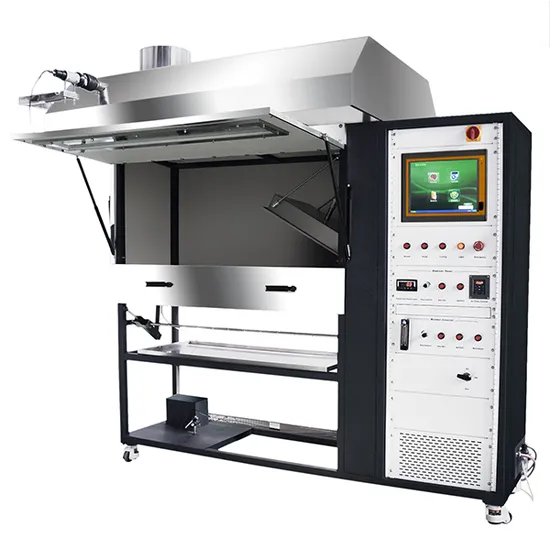
This article presents a systematic and comprehensive overview of the radiant panel test from multiple perspectives, including its basic definition and principles, test apparatus and procedures, key performance indicators and data analysis, international and regional standards, major application areas, the significance of test results, and future technological development trends. The aim is to help readers gain a thorough understanding of the role and practical implementation of this test method within fire safety evaluation systems.
Basic Definition and Purpose
The radiant panel test is a method that applies controlled thermal radiation and flame exposure to a specimen using a radiant heat source (radiant panel), and evaluates the fire response performance of materials or products by measuring parameters such as flame spread, combustion development, and heat flux variation. The purpose of the radiant panel test is to simulate the combined effects of flame and high-temperature thermal radiation during the early stages of a fire, thereby assessing flame spread tendencies, critical radiant flux, smoke production, and heat release characteristics.
This test method can be used to evaluate surface flammability and flame spread rates of materials such as wall panels and insulation materials, as well as to determine the ignition sensitivity and critical radiant flux of floor coverings under radiant heat exposure. It plays a vital role in fire safety design, the development of fire regulations, risk assessment, and verification of regulatory compliance.
The radiant panel test does not focus solely on whether a material ignites, but also provides a comprehensive evaluation of flame spread rate, sustained combustion behavior, critical radiant heat thresholds, and smoke generation.
Principle of the Radiant Panel Test
The core principle of the radiant panel test is to use a radiant heat source to supply thermal energy to the specimen, simulating the heating effect of thermal radiation in real fire scenarios. Unlike tests that consider only direct flame contact, the radiant panel test places particular emphasis on the influence of radiant heat, which is typically generated by a gas-fired radiant panel.
During testing, the radiant panel is supplied with a calibrated gas heat source, such as propane or a propane/air mixture, to produce a stable and repeatable heat flux within a defined range. This heat flux raises the surface temperature of the specimen to levels representative of fire conditions. A small pilot flame is then applied to initiate combustion, and the burning behavior of the specimen under constant radiant heat and flame exposure is observed. Recorded data typically include flame front propagation rate, critical heat flux required to sustain flame spread, smoke density, and combustion duration.
The radiant panel is usually positioned at a specified inclination angle—most commonly 30°—relative to the specimen to simulate the way thermal radiation acts along material surfaces during a fire. By adjusting the radiant heat flux, the resistance of materials to different fire intensities can be evaluated.
Test Apparatus and Testing Procedure
Test Apparatus Components
A typical radiant panel test system consists of the following main components:
Radiant heat panel, serving as the heat source, usually a gas-heated metal panel capable of delivering a stable, predefined heat flux
Test chamber or enclosure with appropriate structural containment, specimen supports, and measurement devices
Ignition source, generally a small flame device used to ignite the specimen surface
Temperature and heat flux measurement instruments for real-time monitoring of radiant output and specimen surface temperature
Smoke density measurement equipment, where required by specific standards
Data acquisition and analysis system for recording test parameters and generating reports
This apparatus can be adapted to different radiant panel test standards by adjusting the configuration and operating conditions.
Typical Testing Procedure
The general testing procedure for a radiant panel test includes the following steps:
Specimen Preparation
Test specimens are prepared in accordance with the relevant standard. For floor covering tests, materials are installed on a support platform of specified dimensions, with appropriate backing or substrate. For surface flammability tests of other materials, specimens are prepared to the required size and configuration.
System Setup and Calibration
The specimen is mounted horizontally or at a specified inclination within the test chamber. The position and angle of the radiant panel—commonly set at 30°—are calibrated. The radiant heat source is activated, and heat flux measurement instruments are calibrated to ensure that the applied thermal input meets the standard-specified requirements.
Test Execution
While the radiant panel provides continuous thermal radiation, the ignition source is applied to one end of the specimen or the flame front. During the test, parameters such as flame spread distance, flame spread rate, sustained burning time, and critical radiant flux are recorded. Smoke density and heat release data may also be collected where applicable.
Data Analysis
After the test, recorded data are analyzed to determine flame spread behavior, critical radiant heat thresholds, and other fire response parameters. According to the applicable standard, the data are converted into quantitative indicators suitable for fire risk assessment.
Report Generation
All test conditions, parameters, and results are compiled into a comprehensive test report, which can be used for research and development, certification, or regulatory submission.
Key Performance Indicators and Test Data
Radiant panel test results are designed to quantify material behavior under combined radiant heat and flame exposure. The most commonly evaluated indicators include the following.
Critical Radiant Flux
Critical Radiant Flux (CRF) is one of the most important parameters derived from radiant panel testing and is typically expressed as heat flux per unit area (e.g., kW/m²). It represents the minimum external radiant heat level required to sustain flame spread across a material. When the applied heat flux is below this critical value, flame propagation is unlikely to continue.
A higher critical radiant flux indicates that the material is better able to resist flame spread under intense thermal radiation, reflecting superior fire performance.
Flame Spread Distance and Rate
These parameters describe the extent and speed of flame propagation across the specimen surface. Measurements of flame spread distance and time provide insight into the combustion characteristics of the material and its tendency to contribute to fire growth.
Smoke Generation
Some standards require the measurement of smoke production during testing, often expressed in terms of optical smoke density. Smoke generation data are important for assessing the impact of materials on visibility reduction and smoke-related hazards during a fire.
Heat Release and Burning Duration
Although the radiant panel test primarily focuses on flame spread under radiant heat, it can be supplemented with additional measurements to evaluate heat release and combustion duration. These indicators are essential for understanding overall fire development behavior.
International and Regional Standards
The radiant panel test is incorporated into numerous international and regional fire testing standards, including the following:
EN ISO 9239-1
This widely used international and European standard evaluates the fire reaction performance of floor coverings. It specifies requirements for the radiant heat source, specimen installation, and heat flux measurement, and is an integral part of European building product regulations. The standard applies to various floor coverings such as textile carpets, wood flooring, and rubber flooring, and supports classification into different fire performance categories.
ASTM E648
This standard is another important radiant panel test method used internationally to determine the critical radiant flux of floor covering systems, providing a scientific basis for assessing fire performance.
ASTM E162
This standard focuses on surface flammability testing of materials such as wall panels and insulation products, using radiant heat exposure and flame spread measurements.
16 CFR §1209
Within the United States regulatory framework, this regulation specifies the use of radiant panel testing to measure the critical radiant flux of ceiling insulation materials and defines detailed requirements for apparatus construction and testing procedures.
GB/T 11785
This Chinese national standard corresponds to international radiant panel test methods and is used to determine the critical radiant flux of floor coverings, aligning closely with ISO 9239-1.
By clearly defining test equipment, specimen preparation, thermal input conditions, data acquisition, and evaluation methods, these standards ensure that radiant panel test results are highly comparable and reproducible worldwide.
Major Application Areas
The radiant panel test is widely applied in several key fields.
Building Materials and Floor Coverings
For floor coverings, decorative materials, and interior wall products used in public buildings, commercial spaces, and residential environments, radiant panel testing is a critical method for evaluating fire reaction performance. Floor coverings may be exposed to radiant heat from adjacent rooms during a fire, and such radiation is a major driver of fire spread. Radiant panel testing simulates this scenario and is an essential component of safety codes and material classification systems.
Transportation Interior Materials
Fire performance evaluation of interior materials used in trains, buses, and aircraft must consider both radiant heat exposure and flame spread behavior. Radiant panel testing provides valuable data on materials such as seat coverings, flooring, and insulation layers, supporting safer design of transportation interiors.
Insulation and Thermal Protection Materials
Insulation materials may lose effectiveness or contribute to combustion when exposed to radiant heat during a fire. Radiant panel testing helps assess surface flammability and flame spread tendencies, ensuring that these materials meet fire safety requirements in buildings and industrial equipment.
Aerospace and Specialized Industries
In aerospace and other specialized industries, material fire performance is closely linked to overall safety. Radiant panel testing is used to evaluate the behavior of thermal insulation and acoustic materials under radiant heat and flame exposure, supporting product development and quality control.
Significance of Test Results and Safety Evaluation
The parameters obtained from radiant panel testing—such as critical radiant flux, flame spread rate, and burning duration—allow quantitative assessment of material fire risk. These results are highly valuable for material selection, product design, and building safety evaluation.
In building design, classification of floor coverings based on radiant panel test results helps reduce the risk of rapid fire spread during the early stages of a fire. In transportation design, test data guide the selection and arrangement of interior materials, improving passenger evacuation safety and overall fire resilience. When combined with other fire tests, such as smoke density and heat release analysis, radiant panel testing contributes to a more comprehensive evaluation of material fire performance.
Technological Development and Future Trends
With ongoing advancements in fire engineering and fire-resistant material science, radiant panel testing technology continues to evolve. Key trends include:
Increased automation in data acquisition and analysis, improving precision and standard comparability
Multi-dimensional fire response evaluation through integration of heat release, smoke toxicity, and other parameters
Improved simulation of real fire environments through enhanced heat source design and refined radiation conditions
These developments will further enhance the role of radiant panel testing in material development and fire safety evaluation.
The radiant panel test is a scientific method for evaluating the fire performance of materials by simulating combined thermal radiation and flame exposure. Through controlled radiant heat sources, standardized test procedures, and quantitative performance indicators, it provides critical data for assessing the fire resistance of building materials, floor coverings, and transportation interior components. Analysis of test results supports fire classification, risk screening, and safety-oriented design optimization.
As a core component of many global fire testing standards, the radiant panel test continues to evolve alongside advances in fire science. In the future, it will remain an essential element of fire safety evaluation systems, contributing to safer living and working environments worldwide.
Previous: What is the indicative fire test?
N e x t : High - speed Pellet Impact Testing Machine for Helmet Goggles,EN 166
