





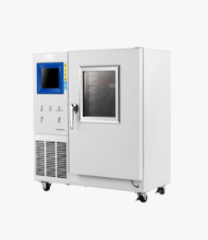
Adiabatic Self - Accelerating Decomposition Temperature Tester
2026/02/13
Share:

Definition and Safety Significance
Basic Definition of SADT
The Self‑Accelerating Decomposition Temperature (SADT) is defined as the lowest environmental temperature at which a reactive chemical in its transport or storage container may undergo uncontrolled self-accelerating decomposition due to the heat generated by its exothermic reaction exceeding the rate of heat loss. In other words, when the environmental temperature reaches or exceeds this critical threshold, the substance may spontaneously accelerate its decomposition, rapidly increase in temperature, and reach an uncontrollable hazardous state within a certain time period.
SADT is a comprehensive parameter: it depends not only on the chemical’s reaction heat and kinetics but also on packaging size, container material, thermal conductivity, and surrounding environmental conditions. Therefore, it is not an intrinsic property of the chemical alone but a safety parameter determined by the substance and its packaging system.
Importance in Safety Management
SADT plays a critical role in chemical safety management:
Storage Temperature Control: SADT is commonly used as the basis for setting the maximum allowable storage temperature for hazardous chemicals. Control temperatures are typically set several degrees below the measured SADT (e.g., 5–10°C) to ensure the storage environment remains safely below the thermal decomposition threshold.
Transportation Temperature Control: For the transport of hazardous materials, especially self-reactive substances and organic peroxides, SADT guides transportation conditions, including refrigeration, ventilation, or insulation measures.
Hazard Classification: According to the UN Recommendations on the Transport of Dangerous Goods and the Globally Harmonized System (GHS), the classification and labeling of self-reactive substances are closely related to their SADT. Different SADT ranges correspond to different hazard categories and control measures.
Accurate determination of SADT is thus essential for developing chemical safety standards, preparing Safety Data Sheets (SDS), conducting safety evaluations, and predicting accident risks.
Principle
Thermal Imbalance in Adiabatic Conditions
The core thermal phenomenon underlying SADT is the imbalance between heat generation and heat dissipation. In a closed container, if a substance undergoes decomposition and releases heat, part of the heat is lost through the container walls to the environment. When heat generation is less than heat loss, the system remains thermally stable. Once heat generation exceeds heat dissipation, the temperature rises continuously, accelerating the reaction rate and leading to thermal runaway. The critical environmental temperature at which this occurs is the SADT.
In an adiabatic SADT tester, heat exchange between the sample and the environment is minimized to simulate thermal runaway. Calorimetric measurements monitor the sample’s temperature change, heat release rate, and thermal flow parameters during heating. From these curves, the critical temperature can be determined and, together with packaging heat loss data, the SADT under practical packaging conditions can be estimated.
Key Parameters of Heat Accumulation
The essential thermal parameters measured in SADT testing include:
Heat release rate of sample decomposition: indicating the severity of the chemical reaction.
Temperature ramp response: rate of temperature change inside the sample over time.
Critical temperature point: threshold at which thermal runaway occurs under different initial environmental temperatures.
These parameters are combined to calculate SADT and inform safe temperature control strategies.
Methods for Determining SADT
The UN Manual of Tests and Criteria recommends four standard methods for SADT determination, applicable to different packaging forms and sample characteristics:
U.S. SADT Test (H.1)
This original method uses actual samples in commercial packaging sizes, maintained at constant temperature in an oven for one week (168 hours). If the internal temperature of the package rises more than 6°C above ambient, the critical temperature range is identified. While closest to real-world conditions, this method is time-consuming and hazardous.
Adiabatic Storage Test (H.2)
Using an adiabatic SADT tester, this method dynamically measures heat flow in samples at different initial temperatures to determine heat release rates. By recording temperature and thermal flow curves under near-adiabatic conditions and combining packaging heat loss data, the corresponding SADT is calculated. This method suits various packaging types.
Isothermal Storage Test (H.3)
Short-duration thermal flow measurements are conducted at different temperatures, plotting heat generation rate versus temperature. Combined with thermal loss data, the SADT is extrapolated. This method is suitable for small sample quantities.
Thermal Accumulation Storage Test (H.4 / Dewar Method)
Small-volume systems similar to Dewar containers are used to assess SADT from a heat accumulation perspective. This method is often applied to solid reactive substances with packaging behavior comparable to Dewar conditions.
All four methods rely on heat release data and thermal dissipation rates to calculate the critical temperature. Modern experiments tend to use adiabatic measurements combined with thermal kinetics to reduce test duration and risk.
Structure and Function of the Tester
Simulation of Ideal Adiabatic Conditions
The core design principle is to minimize heat exchange between the sample and surroundings so that temperature changes are primarily driven by the sample’s exothermic reaction. Adiabatic sample holders, controlled heating systems, and sensitive temperature sensors allow near-adiabatic conditions within the tester.
Temperature and Heat Flow Detection
High-precision temperature probes and thermal flow sensors, connected to automated data acquisition systems, record real-time temperature and heat flow curves. These data form the basis for calculating reaction rates and the critical SADT.
Automatic Thermal Tracking Control
When the sample’s heat release rate exceeds a preset threshold, the system switches to thermal tracking mode, synchronizing the instrument’s environment temperature with the sample’s temperature. This allows more accurate simulation of thermal runaway conditions.
Applications and Examples
Storage and Transportation of Hazardous Chemicals
For thermally sensitive chemicals, such as organic peroxides and self-reactive substances, SADT determines the maximum safe storage temperature and transportation temperature control measures. For substances with low SADT, continuous cooling may be necessary to prevent decomposition under normal environmental temperatures.
Accident Prevention and Emergency Response
In hazard identification and emergency planning, SADT helps determine which substances are at risk of thermal runaway under specific temperatures, enabling measures such as insulation, ventilation, temperature control, or cooling to reduce accident likelihood.
Risk Management and Regulatory Compliance
National and international standards (e.g., UN Recommendations on the Transport of Dangerous Goods, GB/T21613) require SADT testing for thermally hazardous chemicals and prescribe labeling and control measures based on the results.
The adiabatic SADT tester is specialized equipment for evaluating chemical thermal hazards and determining SADT. As the minimum critical environmental temperature at which thermal runaway may occur in a container, SADT is an essential parameter for establishing storage, transport, and emergency control measures. The testing relies on thermodynamic and calorimetric principles to monitor heat release under near-adiabatic conditions, allowing accurate estimation of the self‑accelerating decomposition temperature. This supports risk assessment and safety management with scientific quantification and effective protection. With increasingly stringent chemical safety standards and greater societal demand for accident prevention, SADT testing and adiabatic testers are becoming more widely applied, providing solid technical support for the safe production and transport of chemicals.
Previous: How does auto-ignition temperature compare to the flash point of fluids?
N e x t : How to test for an oxidizing agent?
