





How does auto-ignition temperature compare to the flash point of fluids?
2026/02/13
Share:

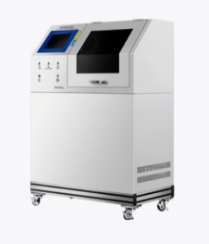
This article provides a comprehensive analysis of the differences and relationships between auto‑ignition temperature and flash point from multiple perspectives, including definitions, testing principles, hazard comparison, and practical applications.
Definitions and Basic Concepts
Definition of Flash Point
The flash point is defined as the lowest temperature at which a liquid, under specific standard conditions, produces sufficient vapor to ignite momentarily in the presence of an external ignition source, such as a flame or spark. In other words, it is the temperature at which flammable vapors are first generated and can flash when exposed to a spark or flame. At this temperature, contact with an ignition source produces a brief flame that typically does not sustain combustion. A lower flash point indicates a higher susceptibility to ignition, making the substance more hazardous in terms of conventional fire risk.
Flash point testing is typically conducted using standardized methods, such as the closed‑cup or open‑cup techniques. In closed‑cup tests, the sample is placed in a sealed container, and the vapor is ignited indirectly using an external source. In open‑cup tests, the container is open, and the ignition source is applied directly to the vapor. Results can vary depending on the method, with closed‑cup tests generally producing lower flash point values.
Definition of Auto‑Ignition Temperature
The auto‑ignition temperature (also called spontaneous ignition temperature) is the lowest temperature at which a substance ignites spontaneously without any external ignition source. At this temperature, the thermal energy of the substance is sufficient to react with oxygen and sustain combustion. The auto‑ignition temperature is typically much higher than the flash point and serves as an important measure of thermal stability and high‑temperature safety.
In short, the flash point depends on an external ignition source, whereas the auto‑ignition temperature indicates the temperature at which combustion occurs spontaneously without such a source.
Fundamental Differences Between Flash Point and Auto‑Ignition Temperature
Requirement for an Ignition Source
This is perhaps the most fundamental difference:
Flash point requires an external ignition source (flame or spark) to initiate combustion.
Auto‑ignition temperature occurs without any external source, triggered solely by the substance’s own temperature rise.
Therefore, flash point measures whether vapors will ignite in the presence of an ignition source, while auto‑ignition temperature assesses whether a substance can self‑ignite under elevated temperatures.
Temperature Comparison
In general, the auto‑ignition temperature is much higher than the flash point. The flash point represents the minimum temperature at which flammable vapors can form and ignite momentarily with an external source, while the auto‑ignition temperature represents the threshold for spontaneous combustion under high‑temperature conditions. Examples include:
Ethanol: Flash point ~16.6°C, Auto‑ignition temperature ~363°C
Gasoline: Flash point ~–43°C, Auto‑ignition temperature ~245–280°C
Diesel: Flash point ~38–52°C, Auto‑ignition temperature ~210°C
This significant difference reflects the energy conditions involved: the flash point corresponds to the minimal energy needed for vapor ignition with a spark, while the auto‑ignition temperature corresponds to the high-energy threshold at which the substance self‑ignites.
Conditions for Combustion
Flash point involves vapor-phase reaction at the liquid surface, requiring a combustible vapor–air mixture and an external heat source. Auto‑ignition temperature involves thermal decomposition or rapid oxidation, resulting in spontaneous ignition, generally requiring higher temperatures and internal energy.
Overall, the flash point is generally lower and more sensitive to test conditions (sample volume, container type, ignition method, etc.), while the auto‑ignition temperature is an intrinsic property that reflects a substance’s thermal stability under controlled conditions.
Significance in Fire Safety Assessment
Flash Point in Hazard Classification
Flash point is commonly used in hazardous materials classification to identify flammable or combustible liquids. Substances with lower flash points produce flammable vapors at lower temperatures, posing higher fire risks. Flash point data are essential for storage, handling, and transportation safety regulations.
Auto‑Ignition Temperature in Preventing Heat-Induced Fires
The auto‑ignition temperature is critical for assessing fire risk from heat sources even in the absence of flames or sparks. High-temperature surfaces, mechanical equipment, or uncontrolled thermal boundaries can ignite substances that reach their auto‑ignition temperature. In industrial design, maximum allowable surface temperatures and environmental temperature controls are often based on auto‑ignition limits to prevent unintended ignition.
Testing Methods and Standards
Flash Point Testing
Flash points are measured using standardized instruments and methods such as the Pensky‑Martens closed‑cup and open‑cup tests:
Closed‑Cup Method: The sample is placed in a sealed small container and gradually heated while intermittently introducing an ignition source. The temperature at which the vapor flashes is recorded.
Open‑Cup Method: The sample is in an open container, heated, and directly exposed to an ignition source.
Testing conditions such as heating rate, sample volume, and airflow are strictly controlled to ensure comparability.
Auto‑Ignition Temperature Testing
Auto‑ignition temperature testing is conducted in a controlled, closed environment, gradually heating the sample without any external ignition source until spontaneous combustion occurs. Standards by organizations such as ASTM provide specific procedures for measurement. Temperature changes are monitored to determine the critical point of ignition.
Hazard Comparison and Practical Examples
Hazard Comparison
From a fire risk perspective:
Flash point indicates susceptibility to ignition by external sources; low flash point substances can produce flammable vapors at low temperatures.
Auto‑ignition temperature is used to prevent heat-induced fires, such as ignition from hot surfaces or mechanical components.
In summary, flash point reflects the risk of ignition from external sparks, while auto‑ignition temperature evaluates the risk of self‑ignition under high temperatures.
Practical Combined Applications
Storage and Handling Safety
In storage or processing, if the ambient temperature approaches or exceeds the flash point, even a small spark can trigger fire. If equipment surfaces exceed the auto‑ignition temperature, combustion can occur without any external source. Safe storage conditions must therefore consider both maintaining temperatures below the flash point and controlling heat sources below the auto‑ignition temperature.
Transportation Risk Control
Transportation regulations typically use flash point to classify flammable liquids, determine packaging, and assign labeling requirements. Auto‑ignition temperature also informs temperature control measures, particularly in long-distance or hot-climate transport.
Explosion Prevention and Equipment Design
In equipment and explosion-proof zone design, flash point guides evaluation of flammable vapor layers, while auto‑ignition temperature informs material selection and maximum allowable surface temperatures to prevent spontaneous ignition.
Common Misconceptions
Flash point and auto‑ignition temperature are independent: They are not simply two names for the same property. Flash point depends on external ignition; auto‑ignition temperature does not.
Higher flash point does not necessarily mean safer: Even substances with high flash points can ignite if surfaces exceed their auto‑ignition temperature. Conversely, low flash point substances can be safely managed if environmental temperatures remain well below the auto‑ignition temperature.
Flash point and auto‑ignition temperature are two distinct but complementary indicators for evaluating fluid hazards:
Flash Point: The lowest temperature at which vapors ignite in the presence of an external source; a fundamental measure of flammability.
Auto‑Ignition Temperature: The lowest temperature at which a substance ignites spontaneously without an external source; a key measure of thermal stability and spontaneous combustion risk.
The auto‑ignition temperature is generally much higher than the flash point. Flash point is mainly used for general flammability classification and fire safety design, whereas auto‑ignition temperature is used for high-temperature risk control and equipment design. Correct understanding and application of these parameters enable scientifically based safety measures, equipment specifications, and emergency plans, minimizing the risk of fire and explosion.
Previous: What is a Gas Hazardous Characteristics Tester?
N e x t : Adiabatic Self - Accelerating Decomposition Temperature Tester
