





What is a Simulated Human Body Underwear Tester?
2026/03/05
Share:

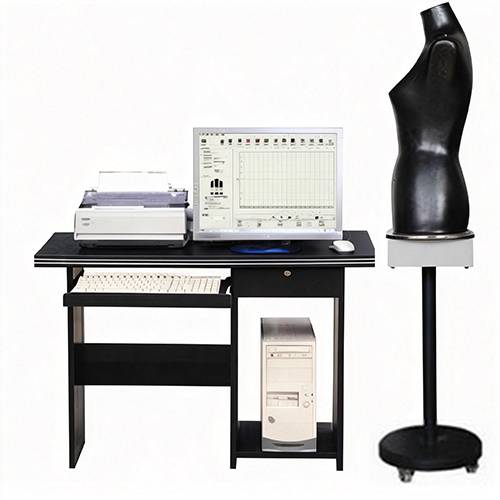
Testing Principle of the Simulated Human Body Underwear Tester
This device is based on multi-sensor pressure distribution monitoring technology. High-precision micro-force sensors are deployed at key positions on a human-shaped mannequin to collect real-time dynamic pressure data at the contact interface between the garment and the “skin.”
Force measurement range: Main sensors 0–10.000 cN; micro-sensors 0.00–200.00 cN, accuracy up to 0.03 cN
Body simulation: Adjustable expansion and contraction of the body (0–50 mm) to simulate wearing conditions for different body shapes
Data output: Software on a PC generates color-coded pressure distribution maps, quantifying stress values in various regions and evaluating the impact of long-term wear on blood circulation, skin compression, and comfort
Standards compliance: Meets FZ/T 70015-2022 “Methods and Evaluation of Pressure in Knitted Tight-Fitting Garments,” specifically for evaluating the pressure performance of functional underwear (such as shapewear and sports bras)
This method directly simulates human wearing behavior, achieving non-invasive, repeatable, high-precision mechanical performance evaluation, and is a core tool in high-end underwear R&D.
How to Use the Simulated Human Body Underwear Tester
The Simulated Human Body Underwear Tester is not a single device; multiple specialized instruments are used depending on the testing purpose. According to the latest public information, the main types of equipment and their usage are as follows:
1. Devices for mechanical performance testing of underwear or shapewear
These devices simulate the effects of human movement and pressure on underwear or shapewear and are commonly used in product development and quality control.
Applicable garments: Shapewear, sports bras, support bras, etc.
Core test items:
Compression performance (compression ratio, pressure distribution)
Tensile strength and elastic recovery
Fatigue durability (repeated compression)
Dynamic comfort (restriction during movement)
Usage steps:
Prepare the sample: Secure the underwear or shapewear on the test fixture, ensuring it is flat and wrinkle-free.
Set parameters: Use the control panel (e.g., 7-inch touchscreen) to set test type (compression, tension, cyclic fatigue, etc.), load range (e.g., 0–500 N), speed (e.g., 90 ± 10 mm/min), and cycle count.
Start the test: Press “Start” to begin automatic testing; the device collects force, displacement, and pressure distribution data in real-time.
Generate reports: After the test, the system automatically produces stress-strain curves, pressure distribution maps, and pass/fail evaluation.
Example equipment: Universal testing machine, pressure distribution testing system, Martindale abrasion tester, etc.
2. Thermal-moisture comfort testing using heated manikin systems
These devices simulate sweating and heat dissipation to evaluate the breathability, moisture-wicking, and thermal performance of underwear.
Applicable garments: Everyday underwear, sports bras, protective clothing, and other products requiring high thermal-moisture comfort
Core test items:
Thermal resistance (insulation)
Moisture permeability index (sweat-wicking ability)
Evaporative resistance
Dynamic or static wearing comfort
Usage steps:
Pre-treatment: Preheat the heated manikin (multi-segment copper manikin or sweating manikin) in a constant temperature and humidity environment (e.g., 22°C ± 2°C) for 30 minutes.
Dress the sample: Fit the underwear onto the manikin, ensuring natural contact with the body surface.
Set the mode:
Constant temperature mode: Set the surface temperature of each segment (e.g., 34°C) to measure thermal resistance.
Sweating mode: Activate the simulated sweating system to measure evaporative resistance and moisture permeability index.
Run the test: Activate motion modes (e.g., walking, standing) if applicable, recording heat flow and humidity changes in each region.
Analyze results: Software generates thermal-moisture performance cloud maps and an overall comfort score.
Functions and Effects of the Simulated Human Body Underwear Tester
1. Core Functions
Multi-point micro-force measurement: High-precision force sensors are installed at key contact points (e.g., chest, back, shoulders, waist) to measure tiny forces exerted by underwear, typically 0.00–200.00 cN with 0.03 cN accuracy.
Dynamic body simulation: Can simulate body size changes (expansion/contraction) within 0–50 mm, to test underwear adaptability and pressure distribution stability across different body types.
Long-term pressure monitoring: Continuously records pressure changes under static or dynamic conditions, assessing pressure decay or deformation over prolonged wear.
Multi-station parallel testing: Some devices support multiple test stations simultaneously, improving testing efficiency for batch evaluation.
Environmental simulation: High-end versions can integrate temperature and humidity control (e.g., 37°C ± 1°C) and fluid immersion (physiological saline), simulating real wearing environments and material aging.
2. Main Effects and Application Value
Quantify wearing comfort: Pressure distribution data helps determine whether local pressure is excessive, causing discomfort or health risks (e.g., restricted blood circulation).
Verify functional design: Validates whether medical-grade compression garments, sports compression clothing, or post-surgery support underwear meet medical or industry standards (e.g., FZ/T 70015-2022).
Optimize product structure: Provides data support for improving cutting, elastic distribution, and seam design, enhancing fit and user experience.
Support personalized customization: Combined with 3D body scanning (e.g., XianKu 3D Body Scanner), enables precise “body-pressure-size” matching, promoting C2M (Customer to Manufacturer) custom production.
Enhance testing standardization: Replaces subjective evaluation, providing objective, repeatable lab data, and meeting export, certification, and quality supervision requirements.
Maintenance Essentials for the Simulated Human Body Underwear Tester
1. Daily maintenance
Wipe electrodes, sensors, and contact surfaces with a soft, dry cloth after each use to prevent sweat or dirt from affecting accuracy.
Store the device in a 20–30°C dry, shaded environment, away from high humidity, strong light, and vibration.
Operate strictly according to the manual; do not adjust parameters or forcefully fit samples.
2. Periodic maintenance
Calibrate every six months; if used frequently or in harsh environments, reduce interval to quarterly.
Inspect heating systems, temperature-humidity sensors, and cable aging/loosening; replace seals, filters, and other consumables.
Update firmware/software regularly and back up test data.
For high-precision systems like sweating manikins, clean and replace the simulated skin layer periodically.
3. Emergency handling
If abnormal heating, unusual sounds, or data fluctuations occur, power off immediately.
Record the issue in detail and contact the manufacturer or professional service; do not disassemble non-professionally.
4. Documentation management
Maintain records including usage logs, calibration certificates, and maintenance logs.
Affix calibration status labels with validity dates visibly on the device.
The core of future development for traditional simulated human body underwear testers lies in the deep integration of flexible electronics and smart textiles, transforming devices from “static testing tools” into “dynamic physiological monitoring systems.”The ultimate form of such testers will be smart underwear with medical-grade monitoring, AI health management, and adaptive adjustment functions. It will provide personalized support during menstruation, pregnancy, or post-surgery recovery; offer early pressure anomaly warnings for high-risk breast cancer groups; interface with hospital HIS systems for chronic disease remote management; and become a key terminal for proactive health and preventive medicine under the “Healthy China 2030” initiative.Over the next five years, this field will move from laboratories into households. The significance of technology lies not in its sophistication, but in how silently it protects every breath and heartbeat in daily life.
Previous: What is a Thermal Radiation Performance Tester (RPP)?
N e x t : Which test is used for testing the fabric?
